
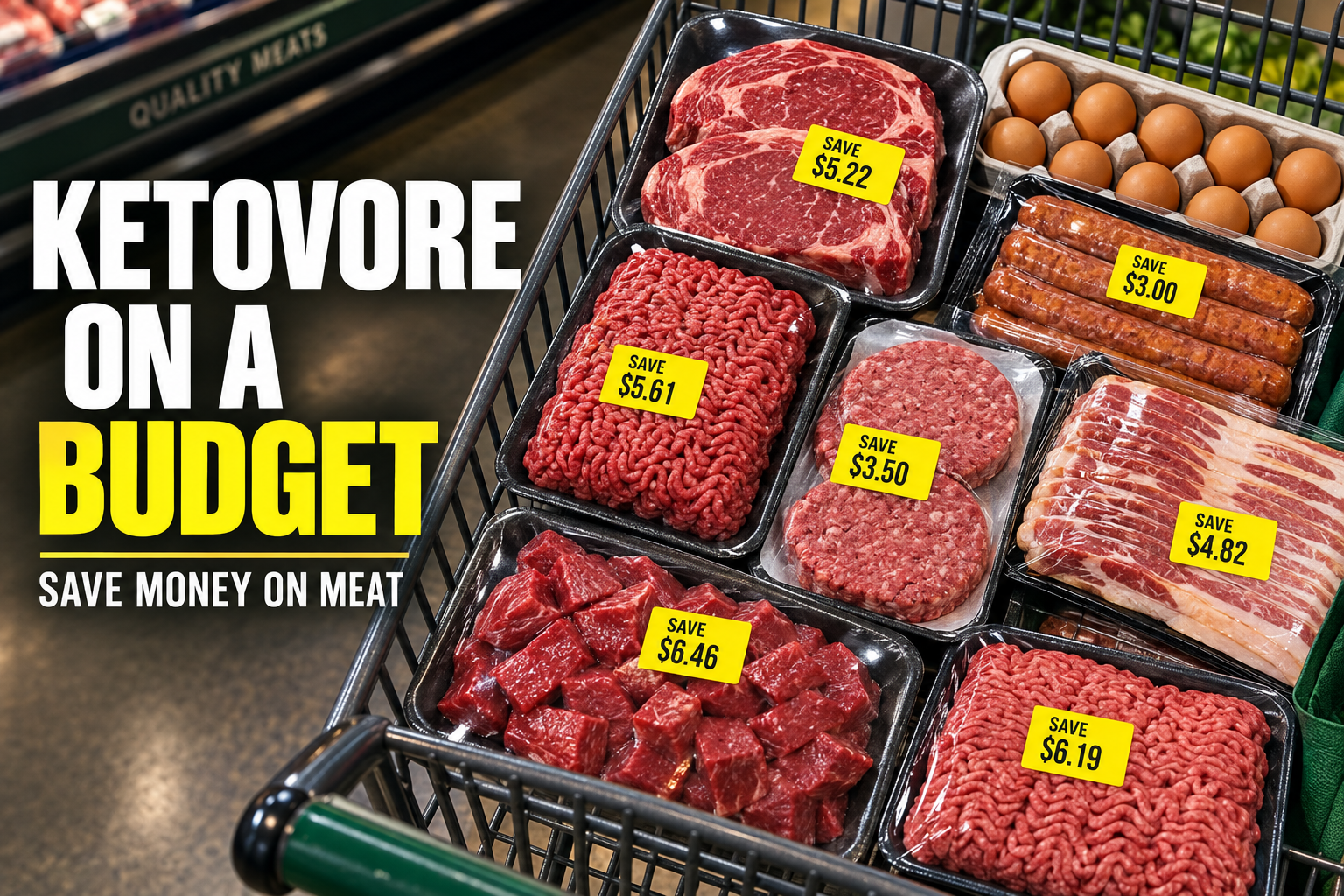
Eating ketovore can become expensive if I insist on buying premium steaks at full price every week. Fortunately, I don’t. Most of my meals are built around ordinary foods such as ground beef, eggs, bacon, sausage, chicken and whatever cuts of meat happen to be on sale. I’m trying to make this way of eating sustainable, and that includes making it work with a real grocery budget.
One of the best tricks I’ve learned is surprisingly simple: find out when your local grocery store marks down its meat.
My Basic Ketovore Grocery List
I don’t need an enormous shopping list filled with specialty products. My goal is to keep enough satisfying, low-carbohydrate food in the house that ordering pizza never starts sounding like a reasonable emergency plan. Here are the foods I normally look for.
Beef
Beef is the foundation of many of my meals:
- Ground beef
- Hamburger patties
- Chuck roast
- Stew meat
- Ribeye, strip or sirloin steak
- Brisket or other roasts when they are on sale
Ground beef is especially useful because it is relatively affordable, filling and easy to prepare. I can make hamburger patties, taco bowls without the shells, scrambled eggs with beef or simply season it and eat it with cheese. I enjoy a good steak, but ketovore does not require eating ribeye every night.
Chicken and Pork
Chicken and pork give me more variety without complicating the plan:
- Chicken thighs
- Chicken wings
- Chicken breasts
- Pork chops
- Pork shoulder
- Bacon
- Sausage
I check the labels on sausage, bacon and other processed meats because some brands contain more sugar and carbohydrates than others. I’m not chasing perfection, but I would rather know what I’m buying. Chicken thighs and pork shoulder are also good options when the price of beef is high.
Eggs and Dairy
My regular choices include:
- Eggs
- Butter
- Cheese
- Heavy cream
- Sour cream
Eggs may be the most versatile food on my list. They work for breakfast, lunch or dinner and pair well with almost every type of meat. Butter goes into my morning coffee and can also be used for cooking. Cheese makes meals more interesting, although I have learned that it is easy for me to eat much more cheese than I intended. A few slices can become half a block remarkably quickly.
Convenient Backup Foods
I also like having several easy options available:
- Canned tuna
- Canned chicken
- Rotisserie chicken
- Deli meat
- Pork rinds
- Pre-cooked hamburger patties
- Hard-boiled eggs
These are not necessarily the center of my diet. They are backup foods for busy days when convenience could otherwise send me through a drive-through. I check the ingredient label on rotisserie chicken, deli meat and packaged products. Seasoning blends, marinades and sauces can sometimes contain added sugar or unexpected carbohydrates.
Seasonings and Sauces
Meat does not have to be boring. I usually keep some combination of these around:
- Salt
- Pepper
- Garlic powder
- Steak seasoning
- Hot sauce
- Mustard
- Low-sugar salsa
- Sugar-free barbecue sauce
The nutritional labels still matter. A sauce that appears harmless can add a surprising amount of sugar when several servings are used.
The Best Part of My Grocery List: Yellow Stickers
This is what a real ketovore grocery haul can look like: ground beef, bacon, sausage, cheese—and several valuable yellow stickers. Local grocery stores frequently reduce the price of meat as it approaches the date when the store wants it sold. Those yellow markdown stickers have become ketovore coupons wearing safety vests. The trick is learning when the markdowns happen.
There is no single markdown day that applies to every grocery store. It depends on the store’s deliveries, inventory and procedures. Instead of guessing, I can simply ask someone in the meat department:
“What day and time do you normally mark down the meat?”
That one question may be worth more than clipping a month’s supply of coupons. Some stores mark meat down in the morning. Others do it after a certain delivery arrives or on particular days of the week. Once I learn the schedule, I can plan a quick shopping trip around it.
What I Look for in the Markdowns
The cart on a good markdown day: steak, roast, stew meat and ground beef at reduced prices. A markdown does not automatically make something a good purchase. Before placing it in my cart, I consider:
- Is the package intact?
- Does the meat look normal for that particular cut?
- What is the price per pound?
- Will I actually eat it?
- Can I cook or freeze it promptly?
- Do I have enough freezer space?
That last question is important. Discounted meat is not a bargain if I forget about it in the refrigerator. I also compare the marked-down price with the weekly sale price. A bright yellow sticker attracts attention, but the price per pound tells the real story.
My Freezer Is Part of the Strategy
When I find a worthwhile markdown, I may buy several packages and freeze what I will not cook immediately.
My routine is simple:
- Divide large packages into meal-sized portions.
- Wrap or bag the portions carefully.
- Label each one with the type of meat and date.
- Freeze them promptly.
- Use the oldest packages first.
According to the USDA, food kept continuously frozen at 0°F remains safe indefinitely, although its quality can decline over time. The agency’s recommended freezer timelines are primarily about maintaining quality rather than determining safety. USDA: Freezing and Food Safety For example, the USDA recommends using frozen ground beef within about four months for the best quality. Dating the package makes that much easier. USDA: Ground Beef and Food Safety I still follow basic food-safety practices: keep raw meat cold, prevent it from contacting ready-to-eat foods, cook it properly and refrigerate or freeze it promptly. FoodSafety.gov: Keep Food Safe
A Simple One-Week Ketovore Shopping List
The exact quantities depend on how many people I am feeding and how often I eat. A basic week might include:
- Ground beef
- One family package of chicken thighs or wings
- One roast, package of steaks or other marked-down cut
- Bacon or sausage
- Eggs
- Butter
- Cheese
- Canned tuna or chicken
- Pork rinds
- Salt and seasonings
- Mustard, hot sauce or low-sugar salsa
I don’t necessarily buy everything every week. Before shopping, I check the refrigerator and freezer and build the list around what I already have. That helps prevent waste and keeps me from accumulating seven bottles of mustard while somehow having nothing available for dinner.
What I Usually Leave at the Store
Just as important as what goes into my cart is what stays out of it:
- Bread
- Cereal
- Chips
- Cookies
- Candy
- Sweetened drinks
- Pasta
- Sugary sauces
- Most heavily processed “keto” snacks
There are plenty of products with the word keto printed on the package. Some may fit a low-carbohydrate diet, but they can be expensive and may keep my desire for sweets alive. For me, meat and eggs are generally more satisfying.
Ketovore Does Not Have to Be Expensive
Ketovore can become expensive if I insist on buying premium meat at full price. It becomes much more affordable when I shop the sales, learn the markdown schedule and let the freezer hold tomorrow’s bargains.
The biggest savings may come from a few simple habits:
- Check the weekly grocery ads.
- Use store loyalty discounts and digital coupons.
- Compare prices by the pound.
- Ask when meat gets marked down.
- Buy cuts that are currently affordable.
- Portion and freeze sale purchases.
- Cook what is already at home before buying more.
This is also one reason ketovore feels easier for me than a complicated diet plan. I don’t need a long recipe with fifteen ingredients every night. I need a protein, some seasoning and a dependable way to cook it.
The Bottom Line
My ketovore grocery list is not glamorous, but it works. I keep beef, chicken, pork, eggs, butter and a few convenient backup foods available. I check labels, avoid loading the cart with foods that trigger cravings and watch for genuine sales. Most importantly, I have started paying attention to when local stores mark down their meat.
If you want to make ketovore more affordable, introduce yourself to someone behind the meat counter and ask about the markdown schedule. Then clean out a little freezer space. Those yellow stickers might become your new favorite grocery-store aisle.

0 Comments