
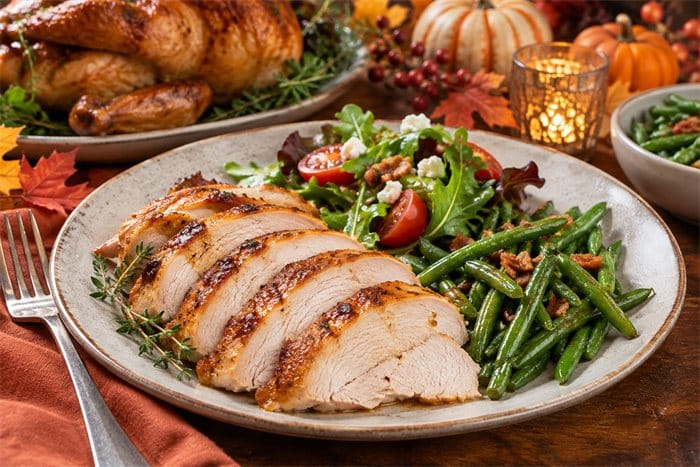
Thanksgiving is one of my favorite kinds of holidays. Family, friends, football, gratitude—and a table full of food that seems to multiply every time someone walks through the door. It can also be a challenging day if you’re trying to eat ketovore. Turkey may be easy enough, but then come the rolls, stuffing, mashed potatoes, cranberry sauce, and desserts.
The good news is that you don’t have to avoid Thanksgiving dinner or bring a sad little container of plain chicken to the party. With a little thought ahead of time, you can build a meal that fits your approach and still enjoy the holiday.
Can You Eat Ketovore on Thanksgiving?
Yes. Turkey, ham, roast beef, and other holiday meats can form the center of a ketovore Thanksgiving meal. Depending on how you eat, you can add lower-carbohydrate vegetables, butter, cheese, or other sides that work for you. The practical strategy is simple: start with the protein, look over the choices, and decide what belongs on your plate.
You don’t have to make the decision the same way as anyone else at the table. Your version of ketovore may include foods that someone following a strict carnivore approach chooses to avoid. Make a plan that fits your goals and your circumstances.
Start With the Turkey
Thanksgiving already comes with a pretty good centerpiece for a ketovore meal: turkey. Whether you prefer white meat, dark meat, or a combination, you can build your plate around the main dish. If your family serves ham, brisket, roast beef, or another meat, those may be options too.
There are a few details to consider: Sweet glazes and sauces may contain added sugar. Some gravies are thickened with flour or starch. Stuffing cooked inside a bird may leave bread or other ingredients mixed with the meat. Prepared meats can vary, so check the ingredients when that matters to you. You don’t need to interrogate the turkey. Just know enough to make the choice that works for you.
Decide Which Sides Work for You
Depending on your approach, you may enjoy some low-carbohydrate vegetables with your Thanksgiving meal. Possibilities include: Green beans, A simple green salad, Roasted cauliflower, Brussels sprouts, Asparagus, Deviled eggs, & Cheese. Preparation matters. Green beans served simply are different from a casserole made with flour-based soup and a crunchy topping. Salads can come with sweet dressings, dried fruit, or candied nuts.
If you’re unsure what’s in a dish, it’s perfectly reasonable to ask the person who made it. They may even appreciate someone showing interest in their cooking. And if you prefer a plate of turkey without the vegetables, that’s your choice too.
Look Over the Table Before Filling Your Plate
A holiday buffet can make everything look like a limited-time offer. Instead of putting food on your plate as you encounter it, take a moment to see what’s available. Then choose the foods you actually want. You might start with turkey, add a side or two that fit your plan, and find a seat. After you’ve eaten, give yourself a little time before deciding whether you want more.
There’s no requirement to sample every dish just because it exists. That rule applies to office potlucks too, although I realize some casseroles can be very persuasive.
Make a Decision About Treats Beforehand
For some people, the plan is to stay very close to their usual ketovore routine. Others may decide in advance to enjoy a particular holiday food. That’s a personal decision. What matters is being intentional. If you want to skip dessert, you can do that. If you choose to have a favorite family dish, enjoy the choice without turning it into an excuse to abandon every other decision for the rest of the weekend.
One meal doesn’t have to become a four-day food festival ending with a promise to “start again Monday.” You can simply return to your usual routine at the next meal.
Bring a Dish You Can Enjoy
If you’re invited to someone else’s home, offering to bring a dish is a thoughtful way to contribute—and it gives you another option at the table. Depending on the gathering, you might bring:
- Deviled eggs
- A meat and cheese tray
- A simple salad with dressing on the side
- Roasted vegetables
- An additional meat dish
Check with your host first so your contribution fits the meal. If they already have three people bringing deviled eggs, perhaps the world is trying to tell you to bring something else. For more ideas on keeping simple foods available, see My Simple Ketovore Grocery List—and How I Save Money on Meat.
What If Family Members Offer You Food?
Food is often how people show love, especially during the holidays. Someone may have worked hard on a dish and genuinely want you to try it. You don’t have to deliver a 15-minute presentation about your eating habits. A friendly response is usually enough: “That looks wonderful, but I’m going to pass today. Thank you for offering.”
You can also compliment the effort, ask about the recipe, or simply change the subject. Thanksgiving gives families plenty of other things to talk about—although choosing which subjects to avoid is a separate holiday strategy.
Have a Plan for Leftovers
One Thanksgiving meal can turn into several days of leftovers. Turkey is useful for a quick meal, an omelet, or a simple plate with whatever sides you enjoy. Refrigerate leftovers promptly and follow safe storage guidance. According to the USDA, most cooked leftovers can be refrigerated for three to four days; freeze them if you want to keep them longer. USDA
For more everyday meal inspiration, visit What I Eat in a Day on Ketovore.
Focus on the Reason for the Gathering
Thanksgiving dinner is one meal. The conversations, laughter, family stories, and time together are what make the day memorable. Make a plan you feel comfortable with, build a plate you enjoy, and give yourself permission to focus on the people around you.
And if someone asks why you’re passing on the rolls, you can always say you’re saving room for more turkey. That answer is likely to make sense to everyone.
This article is for general information and is not individualized medical advice. Dietary needs vary; speak with a qualified healthcare professional about significant changes to your eating pattern.

0 Comments