
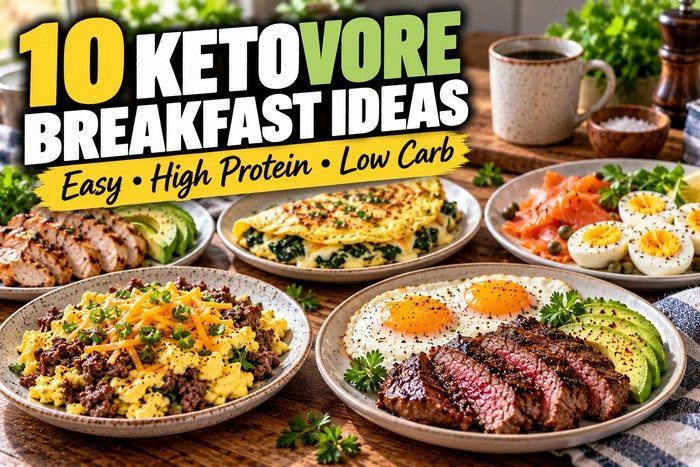
Breakfast is an interesting meal. For some people, it’s the most important meal of the day. For others, it’s a cup of coffee and a promise to eat something later. And for those of us interested in intermittent fasting, breakfast might not happen until noon.
But whether you eat at 7 a.m., 11 a.m., or sometime in the afternoon, there’s one question that eventually needs answering.
What am I going to eat?
When you’re following a ketovore lifestyle, the answer doesn’t have to involve cereal, toast, pancakes, or a breakfast sandwich. It can be something much simpler. Meat. Eggs. Fish. A few low-carbohydrate extras. The nice thing about ketovore is that breakfast doesn’t have to look like traditional breakfast.
Nobody is going to arrest you for eating a hamburger patty at 9 a.m. At least, I don’t think so. Here are ten practical, protein-focused ketovore breakfast ideas that don’t require complicated recipes or expensive specialty ingredients.
1. Classic Steak and Eggs
Let’s start with a favorite combination. Steak and eggs. It’s simple, satisfying, and provides substantial protein.
Ingredients
- 4–6 ounces of cooked steak
- 2 eggs
- Salt and pepper
- A small amount of butter or cooking oil
Preparation
Cook the steak in a skillet to your preferred doneness, following food-safety guidance. For whole beef steaks, the USDA recommends a minimum internal temperature of 145°F followed by a three-minute rest. Prepare the eggs separately. Serve everything together. That’s it. You don’t need potatoes, toast, or a complicated sauce.
Time-saving tip: Leftover cooked steak from dinner can make this breakfast much faster. Refrigerate leftovers promptly and reheat thoroughly if serving hot.
2. Ground Beef and Scrambled Eggs
If steak and eggs sound expensive, here’s a more affordable alternative. Ground beef and scrambled eggs. Ground beef is one of the most versatile ingredients for ketovore meals. And it works surprisingly well with eggs.
Ingredients
- 4 ounces of lean ground beef
- 2 eggs
- Salt
- Black pepper
- Optional shredded cheese
Preparation
Brown the ground beef in a skillet until it reaches 160°F. Drain excess fat if desired. Whisk the eggs and add them to the cooked beef. Stir until the eggs are fully cooked. Add cheese if it fits your eating plan. You now have a protein-rich meal that takes relatively little time. And you can make extra ground beef ahead of time. That’s meal preparation without needing a collection of matching plastic containers.
3. Chicken and Avocado Breakfast Bowl
Who decided chicken was only for lunch and dinner? Certainly not me. Cooked chicken can be a convenient breakfast protein, especially when you have leftovers.
Ingredients
- 4–5 ounces of cooked chicken
- Half an avocado
- A handful of spinach
- Salt and pepper
- Optional lemon juice
Preparation
Warm the chicken if desired. Place it over spinach. Add sliced avocado. Season to taste. That’s your breakfast bowl. The avocado provides fiber and unsaturated fats, while the chicken supplies protein. If you’re following a stricter carnivore approach, simply omit the plant ingredients. One of the advantages of ketovore is the flexibility to choose foods that fit your particular approach.
4. Bacon and Egg Breakfast Cups
These are especially useful when you want to prepare food ahead of time.
Ingredients
- 6 eggs
- 6 strips of bacon
- Optional shredded cheese
- Black pepper
Preparation
Preheat your oven to 375°F. Lightly grease six muffin-tin cups. Line each cup with a strip of partially cooked bacon. Crack one egg into each cup. Add a little cheese if desired. Bake until the eggs are fully set, checking that the centers are cooked through. Cooking times will vary depending on your oven and muffin tin.
Let the cups cool briefly before removing them. Refrigerate leftovers promptly. These can make a convenient breakfast, although one cup by itself may not provide enough protein or energy for a complete meal. Pair several with another suitable food according to your needs. And remember that bacon is processed meat, so it makes sense to rotate it with less-processed protein sources rather than relying on it every morning.
5. Salmon and Eggs
Here’s a breakfast combination that deserves more attention. Salmon and eggs. Salmon provides protein and omega-3 fatty acids. Eggs contribute additional protein and other nutrients.
Ingredients
- 3–4 ounces of cooked salmon
- 2 eggs
- Salt and pepper
- Optional spinach
Preparation
Use leftover cooked salmon or prepare a fresh portion. Scramble or fry the eggs. Serve together with spinach if desired. You can also use canned salmon for a convenient alternative. Just check for bones, packaging instructions, and any added ingredients. It’s a simple way to add variety instead of eating beef every morning.
6. Sausage and Vegetable Omelet
Omelets are useful because you can change the ingredients without changing the basic recipe.
Ingredients
- 3 eggs
- 2 ounces of cooked sausage
- Chopped spinach
- A small amount of shredded cheese
- Butter or cooking oil
Preparation
Cook the sausage thoroughly according to its type and package directions. Whisk the eggs. Heat a skillet over medium-low heat. Add the eggs and allow them to begin setting. Add the sausage, spinach, and cheese. Fold the omelet and continue cooking until the eggs are fully set.
One thing to watch: sausage ingredients vary. Some products contain added sugar, starches, or fillers. Check the nutrition label when carbohydrates matter. And don’t assume the word “breakfast” printed on the package means it’s automatically a good choice. Marketing departments are very creative.
7. Bunless Breakfast Burger
Here’s one of my favorite concepts. A hamburger for breakfast. Why not?
Ingredients
- One or two cooked hamburger patties
- 1–2 eggs
- Optional cheese
- Pickles or avocado, if desired
Preparation
Cook the hamburger patties to 160°F. Prepare the eggs separately. Place the eggs on top of the patties. Add cheese or other toppings according to your preferences. Skip the bun. You’ve got a protein-centered breakfast that could just as easily be lunch or dinner.
That’s one of the things I appreciate about simple ketovore meals. Food doesn’t need to follow a clock.
8. Cottage Cheese and Egg Bowl
If dairy fits your ketovore approach, cottage cheese can provide a convenient source of protein.
Ingredients
- 1 cup of plain cottage cheese
- 2 hard-boiled eggs
- Black pepper
- Optional cucumber slices
Preparation
Place the cottage cheese in a bowl. Add sliced hard-boiled eggs. Season with pepper. Include cucumber if desired. No cooking required, assuming the eggs are already prepared. Check the cottage cheese label because protein, sodium, and carbohydrate amounts vary between brands. Choose a product that fits your nutritional needs.
And if dairy doesn’t agree with you, skip this option. Ketovore doesn’t require eating every food that technically fits the plan.
9. Leftover Roast Beef and Eggs
This is a good example of making yesterday’s dinner work for today’s breakfast.
Ingredients
- 4–5 ounces of cooked roast beef
- 2 eggs
- Salt and pepper
- Optional sautéed mushrooms
Preparation
Slice the leftover roast beef. Reheat it thoroughly. Prepare the eggs. Add mushrooms if desired. Serve everything together. The meal takes very little preparation when the roast is already cooked. And using leftovers can help reduce food waste and grocery expenses. I’ve written more about that in My Simple Ketovore Grocery List—and How I Save Money on Meat.
There’s nothing wrong with buying an expensive steak occasionally. But ordinary ingredients and leftovers can make ketovore considerably easier to maintain financially.
10. The Five-Minute Protein Breakfast Plate
Sometimes you simply don’t want to cook. That’s understandable. Not every morning needs to become a cooking demonstration. Here’s a convenient option.
Ingredients
- 2 hard-boiled eggs
- 3–4 ounces of fully cooked chicken
- A few cheese cubes
- Cucumber slices or avocado
Preparation
Arrange everything on a plate. That’s it. If your ingredients are already cooked and properly refrigerated, the preparation takes only a few minutes. You can also pack this meal in an insulated container with ice packs if you’re heading to work. It’s not fancy. But it gets the job done. And sometimes that’s exactly what breakfast needs to do.
Do You Have to Eat Breakfast on Ketovore?
Here’s an important question. Do you actually need to eat breakfast? Not necessarily. Some people prefer eating early. Others practice time-restricted eating or intermittent fasting. There’s no universal rule requiring everyone to eat at the same time. However, skipping breakfast isn’t automatically healthier, and fasting isn’t appropriate for everyone.
What matters is whether your overall eating pattern provides adequate energy, protein, fiber, vitamins, and minerals. I’ve discussed my own eating schedule in What I Eat in a Day on Ketovore: Simple Meals Without Complicated Recipes. For me, the practical question isn’t whether the clock says breakfast. It’s whether the meal fits the eating routine I’m trying to follow. And if you’re interested in fasting, my article OMAD vs. 16:8 Fasting: Which Is Easier to Maintain? provides additional context.
If you take diabetes medications or have another medical condition affected by fasting, consult your healthcare professional before changing meal timing.
How Much Protein Should Breakfast Contain?
There’s no single correct protein target for everyone. Needs vary based on body weight, age, activity level, health conditions, and total daily food intake. For generally healthy adults, the standard Recommended Dietary Allowance is approximately 0.8 grams of protein per kilogram of body weight per day.
Some people, including those who regularly perform resistance training or older adults, may benefit from different amounts. The important point is that a breakfast containing protein can contribute toward your daily requirements. But don’t assume a meal is nutritionally complete simply because it’s high in protein. Variety and overall dietary quality still matter.
My Biggest Breakfast Tip: Keep It Simple
If there’s one lesson I keep coming back to, it’s simplicity. You don’t need a special ketovore breakfast cereal. You don’t need expensive low-carb pancake mixes. And you certainly don’t need a recipe with fourteen ingredients just to eat before work.
Start with protein. Choose foods you enjoy. Keep ingredients available. Prepare extra when it makes sense. And remember that the same meal can work for breakfast, lunch, or dinner. A hamburger patty doesn’t know it’s 8 a.m. Neither does a steak.
Final Thoughts: Breakfast Doesn’t Have to Be Complicated
One of the easiest ways to make an eating plan sustainable is to stop overcomplicating ordinary meals. Breakfast is a perfect example. Eggs. Ground beef. Chicken. Salmon. Steak. Leftovers. These foods provide plenty of practical possibilities without requiring bread, cereal, or sugary breakfast products.
You can mix and match ingredients, prepare food ahead of time, and choose meals that fit your schedule. And if you’re practicing intermittent fasting, these same ideas can work for your first meal later in the day. The goal isn’t to create the perfect breakfast. It’s to make a reasonable food decision that supports your health and fits your lifestyle. Because when you’re trying to build better eating habits, consistency usually matters more than creativity. And if breakfast can be ready in ten minutes? Even better.
Disclaimer: This article provides general nutrition information, not individualized medical advice. Ketovore and other restrictive diets may not meet everyone’s nutritional needs. Consult a qualified healthcare professional before making significant dietary changes, particularly if you have a medical condition or take prescription medications.

0 Comments
Trackbacks/Pingbacks