
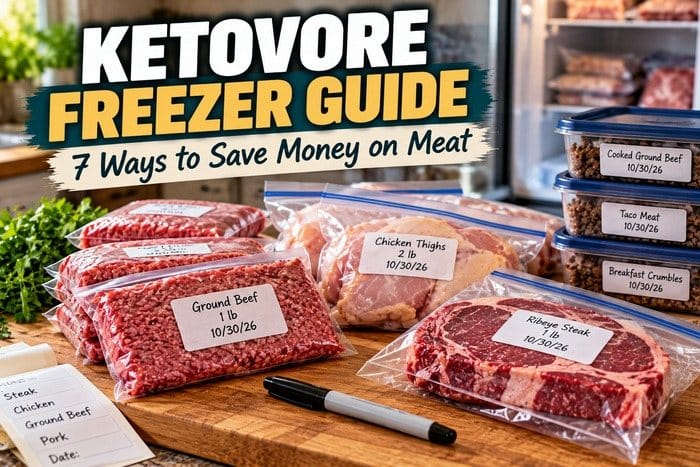
There’s something I think deserves more attention when people talk about eating ketovore. The freezer. Seriously. We spend plenty of time discussing which foods to eat, how many carbohydrates to avoid, and whether a ribeye is better than a sirloin. But one of the most useful tools for keeping ketovore affordable is probably sitting in your kitchen right now.
And it’s not your air fryer. It’s your freezer. Think about it. You find ground beef on sale. Chicken thighs are marked down. There’s a great price on a chuck roast. You buy everything. Then you get home and realize you’ve purchased enough meat to feed a small football team. That’s where having a plan makes all the difference. Here are seven practical ways to use your freezer to save money, reduce food waste, and make ketovore meals easier throughout the week.
1. Buy Meat When the Price Is Right, Not Just When You’re Hungry
One of the biggest advantages of having freezer space is that you don’t have to buy every ingredient the day you plan to cook it. You can shop based on price. For example, suppose ground beef normally costs $4.99 per pound, but your grocery store offers it for $3.49. That’s a savings of $1.50 per pound. Buy five pounds, and you’ve saved $7.50 compared with the regular price. That’s not going to fund your retirement.
But repeat that strategy across several grocery trips, and the savings can become meaningful. I’ve discussed watching for discounted meat in My Simple Ketovore Grocery List—and How I Save Money on Meat. The important part is having somewhere to store those bargains. A freezer lets you take advantage of a good price without needing to eat five pounds of hamburger before Thursday. Just remember that discounted meat still needs proper handling. Buy from reputable stores, check packaging and dates, refrigerate promptly, and freeze it within the recommended storage period.
2. Divide Large Packages Before Freezing
Here’s a common mistake. You buy a five-pound package of ground beef. You put the entire package in the freezer. Two weeks later, you want to make two hamburger patties. Congratulations. You now have a five-pound frozen brick. Unless you’re planning to feed the neighborhood, that’s probably more meat than you need.
A Better Approach
Before freezing, divide meat into portions that match your typical meals. For example, five pounds of ground beef could become five one-pound packages. Or you might make ten half-pound packages. The right amount depends on how many people you’re feeding and your preferred serving sizes.
Use freezer-safe bags or containers, remove excess air, and seal everything securely. Smaller, flatter packages also tend to thaw more conveniently than large, thick blocks. A few extra minutes after grocery shopping can save considerable frustration later.
3. Label Everything Before It Goes Into the Freezer
This might sound ridiculously obvious. But frozen meat has a remarkable ability to become unrecognizable. Is that ground beef? Pork? Leftover pot roast? Something purchased during the previous presidential administration? Nobody knows. That’s why every package should have three things written on it: What it is. How much it contains. When it was frozen.
For example: Ground Beef — 1 Pound — October 30, 2026
That’s all you need. You don’t need a complicated inventory system. A permanent marker and a few freezer labels work perfectly well. And if you want to be particularly organized, keep a simple list on your refrigerator showing what’s available. The goal is to use what you’ve already purchased before buying more. Because saving money on meat doesn’t accomplish much if half of it disappears into the frozen wilderness.
4. Know How Long Frozen Meat Keeps Its Quality
Here’s something worth understanding. Freezing doesn’t make food better. It preserves food that was handled safely. According to FoodSafety.gov’s Cold Food Storage Chart, meat kept continuously frozen at 0°F or below can remain safe indefinitely, but quality can decline over time.
For best quality, the recommended freezer storage periods vary by product.
| Food | Recommended Freezer Time for Quality |
|---|---|
| Raw ground beef | 3–4 months |
| Raw steaks | 4–12 months |
| Raw roasts | 4–12 months |
| Raw chicken pieces | About 9 months |
| Cooked meat leftovers | Generally 2–6 months, depending on preparation |
These are quality guidelines, not automatic expiration dates.
Freezer burn, for example, can affect flavor and texture without necessarily making properly frozen food unsafe. The practical lesson? Buy meat you expect to use, package it properly, and rotate your inventory. Put newer purchases behind older packages. That way, you’re using the meat that’s been frozen longest instead of continually burying it beneath new groceries. Your freezer should be a storage system. Not an archaeological excavation.
5. Cook Extra Meat and Freeze Ready-to-Eat Portions
Here’s where freezer planning becomes especially useful. You don’t always have to freeze raw meat. You can also cook extra portions and freeze them for future meals. Consider ground beef. Cook several pounds at once, dividing the finished meat into meal-sized portions.
Keep some simply seasoned. Add taco-style spices to another portion. Shape some raw beef into patties before freezing, or cook the patties thoroughly and freeze them separately. Now you’ve got the foundation for several different meals.
Three Easy Ketovore Meal Ideas
Ground Beef and Eggs
Reheat cooked ground beef thoroughly, then serve it with freshly prepared scrambled eggs.
Ketovore Taco Bowl
Warm seasoned ground beef and add cheese, avocado, lettuce, or salsa according to your preferences.
Bunless Cheeseburger Plate
Reheat fully cooked hamburger patties and serve with cheese and a low-carbohydrate side. The important thing is that most of the work has already been done. For more simple cooking ideas, see Ketovore Cooking Basics: Simple, Delicious Meals Without Complicated Recipes. When cooking ahead, refrigerate or freeze perishable food within two hours, using shallow containers to cool it quickly. Cooked meat generally keeps three to four days in the refrigerator. Ask FSIS
6. Learn to Thaw Meat Safely
There’s one freezer habit that deserves special attention. Thawing. Because leaving a package of frozen chicken on the kitchen counter all afternoon isn’t a good idea. The outside can reach temperatures that allow bacteria to grow while the center remains frozen. The USDA recommends three safe thawing methods.
Refrigerator Thawing
Move frozen meat into the refrigerator and allow sufficient time to thaw. This is generally the easiest method when you can plan ahead.
Cold-Water Thawing
Place meat in leakproof packaging and submerge it in cold water. Change the water every 30 minutes. Cook the meat immediately after thawing.
Microwave Thawing
Use your microwave’s defrost setting and follow its instructions. Cook immediately afterward because portions of the meat may begin warming during the process. Meat thawed safely in the refrigerator can generally be refrozen without cooking, although quality may decline. Meat thawed using cold water or the microwave should be cooked before refreezing. Ask FSIS
And don’t forget safe cooking temperatures. Ground beef should reach 160°F, poultry 165°F, and whole beef steaks 145°F followed by a three-minute rest. Ask FSIS A food thermometer is a worthwhile kitchen investment. It’s certainly cheaper than guessing wrong.
7. Build a Small Freezer Menu for Busy Days
Here’s my favorite part of this entire strategy. You don’t need a freezer containing fifty different meals. You just need a few dependable options. Think about the days when you’re busy, tired, or simply don’t feel like cooking. Those are the days when convenience becomes important. A freezer stocked with practical proteins gives you options.
Maybe you have hamburger patties ready. Maybe there’s a package of cooked chicken. Maybe you’ve got ground beef that can become dinner in ten minutes after reheating. The goal isn’t to create a gourmet restaurant in your kitchen. It’s to make ordinary meals easier.
A Simple Freezer Starting Plan
Consider preparing:
- Two packages of ground beef
- Two packages of chicken thighs
- One package of hamburger patties
- One package of cooked, portioned meat
That’s enough variety to provide several meal options without overwhelming your freezer. Adjust the quantities based on your household, available space, and how frequently you eat at home. For additional weekly planning ideas, see My Sunday Ketovore Reset: How I Prepare for a Better Week. A little preparation can make a big difference when your schedule gets complicated.
Bonus: Don’t Confuse Buying More With Saving More
There’s one final point worth making. Buying discounted meat only saves money if you actually use it. A ten-pound package isn’t necessarily a bargain if you don’t have freezer space or a realistic plan. And buying an expensive cut of steak at 20% off doesn’t automatically make it cheaper than ground beef at regular price.
Compare the price per pound. Consider how many meals you’ll get. Think about what you already have at home. And remember that freezer bags, electricity, and wasted food also have costs. The best bargain is food you enjoy, can afford, and will actually prepare.
Final Thoughts: Let Your Freezer Do Some of the Work
One thing I appreciate about ketovore is that meals don’t have to be complicated. Meat. Eggs. Fish. A few vegetables or other low-carbohydrate foods, depending on your approach. Simple ingredients can make satisfying meals. But simplicity becomes much easier when those ingredients are already available. That’s why I think freezer planning deserves a place in any practical ketovore routine. Buy meat when prices are reasonable.
Divide it into useful portions. Label everything. Store it safely. And keep a few dependable meal options available. You don’t need to spend every Sunday cooking for six hours. You don’t need twenty-seven matching containers. And you definitely don’t need a freezer so full that opening the door becomes a personal safety risk. You just need a system that works.
Because eating ketovore on a budget isn’t about finding the cheapest possible food. It’s about making smarter decisions with the food you already buy.
And sometimes, the smartest decision is putting tomorrow’s dinner in the freezer today.
Disclaimer: This article provides general food-storage and nutrition information, not individualized medical advice. Follow current food-safety recommendations and consult a qualified healthcare professional before making major dietary changes.

0 Comments