
Road trips have a way of testing even the best food intentions. You leave home feeling prepared. The car is packed, the route is set, and you’re ready to go. Then you stop for gas and find yourself surrounded by candy, chips, pastries, and a hot dog that may have been rotating since the previous presidential administration.
Eating ketovore on the road takes a little planning, but it doesn’t have to make your trip complicated. A cooler, a few convenient foods, and a general idea of where to stop can make the ride much easier.
Can You Eat Ketovore While Traveling?
Yes. A practical ketovore road trip plan can be as simple as packing a few foods you enjoy, keeping perishable items cold, and choosing meat, eggs, or other foods that fit your preferences when you stop to eat. You don’t have to bring your entire kitchen. You just need enough of a plan that the gas station doesn’t become your personal meal planner.
Start With the Length of Your Trip
Before packing, consider how long you’ll be away and whether you’ll have access to a refrigerator. A two-hour drive may require nothing more than water and a plan for your next meal. A full day on the road might call for a cooler and a couple of options. A longer trip could involve a combination of packed food, grocery stops, and restaurant meals.
Think through a few questions: How long will you be in the car? Will you want a full meal or just a convenient option? Will you have a cooler with enough ice or freezer packs? Are there restaurants or grocery stores along the route? Will your destination have a refrigerator? The answers don’t have to be complicated. A few minutes of planning can save you from making food decisions when you’re tired and hungry.
Ketovore Foods to Pack in a Cooler
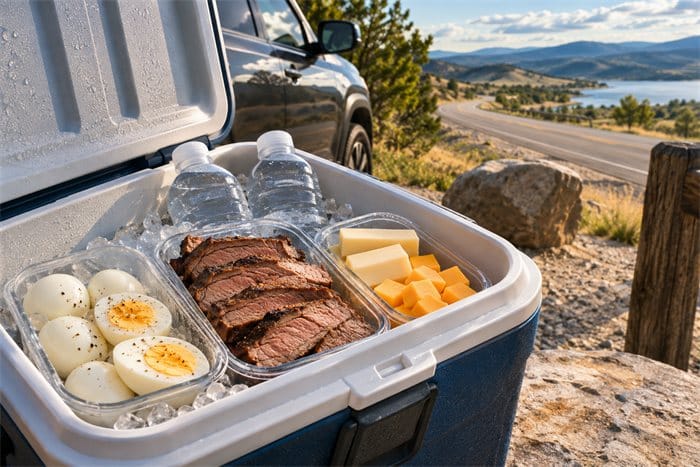
If you have a cooler that can keep food safely cold, you have quite a few options.
Cooked Meat
Cooked hamburger patties, sliced roast beef, chicken, or leftover steak can make an easy meal on the road. Pack portions in sealed containers so they’re easy to access without turning the passenger seat into a picnic table. If you prefer something you can eat without utensils, sliced meat or burger patties may be easier than a meal requiring a knife and fork.
Hard-Boiled Eggs
Eggs are simple, portable, and useful when you need something quick. Peel them in advance if that makes them easier to eat, and keep them refrigerated in your cooler. Pair them with meat if you want something more substantial.
Cheese
Cheese can be a convenient addition if you include dairy in your ketovore approach. Individual portions or slices are easy to pack, though it’s worth deciding how much you want before opening a large bag. After all, “a little cheese for the trip” and “where did the entire package go?” can happen surprisingly close together.
Water and Unsweetened Drinks
Pack enough water for the drive, especially if you’ll be away from regular stops. Unsweetened coffee or tea may also work if those are part of your routine. And remember: the most exciting beverage on a long road trip is sometimes the one that doesn’t spill on your pants.
Shelf-Stable Options for the Road
A few shelf-stable foods can be useful when you don’t have room in the cooler or need a backup. Depending on your preferences, consider: Shelf-stable beef sticks or jerky. Canned tuna, chicken, or sardines. Pork rinds. Individual packets of mustard or other preferred condiments. Nuts, if they fit your version of ketovore. Check the package instructions. Some products that are shelf-stable before opening need refrigeration afterward.
It’s also a good idea to read the nutrition label and ingredients. Jerky, meat sticks, and flavored products can contain added sugar, and serving sizes vary. A big package might contain more than one serving, even if the car ride makes it feel like one.
Keep Cold Foods Cold
Meat, cooked eggs, and other perishable foods need proper temperature control. A cooler alone isn’t enough if it can’t keep the contents cold throughout the trip. The FDA recommends keeping cold perishable food at 40°F or below, using ice or frozen gel packs. An appliance thermometer can help you check the cooler’s temperature. Keep cold food in the cooler until you’re ready to eat it. FDA
A few practical habits help: Pack perishable food straight from the refrigerator. Use plenty of ice or frozen gel packs. Keep food in sealed, watertight containers. Check the cooler temperature during the trip. Replenish ice as needed. For longer travel days, plan where you can replace ice or refrigerate your food at your destination. A warm car is not a food-storage strategy, even if the air conditioner is working hard.
Make a Plan for Restaurant Stops
You don’t have to pack every meal. Restaurants and fast-food stops can work with a little flexibility. Look for a protein you enjoy, then decide which sides or substitutions fit your preferences. Depending on the restaurant, that might mean: Burger patties without the bun. Eggs and bacon or sausage. Grilled chicken without a sweet sauce. A steak or meat entrée. A bowl built around meat and optional low-carb toppings.
Ask about breading, marinades, and sauces when the ingredients matter to you. Menus and preparation methods vary, so it’s okay to ask a question before ordering. For more examples, see the Ketovore Fast-Food Guide.
Don’t Turn Every Stop Into a Snack
Road trips can make eating feel like an activity. You stop for fuel, walk inside, buy something, and return to the car with a snack—even if you weren’t hungry when you arrived. If that sounds familiar, it may help to decide before entering the store what you’re actually looking for. Maybe you need water. Maybe you need a meal. Maybe you just need a restroom and five minutes outside the car.
Not every gas stop requires a souvenir from the snack aisle. At the same time, if you are hungry, having an appropriate option available can keep you from feeling like your only choices are a candy bar or nothing.
Keep the Plan Flexible
Travel rarely goes exactly as expected. Traffic backs up. Restaurants close. Someone in the car insists on a stop that wasn’t on the itinerary. The goal is not to create a perfect road-trip menu. It’s to make the next reasonable choice with what’s available. You might pack a cooler for the first half of the trip, stop for a bunless burger later, and shop for groceries after you arrive. That’s a perfectly workable plan.
For ideas to stock before you leave, read My Simple Ketovore Grocery List—and How I Save Money on Meat.
A Simple Ketovore Road Trip Checklist
Before you head out, consider packing:
- Water and your preferred unsweetened drinks
- One or two foods you know you enjoy
- A cooler with enough ice or freezer packs for perishables
- A cooler thermometer
- Containers, napkins, and utensils
- A general idea of where you might stop for a meal
You don’t need a color-coded binder or a spreadsheet for every mile. Though if that’s your style, I respect the commitment. A little preparation can help you spend less time negotiating with convenience-store food and more time enjoying the trip. And that’s a destination worth reaching.
This article is for general information and is not individualized medical advice. Dietary needs vary; consult a qualified healthcare professional about significant changes to your eating pattern.

0 Comments