
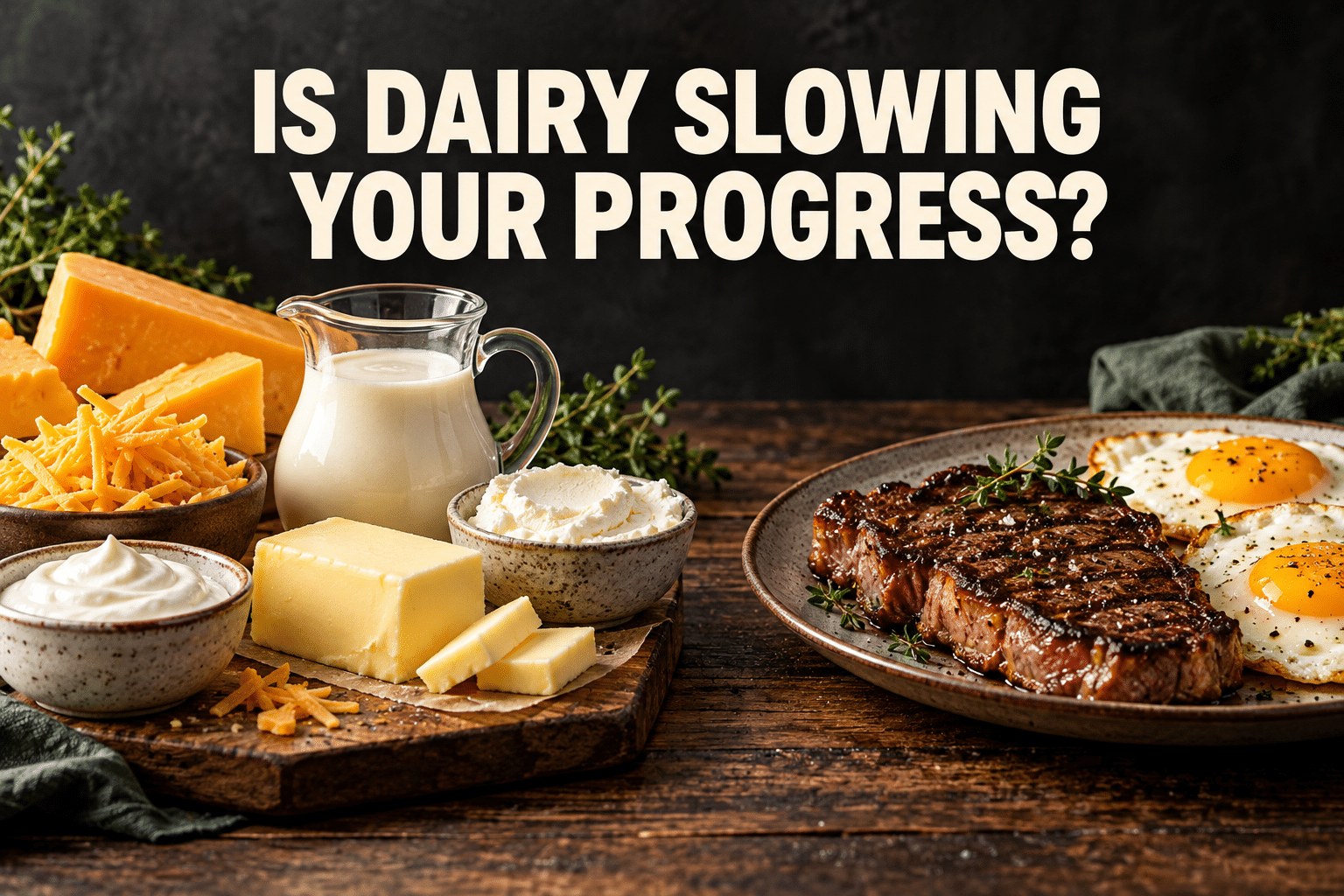
Dairy fits naturally into many ketovore diets. Butter goes on the steak. Cheese goes on the hamburger patties. Heavy cream goes into the coffee. Sour cream goes on the eggs. Then someone introduces us to cream cheese mixed with bacon, and suddenly dairy has acquired its own department in the refrigerator. Most dairy products are relatively low in carbohydrates, which makes them easy to include on keto and ketovore.
But low in carbohydrates does not necessarily mean unlimited. If your progress has slowed, hunger has increased or you are consuming more food than you realize, dairy may be one variable worth examining. That does not mean dairy is unhealthy, forbidden or responsible for every weight-loss plateau. Research does not support the blanket claim that consuming dairy automatically causes weight gain or prevents fat loss. Reviews of controlled trials have generally found that increasing dairy without other dietary changes does not produce a consistent, significant change in body weight.
The real question is more personal: Is the way I am eating dairy helping or hurting my goals?
Does Dairy Fit a Ketovore Diet?
For many people, yes. Ketovore usually begins with animal-based foods while allowing more flexibility than a strict carnivore diet. That flexibility may include: Butter, Ghee, Cheese, Heavy cream, Cream cheese, Sour cream, Cottage cheese & Plain Greek yogurt. These foods come from animals and can be relatively low in carbohydrates, depending on the product.
Strict carnivore eaters sometimes eliminate dairy entirely or limit it to butter and certain aged cheeses. Other people include dairy daily without noticing any problems. There is no single ketovore rule that works for everyone. My approach is to consider dairy an optional food—not the foundation of the diet. The foundation remains: Beef, Pork, Poultry, Fish, Seafood, & Eggs. Dairy can make those foods more enjoyable, but cheese should not quietly replace the meat.
How Dairy May Slow Your Progress
Dairy can create problems for some people for several different reasons.
1. Dairy Is Easy to Overeat
It takes effort to eat a large steak. You must cook it, cut it, chew it and eventually acknowledge that you are full. Cheese asks much less of us. It can be sliced, shredded, melted, rolled up, eaten directly from the refrigerator or added to nearly anything. A small amount can turn into a considerable amount without ever feeling like a separate meal.
The same problem can occur with: Heavy cream, Cream cheese, Sour cream, Whipped cream, Cheese-based dips, Keto desserts & Butter added to foods that were already satisfying.Dairy may be low in carbohydrates while still contributing substantial energy to the diet. The FDA reminds consumers that Nutrition Facts information normally applies to the stated serving size, while one container may hold multiple servings. That matters when “one serving” of cheese becomes four visits to the refrigerator.
What to Watch
Ask yourself: Am I eating cheese as part of a meal or throughout the day? Do I measure heavy cream, or do I pour until my ancestors tell me to stop? Am I hungry for meat, or am I looking for dairy snacks? Does adding dairy make me more satisfied or encourage me to keep eating? The carbohydrate count is only part of the picture.
2. Dairy Can Become a Snack Instead of a Meal
One reason ketovore works well for me is that meat simplifies eating. I can eat a substantial meat-based meal, feel satisfied and stop thinking about food for a while. Dairy can interfere with that simplicity when it becomes an all-day snack: Cheese while preparing dinner, Cream in several cups of coffee, A spoonful of cream cheese, A handful of shredded cheese, A keto dessert after the meal & More cheese while watching television. None of those moments may seem significant by itself. Together, they can create an entire extra meal that never appeared on a plate.
What to Do Instead
If you include dairy, attach it to a meal. For example: Cheese on hamburger patties, Butter on steak, Sour cream with eggs, Heavy cream in one planned cup of coffee, & Plain Greek yogurt as a deliberate part of a meal. Try to avoid grazing on dairy simply because it is convenient.
3. Dairy May Keep Sweet Cravings Alive
Plain cheese and butter are not especially sweet, but dairy is a major ingredient in many keto desserts: Keto cheesecake, Sugar-free ice cream, Whipped cream, Cream cheese fat bombs, Sweetened yogurt, Keto pudding & Flavored coffee drinks. These foods may fit a carbohydrate target, but they can keep the habit of needing dessert after every meal. For some people, a low-carbohydrate dessert is a useful substitute that prevents a higher-carbohydrate choice. For others, it keeps the dessert conversation going indefinitely.
Ask the Useful Question
Instead of asking only, “Is this keto?” ask: Does this food make it easier or harder for me to stop eating? That answer may tell you more than the front of the package.
4. Milk and Some Dairy Products Contain More Carbohydrates
Not all dairy products have the same carbohydrate content. Milk contains lactose, which is a naturally occurring sugar. Sweetened yogurt, flavored coffee creamers and dairy desserts can contain both lactose and added sugar. Products worth checking carefully include: Regular milk, Flavored milk, Sweetened yogurt, Coffee creamer, Condensed milk, Ice cream, Processed cheese products, Cheese sauces & Flavored cottage cheese. The Nutrition Facts label lists total carbohydrates, total sugars and added sugars. Read the label instead of assuming every dairy product is automatically low-carb.
5. You May Not Tolerate Lactose Well
Lactose intolerance is different from a milk allergy. Lactose intolerance occurs when the body has difficulty digesting lactose, the natural sugar found in milk and dairy products. Possible symptoms include: Bloating, Gas, Diarrhea, Nausea, & Abdominal discomfort. A milk allergy involves an immune response to proteins in milk and can be more serious. People tolerate different amounts and types of dairy. Someone may have difficulty with milk but tolerate butter or aged cheese better.
NIDDK notes that many people with lactose intolerance can consume at least some lactose without symptoms, so complete dairy elimination is not always necessary. Persistent or severe symptoms deserve medical attention because several digestive conditions can cause similar problems.
6. Dairy Can Displace More Satisfying Foods
A plate containing steak, eggs and a little cheese is still centered on protein. A meal consisting primarily of cheese, cream and a keto dessert is something different. Dairy becomes a problem when it crowds out the foods that were supposed to form the foundation of the meal.
Compare:
Option 1
-
Two hamburger patties
-
Two eggs
-
A slice of cheese
Option 2
-
Cheese cubes
-
A cream cheese dip
-
Coffee with heavy cream
-
A keto cheesecake serving
Both meals may be relatively low in carbohydrates. The first places meat and eggs at the center. The second is closer to an indoor dairy festival. Ketovore usually works better for me when I eat meat first and treat dairy as an addition.
Which Dairy Products Are Most Likely to Cause Trouble?
The answer depends on why dairy is creating a problem.
Cheese
Cheese is low in carbohydrates and can make simple meals more enjoyable. It is also easy to snack on without noticing how much has been consumed. Cheese may deserve examination if: You eat it between meals, You add it to everything automatically, It triggers more eating, You are relying on it instead of meat, & You have stopped making progress.
Heavy Cream
Heavy cream can fit ketovore, but pouring is not measuring. One cup of coffee becomes two or three, and each receives another generous pour. The cream may contribute more than expected before the first meal even begins. If coffee is becoming a dairy delivery system, measure the amount for several days and see what you are actually using.
Butter
Butter can improve flavor and make lean meat more satisfying. However, foods such as ribeye, bacon, ground beef and chicken thighs already contain fat. Additional butter is optional. Use it intentionally rather than assuming every ketovore meal requires a yellow swimming pool.
Cream Cheese and Sour Cream
These foods are easy to combine with other ingredients and turn into dips, sauces and desserts. The issue is often not a single serving. It is how easily they encourage repeated eating.
Plain Greek Yogurt and Cottage Cheese
These foods can provide protein, but carbohydrate amounts vary among brands and products. Flavored versions may contain significant added sugar. Read the label, check the serving size and choose products based on your individual carbohydrate target.
Milk
Regular milk usually contains more carbohydrates than butter, heavy cream or aged cheese because of its lactose content. If carbohydrates are being kept very low, milk may be more difficult to include in large amounts.
Signs Dairy May Be Worth Testing
Dairy is not automatically responsible for every frustrating week. However, a dairy experiment may be useful if: Weight loss has stalled for several weeks, Cheese has become a frequent snack, Heavy cream is used throughout the day, You experience bloating, gas or digestive discomfort, Dairy increases your cravings, You are eating less meat because dairy is more convenient, Keto desserts have become a daily routine, You rarely feel finished after eating dairy, Your meals have become increasingly complicated, You are unsure how much dairy you consume & A short experiment can provide more useful information than arguing about cheese online.
How to Try a Dairy Elimination Experiment
If you suspect dairy may be affecting your progress, try removing it for two to four weeks. This is not a punishment or a declaration that dairy is bad. It is a structured way to test your individual response.
Step 1: Record Your Starting Point
Before changing anything, note: Weight, Waist measurement, Hunger, Cravings, Digestion, Energy, Skin changes, Typical meal frequency & How much dairy you currently consume.
You need a starting point if you want the experiment to teach you anything.
Step 2: Decide What You Are Removing
A full dairy-free experiment would remove: Cheese, Milk, Heavy cream, Sour cream, Cream cheese, Yogurt, Cottage cheese, Butter & Dairy-based keto desserts. Some people prefer to remove everything except butter or ghee.
Choose the version you intend to test and remain consistent.
Step 3: Replace Dairy With Real Food
Do not remove dairy and replace it with hunger. Instead, build meals around: Beef, Pork, Chicken, Turkey, Fish, Seafood, Eggs, Tallow, Lard, Bacon grease, & Olive oil or avocado oil, if included in your approach.
The experiment should remain satisfying.
Step 4: Keep Other Variables Steady
Avoid changing five things simultaneously. If you eliminate dairy while beginning an extended fast, doubling your exercise and removing all caffeine, you will not know which change produced the result.
Keep the rest of your routine reasonably consistent.
Step 5: Evaluate the Results
At the end of the experiment, ask: Did hunger improve? Did cravings decrease? Did digestion change? Did weight or waist measurements change? Did meals become easier or harder? Did I miss dairy itself or merely the convenience? Do I feel better without it? The answer may be dramatic, subtle or nonexistent. All three outcomes provide useful information.
How to Reintroduce Dairy
If you feel better without dairy but want to know which products you tolerate, reintroduce them one at a time. For example: Try butter for several days. Add an aged cheese. Test sour cream. Test heavy cream. Test yogurt or cottage cheese. Do not reintroduce five dairy foods during one giant cheese celebration. That makes it difficult to identify which product caused a reaction.
Track your hunger, digestion and cravings after each addition. You may discover that butter works well, cheese encourages overeating and heavy cream turns coffee into an all-morning meal. That would allow you to create a more personalized plan without eliminating everything permanently.
My Practical Dairy Rules
I do not think everyone needs to avoid dairy. I do think dairy needs boundaries. These rules keep it from quietly taking over:
Meat Comes First
I build the meal around meat or eggs before deciding whether dairy belongs on the plate.
Dairy Belongs With Meals
I try not to turn cheese into an all-day snack.
Portions Still Count
Low carbohydrate does not mean unlimited.
Sweet Dairy Is Still Dessert
A keto cheesecake may contain fewer carbohydrates than traditional cheesecake. It is still dessert—not the foundation of dinner.
Results Decide
If dairy fits my carbohydrate target, controls hunger and does not interfere with progress, it may remain in the plan. If it increases cravings, digestive trouble or overeating, it deserves another look.
Dairy Is a Tool, Not a Requirement
Dairy can make ketovore easier, more enjoyable and more sustainable. It can also become a source of hidden eating that slows progress without appearing to violate any keto rules. That is what makes dairy tricky. The question is not whether cheese is good or evil. Cheese has not formed a conspiracy against us. The question is whether our use of dairy supports the results we want. If progress is going well, hunger is controlled and digestion feels normal, there may be no reason to change anything.
If progress has stalled, begin by honestly evaluating: Cheese portions, Heavy cream in coffee, Keto desserts, Between-meal snacking, Whether dairy has displaced meat, & Then run a simple experiment. Remove it temporarily, observe what happens and reintroduce individual foods if desired.
Ketovore is not about following the most restrictive version possible. It is about finding the simplest version that produces good results and remains sustainable. For some people, that version includes cheese. For others, cheese may need to visit only on special occasions—and stop bringing all of its delicious friends.
Continue Exploring Ketovore
Disclaimer: This article is for general educational purposes and reflects personal opinions and experiences. It is not medical advice. Consult a qualified healthcare professional if you experience persistent digestive symptoms or before making significant dietary changes, particularly if you have a medical condition, food allergy or take prescription medication.

0 Comments