
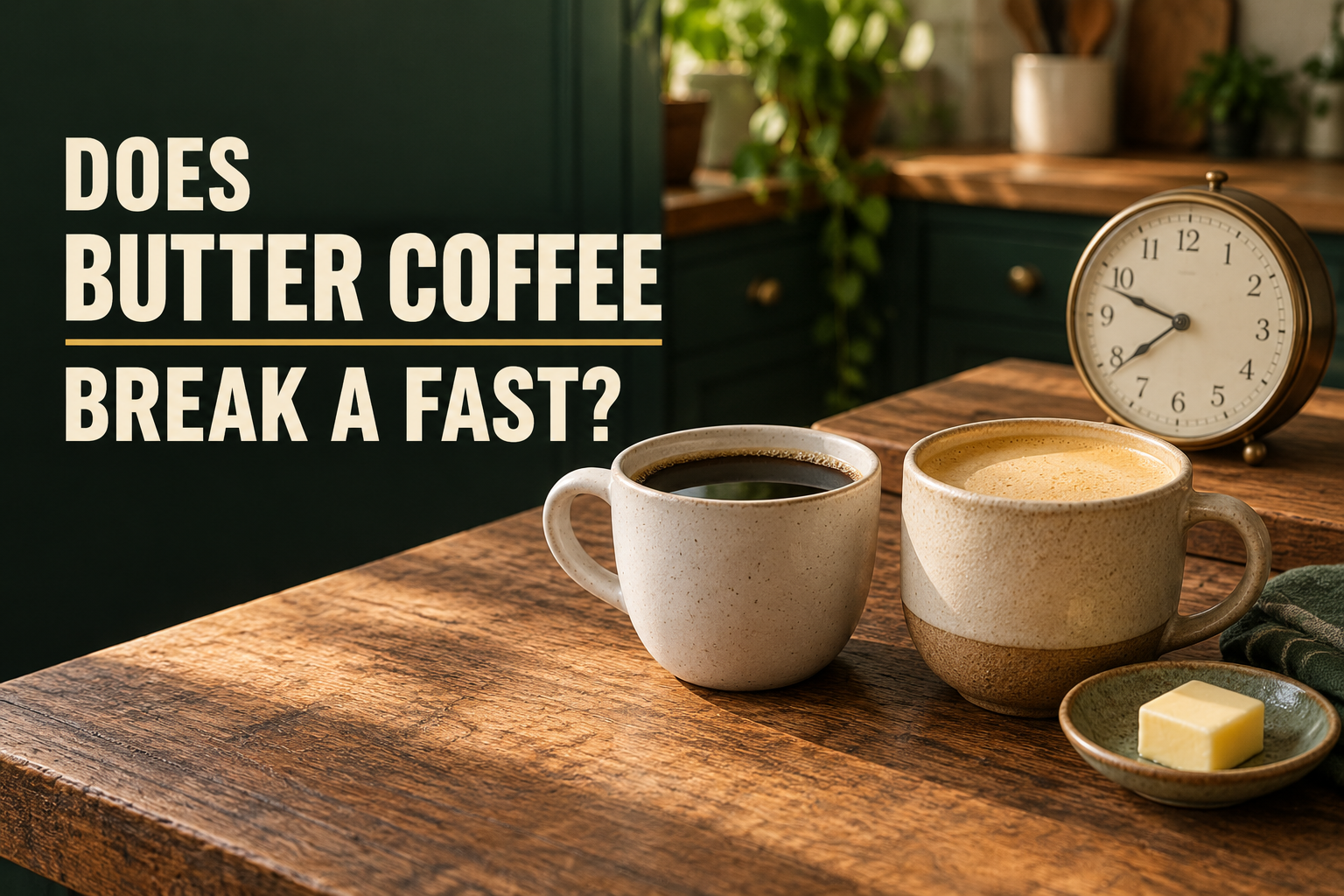
Yesterday, I wrote about what actually counts as a fast. My simple definition was this: A strict fast is a period during which I consume no calories. That definition creates a slight problem for me because every morning I drink coffee with butter. It helps control my appetite. It makes my morning routine easier. It often allows me to wait until later in the day before eating a solid meal. But does my butter coffee break my fast? The honest answer is yes.
Butter Coffee Contains Calories
Plain black coffee contains very few calories. That is why black coffee, plain tea, and water are commonly allowed during an intermittent fast. Johns Hopkins Medicine lists water and zero-calorie beverages such as black coffee and tea as acceptable choices during the fasting window. Butter is different. Butter contains fat and calories. Once I put it in my coffee and drink it, I am consuming energy. Under the strict definition we established yesterday, that ends my fast. It doesn’t matter that the drink contains almost no carbohydrates. It doesn’t matter that the calories come primarily from fat. Calories are still entering my body.
I can call it breakfast in a mug, a modified fast, or my morning ketovore routine, but I cannot honestly call it a clean fast. Apparently, putting it in a Mickey Mouse mug does not create a nutritional loophole.
Is My Coffee Really “Bulletproof Coffee”?
Technically, what I drink is better described as butter coffee or bulletproof-style coffee. The traditional Bulletproof Coffee recipe includes coffee, butter or ghee, and MCT oil. My version is simpler: coffee and butter. I don’t add sugar, flavored creamer, syrup, or MCT oil. I blend butter into my coffee because I enjoy the taste and find it satisfying.
Cleveland Clinic notes that adding butter and oil substantially increases the calories in an otherwise nearly calorie-free cup of black coffee. The exact number depends on the ingredients and amounts used. My version may contain fewer calories than a traditional recipe with both butter and MCT oil, but “fewer calories” is not the same thing as “no calories.”
Does Butter Coffee Knock Me Out of Ketosis?
Not necessarily—but fasting and ketosis are not interchangeable. Butter is mostly fat and contains very little carbohydrate. Depending on the rest of my diet and my individual response, butter coffee may still fit within a ketogenic or ketovore eating plan. That means I could potentially remain in ketosis after drinking it. However, remaining in ketosis does not mean I am still fasting. I can eat a steak and remain low-carb, but the steak clearly ends my fast. Butter coffee operates on the same basic principle. The absence of carbohydrates does not turn calories into invisible calories.
Here is the distinction:
- Fasting describes whether I am consuming calories.
- Ketosis describes how my body is producing and using energy.
- Ketovore describes the types of food I generally choose to eat.
Those ideas can overlap, but they do not mean the same thing.
Why Do I Drink It If It Breaks My Fast?
Because my goal is not always to complete the purest possible fast. My larger goal is to follow a ketovore lifestyle consistently, control unnecessary snacking, and continue losing weight without feeling like I am fighting myself all day. Butter coffee helps me do that. When I drink it in the morning, I usually feel more satisfied than I would with black coffee alone. That makes it easier for me to avoid breakfast foods, office snacks, and random eating before my planned meal.
For me, it works as a bridge to OMAD. No, I am not fasting in the strictest sense. But I am still postponing solid food, limiting my eating opportunities, and avoiding a traditional high-carbohydrate breakfast. That can be a useful trade. A technically perfect plan that I cannot maintain is not automatically better than a slightly modified plan that keeps me consistent.
Butter Coffee Is Not Free
This is where I have to be careful. Because I drink the coffee rather than eat it from a plate, it would be easy to ignore the butter’s calories. But my body does not ignore calories simply because they arrive through a coffee mug. If butter coffee replaces breakfast and helps me eat less later, it may support my overall plan. If I drink butter coffee and then eat the same breakfast, lunch, dinner, and snacks I would have eaten anyway, I have simply added calories to my day.
That is not a fasting strategy. That is accessorizing. My butter coffee has to serve a purpose. It should reduce hunger, replace another eating occasion, or make my ketovore routine easier to follow. If it becomes an extra source of fat without changing anything else, it may slow my progress. Ketovore foods can still be overeaten. Butter does not receive diplomatic immunity just because it contains no sugar.
What About Saturated Fat?
Butter is high in saturated fat, so the amount matters—especially when it becomes a daily habit. Cleveland Clinic cautions that butter coffee can be high in calories and saturated fat while providing relatively little protein, fiber, or other nutrition. People with high cholesterol, heart disease, diabetes, gastrointestinal problems, or other medical concerns should discuss the practice with a qualified healthcare professional.
This does not mean one cup of butter coffee automatically destroys a healthy diet. It means I should pay attention to the complete picture:
- How much butter am I using?
- What else am I eating during the day?
- Am I getting enough protein and nutrients?
- How are my weight and health markers responding?
- Is the coffee replacing food or merely adding calories?
Those questions are more useful than blindly labeling something “keto” and assuming unlimited amounts must be healthy.
When Would Black Coffee Be Better?
Black coffee would be the better choice when my primary goal is completing a strict, calorie-free fast. For example, I would choose black coffee if I wanted to:
- Measure the exact length of my clean fasting window.
- Avoid all calories until my first meal.
- Follow a medical fasting instruction.
- Determine whether the butter has been slowing my progress.
- Test whether I actually need the added fat to control hunger.
If a doctor orders fasting for bloodwork, surgery, or another medical procedure, I would follow those specific instructions rather than assuming ordinary intermittent-fasting rules apply. Medical fasting is not the moment to improvise a coffee recipe.
Is This a “Dirty Fast”?
Some people call consuming a small number of calories during the fasting window a dirty fast. The term can be useful in casual conversation, but it is not a perfectly standardized medical definition. One person may use it for a splash of cream, while another may use it for a much larger amount of fat.
I would rather describe exactly what I am doing: I am delaying solid food and following a ketovore routine, but my butter coffee ends my strict fast. That may be less exciting than inventing a special fasting category, but it is more honest.
My Personal Conclusion
Yes, my butter coffee breaks my fast. I’m not going to twist the definition until I get the answer I want. Butter contains calories, and consuming calories means I am no longer strictly fasting. That doesn’t mean I have to stop drinking it. My morning coffee can still help control my appetite, support my low-carbohydrate eating plan, and make OMAD easier. I simply need to recognize it for what it is: a small, high-fat meal rather than a calorie-free beverage.
I also need to remember that the butter counts. If my weight loss stalls, my morning coffee is one of the places I should look before blaming my metabolism, the bathroom scale, or an international carbohydrate conspiracy. The best description of my current routine is probably this: I’m not completing a clean fast, but I am using butter coffee as a practical bridge to my main ketovore meal.
That distinction matters. Honesty about what I am consuming gives me the information I need to adjust my plan when necessary. And ultimately, I am more interested in making steady progress than winning an argument over fasting terminology.

0 Comments