
There’s something about a bathroom scale that gives it entirely too much power over our lives. You wake up. You go to the bathroom. You step on the scale. And suddenly, a little digital number gets to decide whether you’re having a good morning.
Down two pounds? Wonderful! Life is beautiful! Up one pound? Apparently, everything you’ve been doing is wrong. But here’s something I’ve learned about trying to improve eating habits.
The scale doesn’t tell the whole story.
Body weight can fluctuate because of water retention, digestion, sodium intake, and several other factors that have very little to do with actual changes in body fat. And when you’re eating ketovore, especially during the early stages of carbohydrate restriction, those fluctuations can become even more noticeable.
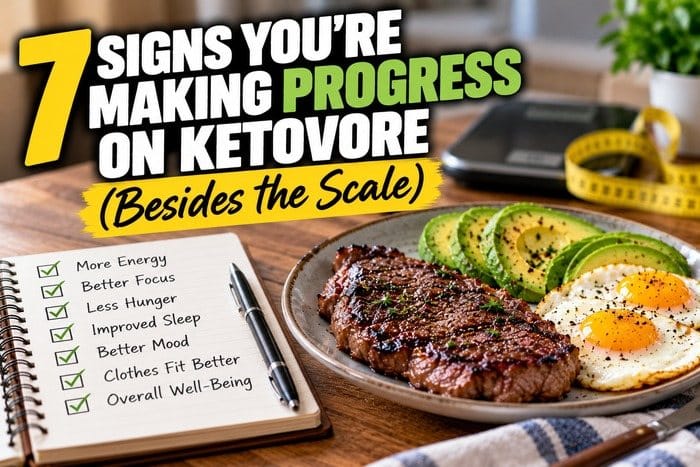
That’s why I think it’s important to look at progress from several different angles. Here are seven signs worth paying attention to, even when the scale isn’t cooperating.
1. Your Clothes Are Fitting Differently
Let’s start with one of the most practical measurements available. Your pants. Seriously. Sometimes the scale hasn’t moved much, but your waistband feels a little looser. Or a shirt that used to fit tightly suddenly feels more comfortable. That can be encouraging.
Body weight doesn’t always reflect changes in body composition. For example, resistance training may help preserve or increase muscle while fat mass changes. Of course, clothing fit isn’t a precise medical measurement. But it’s another piece of information. You might even consider measuring your waist once every few weeks, using the same method each time. Just don’t measure it six times a day. Your waistline deserves a little privacy.
2. You’re Getting Better at Recognizing Hunger
One of the challenges with eating is figuring out when we’re actually hungry. Sometimes we eat because we’re bored. Sometimes because we’re stressed. Sometimes because it’s noon and the clock says lunch should happen. And sometimes because someone put a plate of cookies in the conference room. A useful sign of progress is becoming more aware of your hunger and fullness cues.
Maybe you’re learning to distinguish between wanting a snack and needing a meal. Maybe you’re becoming more comfortable stopping when you’re satisfied. Or perhaps you’re getting better at planning meals so you don’t arrive at dinner excessively hungry. These are valuable behavioral changes. They don’t prove that a particular diet is working metabolically, but they can support a more intentional relationship with food. And that matters.
3. Your Energy Feels More Consistent
Energy is another area worth observing. Some people report changes in their energy levels after modifying their diets. But experiences vary considerably. Reducing carbohydrates doesn’t guarantee that you’ll suddenly have endless energy. In fact, some people experience fatigue, headaches, or reduced exercise performance when they first make substantial dietary changes.
That’s why the important question isn’t whether you feel amazing every hour. It’s whether your overall routine supports normal daily activities. Are you able to get through the afternoon without feeling unusually exhausted? Do you have enough energy for exercise? Are you recovering reasonably well? If the answers are improving, that’s worth noting. But persistent fatigue, weakness, or dizziness shouldn’t be celebrated as evidence that a diet is working. Those symptoms deserve attention, particularly if you’re fasting or restricting food intake.
4. You’re Getting Stronger or Maintaining Muscle
Here’s something I think deserves more attention during weight loss. Muscle. When people focus exclusively on losing pounds, they sometimes overlook the importance of maintaining strength. But muscle plays an important role in physical function, mobility, and long-term health. If you’re exercising regularly, consider tracking what you’re able to do.
Can you lift a little more weight? Complete another repetition? Walk farther without getting tired? Recover better between workouts? Those changes can be meaningful. Protein intake and resistance training both play important roles in supporting muscle maintenance. A ketovore approach may provide substantial protein, but the actual amount depends on what and how much you’re eating. The goal shouldn’t simply be getting smaller. It should also include staying strong and functional. After all, I’d rather be able to carry the groceries than simply admire how much less I weigh.
5. You’re Making Better Food Decisions Automatically
This might be one of my favorite signs of progress. A decision that once required considerable effort starts becoming routine. Maybe you automatically check a nutrition label before buying an unfamiliar product. Maybe you look for protein first when choosing a restaurant meal. Maybe you keep convenient food available instead of waiting until you’re starving. These are habits. And habits can be powerful because they reduce the amount of daily effort required to maintain a routine.
I’ve discussed the importance of recognizing portion sizes in The Ketovore Mistake I Keep Making: Eating Too Much of the Right Foods. Knowing which foods fit your plan is useful. Learning how much food you actually need is another important skill. And when those decisions become easier, that’s progress worth recognizing.
6. You’re Sleeping Better and Recovering Well
Sleep is an important part of overall health and weight management. Adults generally need at least seven hours of sleep each night, although individual needs vary. Poor sleep can affect appetite regulation, mood, concentration, and physical performance. So it’s worth paying attention to how you’re sleeping as you make lifestyle changes.
Are you keeping a more consistent bedtime? Waking up feeling rested? Recovering better after exercise? Those can be positive developments. However, better sleep isn’t a guaranteed result of eating ketovore. Dietary restriction, late caffeine consumption, hunger, and other factors can sometimes make sleep worse. Think of sleep as one of several health indicators to monitor, not proof that you’ve entered some special metabolic state. And remember, staying up until midnight researching the perfect diet probably isn’t helping your sleep schedule.
7. You’re Becoming More Consistent Without Expecting Perfection
This may be the biggest sign of progress of all. Consistency. Not perfection. Consistency. Think about the difference. Perfection says you must follow every rule every day. Consistency says you make reasonable choices repeatedly, even when life gets complicated.
Perfection says one unexpected meal ruins your week. Consistency says the next meal is another opportunity. Perfection turns eating into a test. Consistency turns it into a routine. I’ve written about this in I Broke Keto—Now What? My Simple Next-Meal Keto Reset.
One decision doesn’t define your entire journey. What matters more is the pattern you’re developing over time. If you’re getting better at returning to your normal routine after an unexpected meal, that’s a meaningful behavioral improvement. And it might be more valuable than any particular number on the scale.
A Simple Weekly Ketovore Progress Check-In
Here’s an idea. Instead of judging your entire week based on one weigh-in, spend a few minutes reviewing several areas of your life. Ask yourself: Did I make food choices that supported my goals? Did I eat enough protein and a reasonable variety of nutritious foods? Did I move my body regularly? How was my energy throughout the week? Did I sleep adequately? Am I maintaining or improving my strength? Did I respond constructively when things didn’t go as planned? You don’t need a complicated spreadsheet.
A few notes in your phone or a small notebook can work. The purpose isn’t to create seven additional things to obsess over. It’s to recognize patterns that one measurement might miss. If you enjoy tracking weight, that’s fine too. Just consider looking at longer-term trends rather than individual daily fluctuations.
What If You’re Not Seeing Any Progress?
There’s another side to this conversation. Sometimes people aren’t seeing improvements in weight, energy, strength, or other meaningful measures. And that’s worth taking seriously. It doesn’t automatically mean you’re failing. But it may mean your current approach needs adjustment. You might need to reconsider your total food intake, protein, physical activity, sleep, or whether the diet is nutritionally adequate.
Medical conditions and medications can also affect weight and energy. If you’re experiencing persistent symptoms or unexplained changes, consult a qualified healthcare professional. The objective isn’t to defend a diet at all costs. It’s to find an approach that supports your health.
Final Thoughts: Don’t Let One Number Define Your Journey
I understand why the scale gets so much attention. It’s simple. It’s measurable. And it gives us a number we can compare with yesterday. But real progress is often more complicated. It can involve changes in strength, habits, clothing fit, sleep, energy, and how we respond to everyday challenges.
Not every improvement will happen at once. And not every improvement can be attributed directly to eating ketovore. But that doesn’t make those changes unimportant. So the next time you step on the scale and the number isn’t what you hoped to see, remember something. It’s one measurement. Not your entire story.
Keep paying attention to the bigger picture. Make thoughtful adjustments when needed. And celebrate the habits that are helping you build a healthier, more sustainable lifestyle. Because sometimes the biggest victory isn’t losing another pound.
It’s becoming the kind of person who can maintain better habits long after the excitement of starting a new diet wears off. And that’s something worth celebrating.
Disclaimer: This article provides general nutrition and wellness information, not individualized medical advice. Restrictive diets may not be appropriate for everyone. Consult a qualified healthcare professional before making significant dietary changes, especially if you have a medical condition or take prescription medications.

0 Comments