
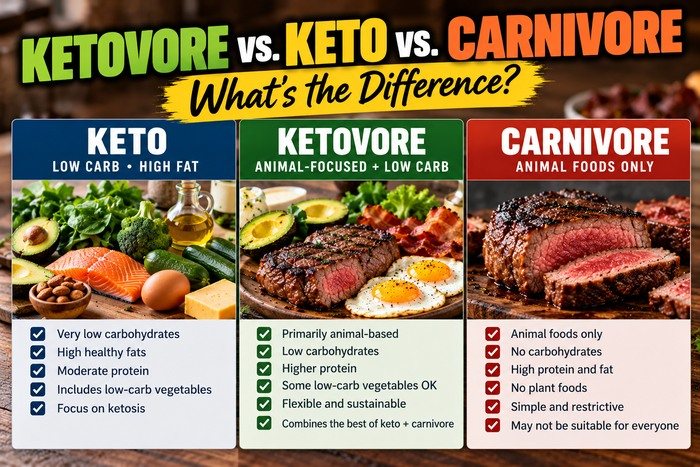
If you’ve spent more than five minutes researching low-carb eating, you’ve probably run into three words. Keto. Carnivore. Ketovore. And if you’re new to all of this, you might reasonably wonder whether they’re three different diets or three different names for eating steak.
The answer is that they’re related, but they’re not the same. Keto generally focuses on restricting carbohydrates enough to encourage nutritional ketosis. Carnivore focuses on eating animal-derived foods while excluding most or all plant foods. Ketovore sits somewhere between the two, emphasizing animal-based meals while allowing some low-carbohydrate plant foods. At least, that’s the general idea.
There’s no official rulebook for ketovore, which means people use the term somewhat differently. Let’s sort through the differences without making things more complicated than they need to be.
What Is the Keto Diet?
The ketogenic diet, usually called keto, is a very-low-carbohydrate, high-fat eating pattern. The idea is to reduce carbohydrate intake enough that the body increases production of ketones, which can be used as an alternative fuel source. This metabolic state is called nutritional ketosis. Many popular keto plans limit carbohydrates to roughly 20–50 grams per day, although individual responses vary.
What Can You Eat on Keto?
Common choices include: Meat, poultry, and fish; Eggs, Avocado and olives, Non-starchy vegetables, Nuts and seeds, Cheese and some other dairy products, & Oils and other fats. Keto isn’t necessarily a meat-heavy diet. Someone could follow a vegetarian ketogenic diet using eggs, dairy, tofu, nuts, and low-carbohydrate vegetables. The defining feature is carbohydrate restriction, not the amount of steak on the plate.
What’s the Challenge?
Keto requires paying attention to carbohydrates, including those in sauces, drinks, packaged foods, and seemingly innocent snacks. It can also become unnecessarily complicated when every meal involves calculating percentages and searching for specialty products. You don’t need a $9 package of keto cookies to eat fewer carbohydrates.
Sometimes dinner can just be chicken and broccoli.
What Is the Carnivore Diet?
Carnivore is a much more restrictive approach.
It generally centers on animal-derived foods and excludes plant foods.
What Can You Eat on Carnivore?
Depending on the version, foods may include: Beef, lamb, pork, and poultry; Fish and seafood, Eggs, Animal fats & Some dairy products. Strict versions exclude vegetables, fruit, grains, beans, nuts, and seeds. Some people eat primarily beef, salt, and water. Others include a wider range of animal foods.
What’s the Challenge?
The biggest concern is how restrictive the diet becomes. Excluding entire food groups can make it difficult to obtain adequate fiber and certain vitamins and minerals. It can also make restaurants, family meals, travel, and grocery shopping more challenging. Research on the long-term health effects of strict carnivore diets remains limited.
That means claims that carnivore cures chronic illnesses or is universally healthier than other eating patterns aren’t supported by strong long-term evidence. Animal foods can be nutritious, but a diet consisting exclusively of them deserves careful consideration.
What Is Ketovore?
Ketovore is the middle ground many people are looking for. It generally emphasizes animal-based foods while allowing selected low-carbohydrate plant foods. Think of a plate built around steak, chicken, eggs, or fish, with an optional serving of avocado, leafy greens, mushrooms, or another lower-carbohydrate vegetable. That’s a common ketovore-style meal.
What Can You Eat on Ketovore?
Examples include:
- Beef, chicken, pork, and seafood
- Eggs
- Some dairy products
- Avocado
- Leafy greens
- Broccoli and asparagus
- Mushrooms
- Other low-carbohydrate foods, depending on preference
The important distinction is that ketovore isn’t a standardized medical diet. There’s no universally accepted carbohydrate limit, food list, or required percentage of animal foods. One person might eat almost entirely meat and eggs. Another might include vegetables at most meals. Both may describe themselves as ketovore. That’s why it helps to explain what you actually eat instead of assuming everyone uses the label the same way.
Ketovore vs. Keto vs. Carnivore: Side-by-Side Comparison
| Feature | Keto | Ketovore | Carnivore |
|---|---|---|---|
| Main focus | Very low carbohydrate intake | Animal-centered, lower-carb meals | Animal-derived foods |
| Meat and eggs | Included | Central foods | Central foods |
| Low-carb vegetables | Commonly included | Optional | Generally excluded |
| Nuts and seeds | Often included | Sometimes included | Generally excluded |
| Fruit | Usually limited | Usually limited | Generally excluded |
| Dairy | Often included | Optional | Varies |
| Carbohydrate tracking | Often important | Depends on approach | Usually less emphasis |
| Flexibility | Moderate | Varies, often moderate | Generally low |
These are typical patterns, not universal rules.
What Would a Day of Eating Look Like?
Sometimes the easiest way to understand a diet is to look at actual meals.
A Typical Keto Day
Breakfast: Eggs with avocado and sautéed spinach.
Lunch: Chicken salad with olive oil dressing and walnuts.
Dinner: Salmon with broccoli and cauliflower mash.
This approach includes animal protein alongside a variety of plant foods.
A Typical Ketovore Day
First meal: Ground beef and scrambled eggs.
Second meal: Grilled steak with mushrooms and asparagus.
Optional snack: Cheese or a hard-boiled egg.
This approach places animal protein at the center while allowing some plant foods.
A Typical Carnivore Day
First meal: Eggs and beef patties.
Second meal: Steak or salmon.
Optional snack: An animal-derived food, depending on the version followed.
This example excludes plant foods. These menus are illustrations, not complete personalized meal plans. Portion sizes and nutrient adequacy would need to be assessed individually. For practical meal inspiration, see Ketovore Breakfast Ideas: 10 Easy High-Protein Meals.
Which Diet Is Easiest to Follow?
That depends on the person. Some people appreciate clear, restrictive rules. Others find those rules difficult to maintain when eating with family, traveling, or attending social events. Keto offers flexibility in food choices but may require more carbohydrate tracking. Carnivore has a narrower food list, which may simplify decisions while making variety and nutritional adequacy harder.
Ketovore may offer a practical compromise, but its flexibility also means you have to decide what your own boundaries are. I think that’s an important distinction. A plan isn’t automatically better because it’s stricter. The useful question is whether it supports your nutritional needs and fits your life. If every family dinner becomes a negotiation and every grocery trip feels like a scavenger hunt, something probably needs adjusting.
What About Weight Loss?
People often become interested in all three approaches because they want to lose weight. Reducing carbohydrates can lead to early changes in body water, and some people find that certain low-carb eating patterns help them manage appetite or overall calorie intake. But weight loss isn’t guaranteed.
You can gain weight while eating low-carb foods if your energy intake consistently exceeds your needs. And you can lose weight with a variety of eating patterns. Long-term results depend on many factors, including total food intake, activity, sleep, medications, health conditions, and whether the approach is sustainable. That’s why I wouldn’t judge success entirely by what happens on the scale during the first week. For a broader perspective, read 7 Signs You’re Making Progress on Ketovore (Besides the Scale).
Is Ketovore Healthier Than Keto or Carnivore?
There’s no strong scientific basis for declaring ketovore the healthiest of the three. That’s partly because ketovore hasn’t been studied as a standardized dietary intervention. What matters is the overall quality of the foods you eat and whether you’re getting adequate nutrition.
A meal plan featuring fish, eggs, lean and unprocessed meats, and suitable vegetables differs substantially from one built mostly around processed meat, butter, and cheese. Both might be described as low-carb, but their nutritional profiles are not identical.
Health organizations generally recommend limiting saturated fat and processed meat while emphasizing nutrient-rich foods. If you’re considering a very restrictive diet long-term, a registered dietitian can help evaluate fiber, vitamins, minerals, and other nutritional needs. And if you take glucose-lowering medications, substantial carbohydrate reduction can require medical supervision because medication needs may change.
My Approach: Keep the Rules Practical
Here’s the part that matters most to me. I don’t think eating needs to become a competition over who can eliminate the most foods. If you’re interested in ketovore, start by understanding the foods you want to emphasize. Build meals around protein.
Choose portions that fit your needs. Include nutrient-rich foods that agree with you and fit your plan. And avoid making every meal more complicated than necessary. You can also save money by using ordinary grocery-store ingredients instead of specialty low-carb products. For ideas, see My Simple Ketovore Grocery List—and How I Save Money on Meat. Ground beef, chicken thighs, eggs, and canned fish don’t need fancy packaging to be useful. And they’re generally easier to find than a snack bar promising to transform your metabolism by Tuesday.
Final Thoughts: Choose What You Can Sustain
Keto, ketovore, and carnivore share some similarities, but they aren’t interchangeable. Keto focuses primarily on carbohydrate restriction. Carnivore focuses on animal-derived foods. Ketovore generally combines an animal-centered approach with some flexibility for low-carbohydrate plant foods.
Each approach has practical advantages and limitations. None is automatically right for everyone. If you’re exploring ketovore, focus less on defending the label and more on whether your actual eating habits support your health, budget, and daily routine. Because the best eating plan isn’t necessarily the one with the strictest rules.
It’s the one that provides adequate nutrition, fits your life, and gives you a realistic chance of maintaining better habits over time.
And if you can accomplish that without arguing about whether an avocado is allowed? I’d call that progress.
Disclaimer: This article provides general nutrition information and is not medical advice. Very-low-carbohydrate and restrictive diets may not be appropriate for everyone. Consult a qualified healthcare professional before making significant dietary changes, especially if you have a medical condition or take prescription medications.

0 Comments