
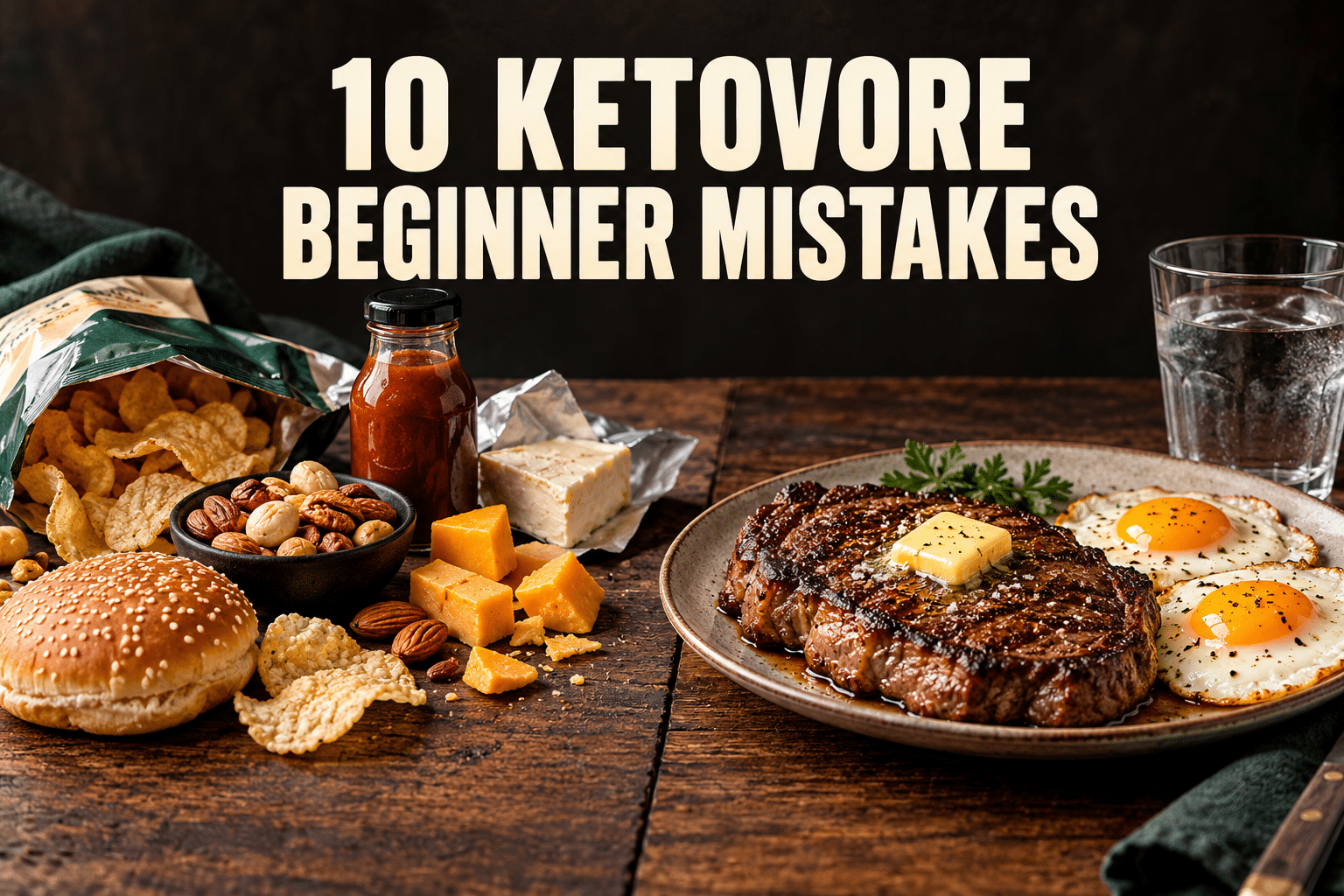
Ketovore can be one of the simplest ways to eat. Choose meat. Add eggs if you want them. Include enough natural fat to feel satisfied. Keep carbohydrates low. Repeat when hungry. That does not sound particularly difficult. Then real life arrives carrying donuts, hamburger buns, football-party chips, sweet sauces and a friend who insists that one bite cannot possibly matter.
Ketovore is usually easy for me at home. I control what I purchase, what goes into the refrigerator and what appears on my plate. The challenge begins when I leave the house. A business client wants to meet for lunch. Someone brings donuts to church. The family gathers to watch football. Suddenly, I am surrounded by food that I did not select and decisions I did not plan to make. The diet itself is not especially complicated. Navigating everyday life is the complicated part. Here are ten common ketovore beginner mistakes that can make the lifestyle harder than necessary—and what I am learning to do instead.
Mistake #1: Making Ketovore Too Complicated
When people begin ketovore, they often believe they need to calculate everything. They start worrying about: Exact percentages of protein and fat, Perfect meal timing, Ketone readings, Complicated recipes, Expensive supplements, Whether one gram of carbohydrate ruined the day, and What every online expert thinks about every ingredient. Before long, preparing lunch feels like launching a satellite.
Most beginners do not need a complicated system. They need several dependable meals they can make without much thought. My basic meals include combinations such as: Hamburger patties and eggs, Steak and butter, Chicken thighs, Traditional wings, Bacon and eggs, Salmon with butter, Bunless hamburgers and Leftover meat from the previous meal.
What to Do Instead
Build your routine around five or six simple meals that you genuinely enjoy. You can learn more about nutrition, fasting and metabolism over time. You do not need to understand the entire human endocrine system before cooking a hamburger. Begin with real food and repeatable decisions.
Mistake #2: Eating Too Little Real Food
Some beginners attempt to succeed by eating as little as possible. They have coffee for breakfast, a tiny salad for lunch and a few pieces of cheese in the afternoon. By evening, they are standing in front of the pantry negotiating with a bag of chips. Ketovore should not feel like a daily starvation contest.
When I eat an adequate serving of meat, I am usually more satisfied and less interested in chasing snacks for the rest of the day. That is one reason ketovore is easier for me than a diet based on small portions of foods that never seem to finish the job.
What to Do Instead
Build meals around a meaningful serving of animal protein: Beef, Pork, Chicken, Turkey, Fish, Seafood & Eggs. Eat slowly and pay attention to hunger. Stop when you are comfortably satisfied, not painfully full. If you are continually hungry between meals, first examine the meals themselves. You may need more real food—not another packaged keto snack.
Mistake #3: Assuming Added Fat Is Unlimited
Ketovore includes fat, but that does not automatically mean more is always better. Fat appears naturally in ribeye, ground beef, bacon, eggs, salmon and chicken thighs. Butter, cheese, cream, tallow and other fats can make leaner foods more enjoyable and satisfying. The mistake is believing that adding butter, oil and cream to everything guarantees faster progress.
I drink bulletproof coffee in the morning because it fits my routine and can help me manage hunger. I also recognize that butter coffee contains energy. It is part of my eating plan, not magical zero-calorie hydration.
What to Do Instead
Use added fat for a purpose: To cook food, To improve flavor, To make lean protein more satisfying, & To help control hunger. Then pay attention to your results. If progress slows, added fats may be one of the first variables worth examining. You may not need to eliminate them, but pouring additional fat into an already satisfying meal may not always help. Ketovore is not a competition to see who can hide the most butter in a cup of coffee.
Mistake #4: Living on Cheese, Nuts and Keto Snacks
Cheese, nuts, low-carbohydrate bars and keto desserts can technically fit many low-carbohydrate plans. They can also become the entire plan. These foods are easy to grab and even easier to overeat. A steak usually gives me a clear signal that dinner is finished. Cheese and nuts sometimes behave more like television episodes: there always seems to be room for one more. Packaged keto foods can create a similar problem. They may keep the habit of snacking alive even when the carbohydrate count looks acceptable.
What to Do Instead
Use convenience foods as supporting players rather than the foundation of your diet. Prioritize: Meat, Eggs, Seafood, Simple meals, & Leftovers. Use cheese, nuts, bars and keto desserts in controlled amounts if they work for you. If a food repeatedly causes overeating or stronger cravings, it may not be helpful just because the package includes the word “keto.”
Mistake #5: Missing Hidden Carbohydrates
The obvious carbohydrates are usually easy to identify. Most of us know that bread, pasta, rice, chips, cookies and regular soda contain carbohydrates. The surprises are found in foods that appear safe:
- Barbecue sauce
- Ketchup
- Teriyaki sauce
- Honey mustard
- Salad dressing
- Sausage
- Jerky
- Deli meat
- Seasoning blends
- Restaurant marinades
- Breaded wings
- Flavored yogurt
- “Sugar-free” candy
A meal can begin with perfectly good meat and accumulate carbohydrates through everything poured, brushed or sprinkled onto it.
What to Do Instead
Read the entire label. Check: Serving size, Total carbohydrates, Added sugars, Ingredient list & Number of servings in the package. At restaurants, ask whether meat is breaded, glazed or marinated in a sweet sauce. Traditional wings with a dry seasoning or simple buffalo sauce are often easier to evaluate than boneless wings covered in something called “Sweet Firecracker Explosion.” If the sauce name sounds like a dessert or a minor fireworks emergency, it probably deserves a closer look.
Mistake #6: Leaving Home Without a Plan
This may be the biggest practical challenge for me. At home, ketovore is simple. Outside the house, food decisions are often made by groups. A client suggests lunch. Someone chooses a restaurant. Family members plan a football watch party. Church provides donuts. Suddenly, the options are based on convenience and tradition rather than my eating goals.
I recently had a business client who wanted to meet for lunch. I helped steer the meeting toward Wingstop because I knew I could order traditional wings and avoid fries, bread and sugary extras. That small decision was much easier than arriving hungry at a restaurant with no plan.
What to Do Instead
Make the food decision before becoming hungry. Before attending an event: Eat a filling meal at home if necessary, Review the restaurant menu online, Suggest a restaurant with meat-based options, Decide what you will order in advance, Bring an appropriate food when possible, & Practice saying, “No, thank you”.
Good restaurant choices may include: Bunless hamburger patties, Steak without a potato, Traditional wings, Grilled chicken, Eggs and bacon, Fajita meat without tortillas, rice or beans, & Barbecue meat without sweet sauce. Planning is not obsessive. It removes pressure from the moment.
Mistake #7: Confusing Cravings With Hunger
Hunger and cravings can feel similar, but they are not always asking for the same thing. Real hunger is generally open to a variety of satisfying foods. If I am genuinely hungry, steak, eggs, hamburger patties or leftover chicken all sound good. A craving is often very specific. I do not merely want food. I want a donut, chips, pizza or dessert. One useful question is: Would I eat hamburger patties and eggs right now?
If the answer is yes, I may be hungry. If the answer is no, but I would happily eat cookies, I am probably dealing with a craving.
What to Do Instead
Pause before eating and identify what you are experiencing. If you are hungry, eat a proper ketovore meal. If it is a craving: Drink water, Leave the kitchen, Take a short walk, Brush your teeth, Wait 15 or 20 minutes, Remind yourself why you started & Plan your next real meal. A craving is a feeling, not a court order.
Mistake #8: Panicking Over the Scale
Body weight does not move in a perfectly straight line. It can change from one day to the next because of hydration, sodium, digestion, meal timing and numerous other variables. That can become frustrating when you believe every weigh-in is a final grade. A higher number one morning does not necessarily mean the entire plan stopped working overnight. Likewise, a quick drop at the beginning does not mean the same rate will continue forever.
What to Do Instead
Look for the trend rather than assigning too much meaning to one measurement. You might track: Weekly weight trend, Waist measurement, Hunger, Energy, Cravings, Sleep, Exercise performance, How your clothes fit & Whether the plan feels sustainable. The scale is useful information. It is not qualified to determine your mood for the rest of the day.
Mistake #9: Treating One Imperfect Meal as a Ruined Week
This is one of the most damaging diet mistakes. Someone eats a food that was not part of the plan and thinks: I already messed up, so I might as well start again Monday. One questionable meal becomes an entire weekend. Then Monday becomes next month. Eventually, a donut has somehow gained control of the calendar. One meal does not erase the good decisions that came before it. The greater danger is using one choice as permission to continue making the same choice.
What to Do Instead
Use the next-meal rule: The next meal is your opportunity to return to the plan. Do not punish yourself with an extreme fast. Do not attempt to exercise away your guilt. Do not spend three days analyzing the mistake. Simply make the next meal ketovore: Meat, Eggs, Water, & No drama. Consistency does not require perfection. It requires returning quickly.
Mistake #10: Comparing Your Ketovore Diet With Everyone Online
Social media makes it easy to believe that everyone else follows ketovore perfectly. One person eats only beef, salt and water. Another measures ketones three times a day. Someone eats twelve eggs for breakfast, although I remain suspicious about what happens for the rest of that person’s afternoon. The internet can provide helpful ideas, but it can also convince us that our version of ketovore does not count.
My approach may include bulletproof coffee, restaurant wings, dairy and selected low-carbohydrate vegetables. Someone else may prefer a strict carnivore diet. The important question is not whether my plate looks exactly like theirs. The question is whether my choices are producing results I can sustain.
What to Do Instead
Learn from other people without surrendering your judgment. Evaluate your own: Hunger, Energy, Weight trend, Cravings, Digestion, Health markers & Ability to remain consistent. Make adjustments based on results rather than dietary peer pressure. The most extreme person online does not automatically receive a trophy.
A Better Way to Begin Ketovore
If you are new to ketovore, begin with a simple plan.
Step 1: Remove the Obvious Carbohydrates
Start by removing or dramatically reducing: Sugar, Bread, Pasta, Rice, Chips, Potatoes, Regular soda, Sweet tea, Desserts & Breaded foods.
Step 2: Build Meals Around Animal Foods
Choose from: Beef, Pork, Chicken, Turkey, Fish, Seafood & Eggs.
Step 3: Add Fat as Needed
Use butter, tallow, bacon grease or other appropriate fats for cooking, flavor and satisfaction.
Step 4: Decide Which Optional Foods Work for You
These might include: Cheese, Heavy cream, Sour cream, Avocado, Leafy vegetables, Broccoli, Cauliflower, Pickles, Olives & Small amounts of berries.
Step 5: Prepare for Difficult Situations
Identify your most likely challenges: Business lunches, Church gatherings, Family dinners, Football parties, Vacations, Late-night snacking & Fast-food stops. Create a plan for each one before it happens.
Step 6: Evaluate and Adjust
Follow the basic plan consistently before making endless changes. If you are hungry, examine meal size and protein. If progress stalls, look at dairy, snacks, sweeteners, alcohol and added fats. If restaurant meals create problems, plan the order before leaving home. Change one major variable at a time so you can tell whether it helped.
Ketovore Should Make Eating Simpler
The biggest lesson I am learning is that ketovore works best when I stop trying to turn it into a complicated project. Meat is the default. Carbohydrates remain low. Meals are large enough to satisfy me. Restaurants are handled with a plan. An imperfect choice ends with the next meal. I do not need to win every food decision for the rest of my life today. I need to make the best available decision at the next meal.
That may mean steering a business lunch toward traditional wings. It may mean declining donuts at church. It may mean eating the hot dog without the bun and leaving the chips alone at a football party. Those decisions are not always dramatic, but they add up. Ketovore becomes easier when real food is the foundation, planning replaces willpower and mistakes stop becoming excuses.
Continue Exploring Ketovore
- How to Eat Ketovore at These 10 Fast-Food Restaurants
- My Simple Ketovore Grocery List
- What I Eat in a Day on Ketovore
- What Counts as a Fast?
- Does Butter Coffee Break a Fast?
- How to Get Back on Ketovore at the Next Meal
Disclaimer: This article is for general educational purposes and reflects my personal experience and opinions. It is not medical advice. Consult a qualified healthcare professional before making significant dietary or fasting changes, particularly if you have a medical condition or take prescription medication.

0 Comments