
There’s a particular kind of frustration that happens around lunchtime. You’re busy. You’re hungry. You have another three hours of work ahead of you. And the only convenient food options seem to involve bread. Sandwiches. Pizza. Burgers. Tacos. More sandwiches.
Apparently, the entire American lunch industry was built around finding new ways to put carbohydrates around meat. But here’s something worth remembering.
Eating ketovore doesn’t require a stove, a microwave, or even a hot meal.
Sometimes a cold lunch is exactly what you need. Whether you’re working in an office, traveling between appointments, sitting through meetings, or simply trying to avoid another expensive restaurant lunch, having a few easy options can make a difference.
And no, I’m not suggesting that you pack a raw ribeye in your briefcase. Let’s look at seven practical ketovore lunches that are simple, affordable, and easy to take to work.
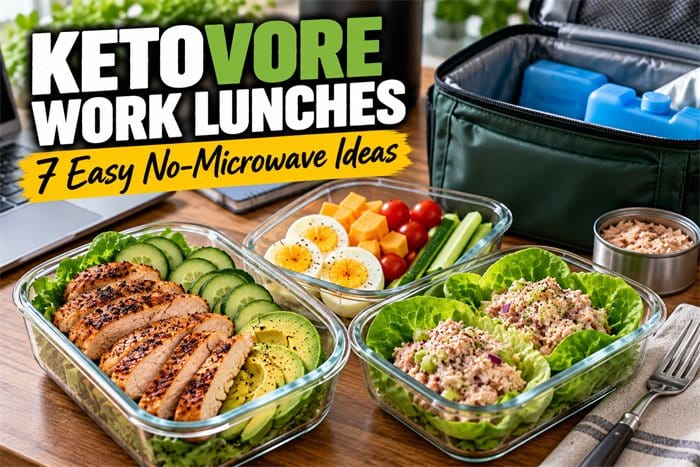
1. Grilled Chicken and Avocado Bowl
Let’s start with something straightforward. Chicken. Avocado. A few vegetables. That’s already a reasonable foundation for lunch.
What You’ll Need
- Cooked, chilled chicken breast or thighs
- Half an avocado
- Lettuce or spinach
- Cucumber slices
- Salt and pepper
- Optional olive oil and lemon juice
How to Prepare It
Cook your chicken ahead of time and refrigerate it promptly. The next morning, slice the chicken and place it in a container with lettuce and cucumber. Add avocado shortly before eating, if practical, to help prevent browning. Season everything to taste. That’s it. No microwave. No complicated recipe. And certainly no need to spend $14 on a restaurant salad that contains approximately four pieces of chicken.
Budget tip: Chicken thighs can be an economical alternative to chicken breasts. Compare the actual price per pound at your grocery store.
2. The Steak and Egg Lunch Box
Here’s a meal that sounds considerably more expensive than it needs to be. Steak and eggs. But we’re not talking about buying a giant ribeye specifically for lunch. We’re talking about using leftover cooked steak.
What You’ll Need
- Sliced, fully cooked and chilled steak
- Two hard-boiled eggs
- Cucumber slices
- A few cheese cubes, if desired
- Salt and pepper
How to Prepare It
Place the chilled steak in a divided lunch container. Add peeled hard-boiled eggs, vegetables, and optional cheese. Keep everything properly refrigerated until lunchtime. The beauty of this meal is its simplicity. You’re getting protein from the steak and eggs without needing bread, crackers, or other traditional lunch additions.
And if you already cooked the steak for dinner, you’ve essentially handled tomorrow’s lunch at the same time. That’s what I call getting a second shift out of dinner.
3. Tuna Salad Lettuce Wraps
Tuna is one of the more convenient protein options available. It’s relatively inexpensive, easy to store unopened, and requires very little preparation.
What You’ll Need
- One can or pouch of tuna
- Mayonnaise, according to preference
- Chopped celery
- Salt and pepper
- Romaine or butter lettuce leaves
How to Prepare It
Drain the tuna. Mix it with mayonnaise, celery, and seasonings. Place the mixture in a chilled container. Pack the lettuce separately so it stays crisp. When lunchtime arrives, spoon the tuna mixture into the lettuce leaves. You’ve got a simple lunch without bread.
A Little Variety
You can change the flavor with mustard, lemon juice, chopped pickles, or a small amount of hot sauce. Check condiment labels for added sugars and carbohydrates. For more help understanding packaged ingredients, see my article How to Read Keto Food Labels Without Getting Fooled.
One important note: unopened shelf-stable tuna can be stored in the pantry, but once opened or mixed into tuna salad, it needs proper refrigeration.
4. Roast Beef and Cheese Roll-Ups
This may be the simplest lunch on the entire list. No cooking required if you’re using fully cooked roast beef. No complicated preparation. And very little cleanup.
What You’ll Need
- Thinly sliced cooked roast beef
- Sliced cheese
- Pickle spears
- Mustard
- Optional lettuce
How to Prepare It
Lay out a slice of roast beef. Add cheese and a little mustard. Roll everything together. Repeat until you have an appropriate portion. Pack with pickles or another low-carbohydrate side. You can use leftover homemade roast beef or commercially prepared slices.
Just remember that deli meats can contain substantial sodium, and some processed products contain added sugars or starches. Check the label rather than assuming every package is identical.
Budget tip: Leftover homemade roast beef may offer better value than purchasing small packages of premium deli meat.
5. Salmon and Cucumber Bowls
Here’s a way to add some variety. Instead of relying exclusively on beef and chicken, consider salmon. Canned salmon can be convenient, relatively affordable, and easy to prepare.
What You’ll Need
- Canned salmon
- Chopped cucumber
- A little mayonnaise or olive oil
- Lemon juice
- Salt and pepper
- Optional avocado
How to Prepare It
Drain the salmon. Mix it with your preferred dressing and seasonings. Add chopped cucumber and any other ingredients that fit your ketovore approach. Pack everything in a sealed container and keep it cold. Salmon also provides omega-3 fatty acids, making it a useful alternative to relying exclusively on red meat.
And here’s another advantage. You don’t need to cook anything. Sometimes the best kitchen equipment is a can opener.
6. Cold Hamburger Patties and Cheese
I know what you’re thinking. Cold hamburgers? Really? But there’s no rule that says cooked hamburger patties must be served hot. Properly cooked, chilled, and stored hamburger patties can be eaten cold. And they can make a convenient protein-centered lunch.
What You’ll Need
- Two cooked hamburger patties, or an appropriate portion
- Cheese, if desired
- Pickles
- Mustard
- Lettuce
- Optional tomato slices
How to Prepare It
Cook the patties ahead of time. For food safety, ground beef should reach an internal temperature of 160°F. Refrigerate the cooked patties promptly. Pack them with cheese, pickles, and your preferred vegetables. At lunchtime, you can eat everything separately or wrap the patties in lettuce. No bun required.
If you’re preparing hamburgers for dinner, cooking a few additional patties can make tomorrow’s lunch easier. This is the kind of simple cooking approach discussed in Ketovore Cooking Basics: Simple, Delicious Meals Without Complicated Recipes.
7. The Ketovore Protein Snack Box
Sometimes you don’t want a traditional lunch. You just want something convenient that doesn’t require much thought. That’s where a protein snack box comes in.
What You’ll Need
Choose a combination of:
- Hard-boiled eggs
- Cooked chicken pieces
- Cheese cubes
- Cucumber slices
- Pickles
- A small serving of nuts, if included in your ketovore plan
Arrange everything in a divided container. That’s your lunch. Of course, the quantities matter. A few cheese cubes and one egg may not provide enough food for a complete meal. Build the box around an adequate protein portion and add other foods according to your nutritional needs.
And remember that cheese and nuts can contribute substantial calories even when they’re relatively low in carbohydrates. Convenient doesn’t mean unlimited.
How to Keep Your Ketovore Lunch Safe
There’s one important subject we shouldn’t overlook. Food safety. Most of these lunches contain meat, eggs, cheese, or other perishable ingredients. They need to remain cold until you’re ready to eat. The United States Department of Agriculture recommends using an insulated lunch bag with at least two cold sources when transporting perishable lunches.
That might mean two frozen gel packs or a gel pack and a frozen water bottle. Perishable foods should generally remain at 40°F or below. They shouldn’t sit at room temperature for more than two hours, or one hour when temperatures exceed 90°F. If you have access to a refrigerator at work, use it.
Cooked leftovers should generally be refrigerated within two hours and consumed within three to four days. These are practical precautions, not ketovore-specific rules. Food Safety and Inspection Service For additional guidance, review the USDA’s recommendations for keeping packed lunches safe.
How to Save Money on Ketovore Work Lunches
One of the biggest advantages of packing lunch is having more control over what you’re spending. Restaurant lunches can add up quickly. Even a relatively inexpensive lunch becomes a significant expense when purchased repeatedly.
Consider a simple example. If buying lunch costs $12 and packing lunch costs $5, the difference is $7 per workday. Over five workdays, that’s $35. Over 50 workweeks, that’s approximately $1,750.
Those are illustrative numbers, not guaranteed savings. Your actual costs will depend on food prices and portions. Still, the principle is useful. You don’t need premium steak every day. Ground beef, eggs, chicken thighs, canned fish, and leftovers can all help keep costs manageable. For additional ideas, see My Simple Ketovore Grocery List—and How I Save Money on Meat.
My Favorite Rule: Make Lunch Easy Before You’re Hungry
Here’s the main lesson I want to emphasize. The best lunch plan isn’t necessarily the most creative. It’s the one that’s realistic enough to repeat. If preparing lunch requires an hour of cooking every morning, that plan probably isn’t going to survive a busy schedule.
But if you can open the refrigerator, grab a prepared container, add an ice pack, and walk out the door? That’s manageable.
You don’t need seven completely different lunches every week. Find two or three options you enjoy. Keep the ingredients available. Prepare what you can ahead of time. And give yourself permission to repeat meals. Boring lunches aren’t necessarily bad lunches. Especially when the alternative is spending $15 on a sandwich you didn’t really want.
Final Thoughts: Ketovore Doesn’t Have to Be Complicated
Eating ketovore at work doesn’t have to involve expensive restaurants, elaborate meal preparation, or a microwave. Sometimes lunch can be as simple as chicken and avocado. Or steak and eggs. Or tuna wrapped in lettuce. The goal is to make eating well easier when life gets busy.
Focus on protein. Choose foods that fit your approach. Keep portions reasonable. Store everything safely. And remember that consistency matters more than creativity. Because the best ketovore lunch isn’t the one that looks impressive in a photograph.
It’s the one you can actually prepare, afford, and enjoy.
And if you can do all that without standing in line at a drive-thru? Even better.
Disclaimer: This article provides general food and nutrition information, not individualized medical advice. Restrictive diets may not be appropriate for everyone. Consult a qualified healthcare professional before making significant dietary changes, especially if you have an existing medical condition.

0 Comments