
There’s something about a long road trip that makes eating differently a little more complicated. At home, you’ve got your refrigerator, freezer, stove, and favorite foods. On the road? You’ve got a gas station selling seventeen varieties of candy, a fast-food restaurant at the next exit, and somebody in the passenger seat asking whether you’re hungry yet. And you’ve still got another 250 miles to drive. Welcome to road-trip nutrition. But here’s the good news.
Eating ketovore while traveling doesn’t require packing an entire refrigerator or refusing to stop anywhere that sells French fries. A little planning can make the difference between a comfortable trip and spending twenty minutes examining every snack in a convenience store. Let’s look at how to make it work.
1. Pack Protein Before You Leave
The easiest road-trip meal is usually the one you already have available. That’s why I like the idea of preparing a few simple foods before leaving home. You don’t need elaborate recipes. You need foods that are easy to pack, reasonably affordable, and appropriate for your eating plan.
Easy Ketovore Foods to Pack
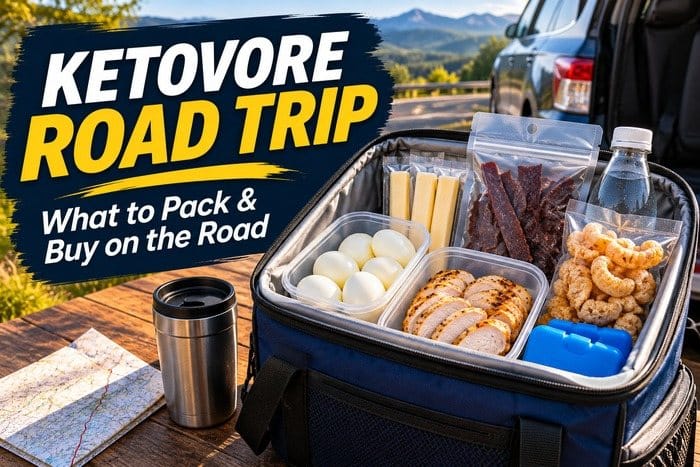
Consider: Hard-boiled eggs, Fully cooked chicken, Cheese sticks, Sliced roast beef, Cooked hamburger patties, Plain Greek yogurt, if dairy fits your plan, Low-sugar beef jerky, & Plain pork rinds. The first several options require refrigeration. Jerky and pork rinds may be shelf-stable, depending on the product and packaging.
Check the label rather than assuming every package can sit in a warm car indefinitely. You don’t need all these foods. Choose two or three that you enjoy. The goal is to make eating on the road easier, not to turn your back seat into a mobile butcher shop.
2. Bring a Cooler—and Use It Correctly
If you’re packing chicken, eggs, cheese, or other perishable foods, a cooler is important. And I’m not talking about putting one slightly cold bottle of water next to a container of chicken and hoping for the best. Use enough ice or frozen gel packs to keep the food properly chilled. The USDA recommends keeping perishable foods at 40°F or below during transportation. A cooler thermometer can help you verify the temperature.
My Suggested Cooler Setup
Pack the cooler with: Frozen gel packs, Chilled, fully cooked proteins, Hard-boiled eggs, Cheese or yogurt, Water bottles, & A thermometer. Keep the cooler in the air-conditioned passenger area rather than a hot trunk. Open it only when necessary. And remember that perishable food generally shouldn’t remain unrefrigerated for more than two hours—or one hour when temperatures exceed 90°F. Those are food-safety rules, not optional ketovore suggestions. Nobody wants to arrive at their destination with an upset stomach and a cooler full of regret.
3. Know What to Buy at a Gas Station
Sometimes you don’t have a cooler. Sometimes you run out of food. And sometimes you just want to stop, stretch your legs, and find something to eat. That’s perfectly reasonable. Many convenience stores carry foods that can fit a ketovore approach.
Seven Possible Gas Station Choices
1. Beef jerky: Look for varieties with relatively little added sugar.
2. Cheese sticks: Choose refrigerated products and eat them promptly or keep them chilled.
3. Hard-boiled eggs: Available in some refrigerated sections.
4. Pork rinds: Often low in carbohydrates, although they shouldn’t replace nutritionally balanced meals.
5. Meat and cheese snack packs: Check ingredients and serving sizes.
6. Plain nuts: An option for people following a more flexible ketovore approach.
7. Water or unsweetened beverages: Simple choices that don’t require decoding a long ingredient list.
Availability varies from store to store. And remember that a snack isn’t necessarily a complete meal. A package containing six grams of protein may help temporarily, but it might not be enough for lunch. For help comparing packaged foods, see How to Read Keto Food Labels Without Getting Fooled.
4. Use Grocery Stores as Roadside Restaurants
Here’s a strategy that deserves more attention. You don’t always need to stop at a restaurant to get a meal. Sometimes a grocery store is just as convenient. Many supermarkets sell ready-to-eat proteins and refrigerated foods.
Build a Simple Grocery Store Meal
Look for:
- Rotisserie chicken
- Hard-boiled eggs
- Deli roast beef or turkey
- Cheese
- Prepackaged salads
- Avocado
- Water
For example, you could purchase a rotisserie chicken and a suitable side. Or assemble a meal using roast beef, cheese, and vegetables. Check ingredients and portions according to your needs. A grocery stop also gives you the opportunity to restock your cooler. And you may be able to buy several portions for less than the cost of multiple restaurant meals. For more affordable shopping ideas, read My Simple Ketovore Grocery List—and How I Save Money on Meat.
5. Have a Simple Fast-Food Ordering Strategy
Let’s be realistic. Sometimes the most convenient place to stop is a fast-food restaurant. That doesn’t automatically mean your eating plan has to disappear. The trick is to look for the protein first.
Simple Roadside Orders
At a burger restaurant, consider a hamburger without the bun. At a chicken restaurant, look for grilled chicken without breading. At a breakfast restaurant, eggs with bacon or sausage may work. At a Mexican restaurant, grilled meat with appropriate toppings can be an option. Sauces, breading, and seasonings can add carbohydrates, so check the current menu information when those details matter. The goal isn’t to create a perfect restaurant meal.
It’s to find something reasonable without making the employee at the drive-through window question every decision that brought them to this moment. I’ve already put together a more detailed Ketovore Fast-Food Guide Covering 10 Restaurants. That article is a useful companion when you’re planning travel stops.
6. Watch Out for the Road-Trip Snack Trap
Here’s something worth thinking about. Driving can be boring. And when we’re bored, eating can become an activity rather than a response to hunger. A bag of snacks sitting beside you makes it easy to keep reaching for another handful. Even when you’re not particularly hungry. This isn’t limited to carbohydrates. Cheese, nuts, pork rinds, and other low-carb foods can also be easy to overeat.
Try a Simple Rule
Instead of keeping an open package within reach, decide when you’re going to stop for food. Take a break. Get out of the car. Stretch your legs. Eat an appropriate portion. Then continue your trip. This approach can also help reduce distracted driving. Eating while operating a vehicle takes attention away from the road. And frankly, trying to eat a bunless cheeseburger while driving 70 miles per hour sounds like a problem waiting to happen.
7. Don’t Let Fasting Make the Trip Harder
Some people combine ketovore with intermittent fasting or OMAD—one meal a day. If that’s part of your routine, travel may require some flexibility. You might be driving during your usual mealtime. You might arrive later than expected. Or you might discover that your planned restaurant is closed. That’s life.
Plan Around Your Actual Needs
If fasting works comfortably for you, there’s no reason every road trip must change your schedule. But if you’re hungry, lightheaded, or feeling unwell, don’t force yourself to continue fasting simply because you planned to eat at a particular time. Make sure you’re consuming enough food and fluids.
People with diabetes, those taking certain medications, and others with medical conditions may need individualized guidance about fasting. The purpose of your eating routine is to support your health. It isn’t supposed to turn a six-hour drive into an endurance competition.
8. Keep Your Road-Trip Food Budget Under Control
Road trips can become surprisingly expensive. Gas. Hotels. Restaurant meals. Convenience-store purchases. And somehow, a small bottle of water that costs considerably more than expected. Food is one area where a little planning can help.
A Simple Budget Strategy
Before leaving home, consider:
- Packing one substantial meal.
- Bringing a few convenient protein snacks.
- Carrying refillable water bottles.
- Planning one grocery-store stop.
- Choosing restaurant meals intentionally.
Here’s a hypothetical example.
Suppose buying two roadside meals costs $30 total. If you can prepare one meal at home for $7 and purchase another for $15, your food spending becomes $22. That’s an $8 difference for one travel day. Your actual costs will vary, of course. But the principle is useful. Small decisions can add up over a long trip. And there’s no rule saying a road trip must include a $14 convenience-store snack collection.
A Simple One-Day Ketovore Road-Trip Plan
Let’s put everything together. Imagine you’re taking an eight-hour drive.
Before Leaving
Eat a satisfying breakfast or pack one that fits your schedule. Bring water and prepare your cooler.
First Food Stop
Have chilled chicken, eggs, or another prepared meal. Park somewhere comfortable and take a break.
Afternoon
If you’re hungry, choose an appropriate snack. Jerky, cheese, or another convenient option may work.
Dinner
Stop at a restaurant or grocery store. Choose a protein-focused meal with additions that fit your preferences and nutritional needs. That’s it.
No elaborate spreadsheet. No seventeen-container meal-prep system. And no requirement to spend the entire trip discussing carbohydrates.
Final Thoughts: Enjoy the Trip
I think there’s an important lesson here. A sustainable eating plan should work in ordinary life. That includes workdays. Family dinners. Restaurants. Vacations. And long drives. You won’t always have access to your favorite foods. You won’t always eat at your usual time. And occasionally, your best option may be something you wouldn’t normally choose at home. That’s okay.
Plan ahead, prioritize adequate nutrition, keep perishable foods safe, and make reasonable choices with what’s available. Most importantly, remember why you’re traveling in the first place. You’re going somewhere. You’re seeing people. You’re making memories. The food should support the experience, not become the entire experience. Because when you finally arrive at your destination, I’d rather remember the trip than the twenty-minute argument I had with a gas station protein bar.
Disclaimer: This article provides general nutrition and food-safety information, not individualized medical advice. Restrictive diets and fasting may not be appropriate for everyone. Consult a qualified healthcare professional before making significant dietary changes, particularly if you have an underlying medical condition or take medications.

0 Comments