
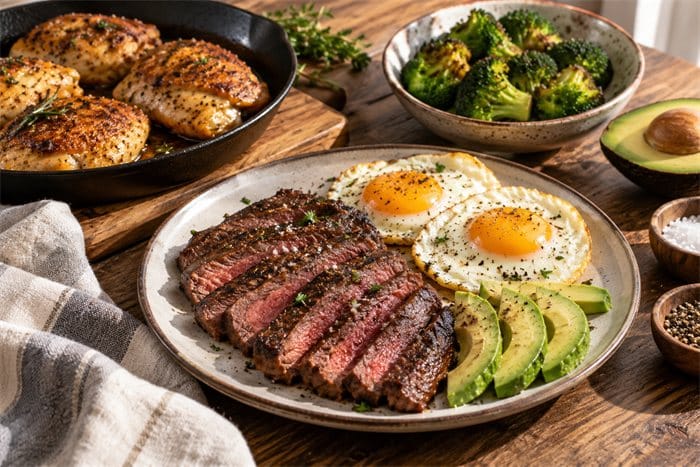
I have a theory about eating ketovore. The hardest part isn’t figuring out what we’re supposed to eat. It’s figuring out what to eat when we’re hungry, busy, tired, and standing in front of the refrigerator hoping something delicious will magically appear. And if nothing appears? Well, there’s always a drive-thru. That’s where a little ketovore meal planning can make a big difference.
I’m not talking about spending six hours every Sunday preparing 21 identical meals in plastic containers. I’m not interested in turning my refrigerator into a commercial food distribution center. I’m talking about making a few decisions ahead of time so that eating ketovore becomes easier during a normal, busy week.
Here are seven practical ways to make that happen.
1. Stop Trying to Plan Every Single Meal
One of the reasons meal planning fails is that people make it unnecessarily complicated. They sit down on Sunday and try to predict exactly what they’ll want for breakfast, lunch, and dinner every day of the week. By Wednesday, they’re tired of the plan. By Thursday, they’re ordering pizza. And by Friday, the meal plan has become a historical document.
Instead, consider planning around a handful of reliable foods.
For example: Ground beef, Chicken thighs, Eggs, Steak or roast, Bacon, Cheese, & A few low-carb vegetables. With these ingredients available, there are plenty of combinations without needing a different recipe for every meal. The goal isn’t to eliminate variety. It’s to eliminate unnecessary decisions.
2. Build Your Meals Around Protein
When I think about ketovore, I start with the protein. Not the side dish. Not the sauce. Not the fancy keto bread that costs approximately the same as a small mortgage payment. Protein. Beef, chicken, fish, pork, and eggs are useful starting points. Once you’ve selected the main protein, everything else becomes easier.
Want a simple dinner? Hamburger patties with eggs. Want something different? Chicken thighs with a small serving of broccoli. Need something fast? Scrambled eggs with leftover ground beef. These meals aren’t complicated, and that’s precisely why they can work. Protein also helps support muscle maintenance, particularly during weight loss. Making room for enough protein matters more than simply adding fat to every meal.
3. Cook Extra Without Calling It Meal Prep
Here’s an idea that doesn’t require buying matching containers. When cooking dinner, make extra. That’s it. If you’re cooking four hamburger patties, consider making six. If you’re preparing chicken thighs, cook enough for another meal. If you’re browning ground beef, make a larger batch and refrigerate or freeze the extra portions promptly.
Suddenly, tomorrow’s meal becomes much easier. You haven’t spent an entire Sunday preparing food. You’ve simply made today’s cooking work harder. And unlike most employees, leftover ground beef doesn’t complain about overtime.
4. Keep Emergency Ketovore Foods Available
There will be days when everything goes wrong. A meeting runs late. Traffic is terrible. The refrigerator contains three condiments, half a lemon, and something you don’t remember purchasing. These are the moments when convenient food becomes especially tempting.
That’s why having a few backup options can help.
Some practical choices include:
- Hard-boiled eggs
- Canned tuna or salmon
- Frozen hamburger patties
- Precooked chicken without sugary sauces
- Cheese, if it fits your eating plan
- Leftover meat stored safely in the refrigerator or freezer
These foods don’t have to be exciting. They just need to be available when you’re hungry and don’t feel like cooking. A good backup meal can prevent a small inconvenience from becoming an entire evening of unplanned eating.
5. Plan for Restaurants Before You Get There
Eating ketovore at home gives you control. Restaurants introduce a whole new collection of decisions. Bread baskets. French fries. Dessert menus. And that one friend who insists everybody should order appetizers for the table. I’ve written before about how making a restaurant decision ahead of time can help.
The same principle applies to weekly meal planning. If you know you’re having a business lunch on Tuesday, look at the restaurant menu before arriving. Identify one or two meals that fit your goals. A bunless burger, grilled chicken, steak, or eggs might work, depending on the restaurant and preparation.
Watch for sugary sauces, breading, and unexpected side dishes. The objective isn’t to become the most difficult customer in the restaurant. It’s to make a reasonable decision before you’re hungry enough to order everything on page three.
6. Don’t Confuse Ketovore With Unlimited Eating
This is an important one. Just because a food fits a ketovore diet doesn’t mean portions no longer matter. Steak is ketovore. Eggs are ketovore. Cheese can be ketovore. But eating far beyond what your body needs can still interfere with weight management. I’ve discussed this problem before because it is one of the most useful lessons in my ketovore journey.
Meal planning can help with portion awareness. Instead of preparing an enormous amount of food and assuming you’ll stop when you’re full, consider starting with a reasonable portion. Eat slowly. Pay attention to hunger and fullness. Give yourself time before deciding whether you actually need more.
You don’t have to weigh every bite or turn dinner into a mathematics examination. But being mindful of portions matters.
7. Make a Plan You Can Actually Follow
This may be the most important lesson. The best ketovore meal plan isn’t the strictest one. It’s the one that works with your life. If you enjoy cooking, prepare different meals. If you hate cooking, keep things simple.
If you’re practicing intermittent fasting or OMAD, pay attention to whether your eating window allows you to meet your nutritional needs. If you have a busy schedule, prepare backup foods. And if you make a choice that doesn’t fit your plan? Make the next choice a better one. You don’t need to wait until Monday. You don’t need to declare the entire week ruined.
And you certainly don’t need to eat everything in the pantry because you’re supposedly starting over tomorrow. One meal is one meal.
A Simple Ketovore Meal Plan for the Week
Here’s an example of how straightforward this can be.
| Day | Main meal idea |
|---|---|
| Monday | Hamburger patties and eggs |
| Tuesday | Grilled chicken thighs and broccoli |
| Wednesday | Steak with a side salad |
| Thursday | Ground beef and scrambled eggs |
| Friday | Bunless burgers with cheese |
| Saturday | Baked salmon and asparagus |
| Sunday | Slow-cooked beef roast |
This is a collection of main-meal ideas, not a complete nutritional plan or a requirement to eat only once daily. Adjust portions, additional meals, fiber sources, and other foods to your individual needs. Notice what’s missing?
Complicated recipes. Expensive specialty ingredients. And a requirement to become a professional chef. It’s ordinary food prepared in ordinary ways. That’s the point.
My Biggest Takeaway: Make the Good Decision the Easy Decision
I’ve spent enough time thinking about food to realize that good intentions aren’t always enough. It’s easy to say you’re going to eat better. It’s harder when you’re hungry, tired, and surrounded by convenient alternatives.
That’s why planning matters. Not because a meal plan guarantees weight loss. It doesn’t. Not because ketovore is the perfect diet for everybody. It isn’t. But because having appropriate food available removes one more obstacle between your intentions and your actions.
And sometimes, that’s exactly what we need. So here’s a simple challenge for the coming week. Pick three proteins you enjoy. Buy enough for several meals. Prepare extra when you cook. Keep one or two backup foods available. And decide what you’ll order before walking into a restaurant. Nothing dramatic. Nothing expensive.
Just a few practical decisions that make the next decision easier. Because when it comes to changing eating habits, consistency usually beats complicated. And I’d much rather spend my Sunday enjoying life than organizing 21 identical containers of chicken.
Disclaimer: This article shares general information and meal-planning ideas, not individualized medical advice. Very-low-carbohydrate diets and fasting are not suitable for everyone, particularly people taking certain diabetes medications or managing medical conditions. Discuss significant dietary changes with your healthcare professional.

0 Comments
Trackbacks/Pingbacks