
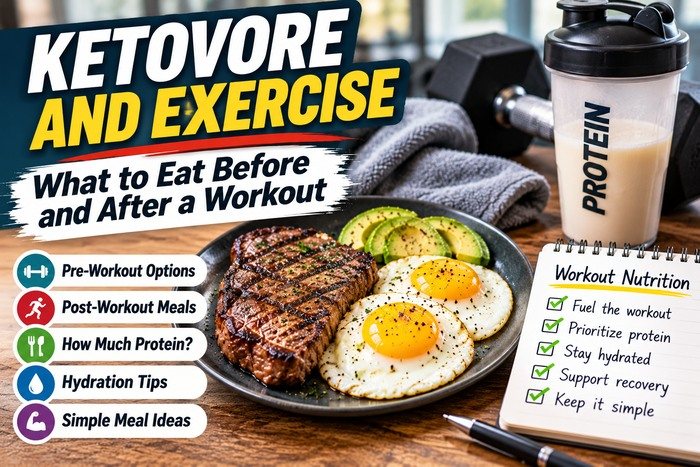
There’s something interesting about trying to eat better and exercise more. You’d think the two would naturally go together. Eat healthier. Get stronger. Feel better. Simple, right? Then you start asking questions. Should I eat before working out? Is exercising while fasting a good idea? How much protein do I need afterward? And if I’m eating ketovore, do I need carbohydrates to exercise? Suddenly, something as simple as going to the gym feels like preparing for a chemistry exam. But here’s the good news.
You don’t need a complicated nutrition strategy to combine ketovore and exercise. You do, however, need enough food, appropriate protein, adequate hydration, and a routine that supports the kind of exercise you’re doing. Let’s look at how to make that happen.
1. Can You Exercise While Eating Ketovore?
Absolutely. People can participate in walking, strength training, cycling, and many other activities while following lower-carbohydrate eating patterns. But there’s an important distinction. Being able to exercise on a low-carbohydrate diet doesn’t mean every type of exercise will feel or perform exactly the same. Your body uses different fuel sources depending on exercise intensity and duration.
During lower-intensity activities, fat can contribute substantially to energy production. During intense exercise, such as sprinting or repeated hard intervals, carbohydrate availability becomes especially important. That’s why some people notice changes in workout performance when they significantly reduce carbohydrate intake. Others adapt to their routine and feel comfortable exercising with fewer carbohydrates. The important thing is to pay attention to your actual performance rather than assuming everyone should respond the same way.
2. What Should You Eat Before a Workout?
Here’s my favorite approach to most nutrition questions. Start with something simple. If you’re exercising after a normal meal and feel comfortable, you may not need a special pre-workout snack. But if you’re hungry or haven’t eaten for several hours, having something beforehand may help.
Easy Ketovore Pre-Workout Ideas
Depending on your appetite and how much time you have:
- Two scrambled eggs
- A small serving of chicken
- A hamburger patty
- Plain Greek yogurt, if dairy fits your plan
- A hard-boiled egg with a little cheese
These foods provide protein, although their carbohydrate and fat content varies.
Watch the Timing
A large, fatty meal immediately before intense exercise can cause digestive discomfort for some people. If you’re eating a full meal, allowing a couple of hours before exercising may feel better. A smaller snack may be more comfortable closer to your workout. There’s no universal timing rule. Experiment with what works for your digestion, schedule, and activity. And remember that if your workout performance consistently suffers, your overall carbohydrate and calorie intake may need reassessment.
3. Should You Work Out While Fasting?
This is where ketovore and intermittent fasting sometimes overlap. Some people enjoy exercising before their first meal. Others feel weak, lightheaded, or uncomfortable doing so. Neither experience should be ignored. For a relatively easy walk, exercising before breakfast may be comfortable for some healthy adults. But longer or more intense sessions can be more demanding, particularly when you’re also restricting carbohydrates.
A Practical Rule
If you feel dizzy, shaky, unusually weak, or unwell during a workout, stop and address the symptoms. Don’t treat those feelings as proof that fasting is working. If you’re practicing OMAD, consider whether one meal gives you enough opportunity to meet your energy, protein, and other nutritional needs. You don’t earn extra fitness points for making your workout unnecessarily miserable. People taking glucose-lowering medications or managing certain medical conditions should discuss fasting and exercise with their healthcare professional.
4. What Should You Eat After a Workout?
After exercise, your body needs to recover. Protein helps support muscle repair and maintenance, particularly after resistance training. The good news is that ordinary foods can provide that protein. You don’t necessarily need a special supplement.
Five Simple Post-Workout Meals
Steak and eggs: A familiar combination that provides substantial protein.
Ground beef bowl: Cooked ground beef with a low-carbohydrate vegetable or avocado, if included in your plan.
Grilled chicken: Chicken thighs or breast with an appropriate side.
Salmon and eggs: Protein plus omega-3 fats from the salmon.
Bunless burgers: Hamburger patties with cheese and vegetables, depending on your preferences.
Choose portions based on your overall nutritional needs. For easy preparation ideas, see Ketovore Cooking Basics. And don’t forget that a meal after exercise should provide enough energy as well as protein.
5. How Much Protein Do You Need?
Protein is especially important when you’re trying to maintain muscle while losing weight. The standard Recommended Dietary Allowance for generally healthy adults is approximately 0.8 grams per kilogram of body weight daily. But that amount is a baseline designed to meet basic requirements for most healthy adults, not necessarily an ideal target for athletic training.
Research and sports-nutrition guidance often suggest that people who exercise regularly may benefit from approximately 1.2–2.0 grams per kilogram daily, depending on training and individual circumstances. That doesn’t mean everyone needs the upper end of that range. Age, activity level, medical conditions, total calorie intake, and training goals all matter. People with certain kidney conditions, for example, may require individualized protein guidance.
Spread Protein Across Your Meals
If you’re eating several meals daily, including protein in each one can make it easier to meet your total needs. If you’re practicing OMAD, consuming enough protein and other nutrients in one sitting may be more challenging. That’s one reason I wouldn’t automatically combine intense training, aggressive calorie restriction, and one meal a day. Sometimes the simplest routine is also the most sustainable.
6. Don’t Forget Hydration
Water may not be the most exciting part of fitness nutrition. But it’s important. Exercise increases fluid losses through sweating. Hot weather can make those losses greater. And when someone substantially reduces carbohydrate intake, changes in glycogen and water balance can affect fluid needs.
Simple Hydration Habits
Drink fluids regularly throughout the day. Have water available during workouts. Pay attention to thirst, sweat losses, and environmental conditions. Long or strenuous exercise may require additional attention to electrolytes. But that doesn’t mean everyone needs expensive electrolyte powders or unlimited salt. Excess sodium can be problematic for some people, especially those with certain medical conditions. Choose a hydration approach appropriate for your activity and health needs.
7. What If Your Workouts Feel Harder on Ketovore?
Here’s something worth acknowledging. Lower-carbohydrate eating doesn’t work equally well for every exercise goal. Some people find that steady walking or moderate exercise fits comfortably into their routine. Others notice that intense cycling, running intervals, or demanding strength sessions feel harder. That doesn’t automatically mean you’re doing something wrong. High-intensity activity relies heavily on carbohydrate metabolism.
If your performance declines, consider whether you’re eating enough overall, recovering adequately, and getting sufficient sleep. You may also need to reassess how restrictive your carbohydrate intake should be. Your nutrition plan should support your health and activity. Your exercise routine shouldn’t have to suffer just to preserve a dietary label.
8. Don’t Measure Fitness Progress Only by Weight
Here’s a connection to our recent discussion about weight-loss plateaus. The scale isn’t the only measurement that matters. When you’re exercising regularly, you can also track:
- Strength improvements
- Walking distance
- Workout consistency
- Recovery between sessions
- Endurance
- Mobility and flexibility
If you’re getting stronger, moving more comfortably, or developing a consistent exercise habit, those are meaningful achievements. Even when your weight isn’t changing quickly. For a broader look at progress, read 7 Signs You’re Making Progress on Ketovore (Besides the Scale). The goal isn’t simply to become lighter. It’s to become healthier and more capable.
A Simple Ketovore Workout-Day Meal Plan
Here’s an example of how a workout day might look. It’s not a personalized prescription, but it illustrates how ordinary meals can fit around exercise.
Morning
Water and coffee, if desired. If you’re hungry before exercising, consider eggs or another easily tolerated meal.
After Exercise
Grilled chicken, ground beef, or another protein source, paired with foods that help meet your overall energy and nutrient needs.
Later Meal
Steak, salmon, or chicken with appropriate sides.
Optional Snack
Hard-boiled eggs, yogurt, or another food that fits your needs. You don’t need to follow this exact schedule. And you don’t need to eat immediately after every workout if you’ve already eaten adequately. The bigger picture is getting enough nutrition throughout the day.
Final Thoughts: Let Exercise and Nutrition Work Together
One thing I appreciate about simple ketovore meals is that they can make protein planning straightforward. Eggs. Chicken. Beef. Fish. Ordinary foods that don’t require complicated recipes. But eating ketovore doesn’t automatically guarantee better workouts, stronger muscles, or faster recovery. You still need adequate nutrition. You still need appropriate training. You still need sleep, hydration, and recovery. And you need to pay attention to how your body responds.
The best nutrition plan isn’t the one with the most restrictions. It’s the one that supports the life you’re trying to live. If you’re exercising regularly, your meals should help you do that. Because getting healthier should make everyday life better. Not turn every trip to the gym into a debate about whether you’re allowed to eat an avocado.
Disclaimer: This article provides general nutrition and exercise information, not individualized medical advice. Consult a qualified healthcare professional before making major dietary or exercise changes, especially if you have a medical condition, take prescription medications, or plan to combine fasting with strenuous activity.

0 Comments