
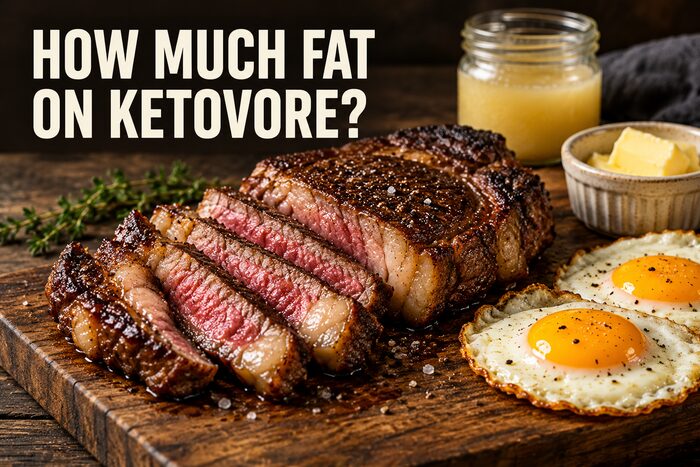
Yesterday, I answered the question, “How much protein should I eat on ketovore?” That naturally leads to the next question: How much fat should I eat? This can get confusing because keto is usually described as a high-fat diet. That makes it sound like we should add butter, cheese, heavy cream and bacon grease to everything we eat. I enjoy all of those things, but I don’t believe the goal is to consume as much fat as humanly possible. My current approach is much simpler:
Protein is the foundation of my meal. Fat is what I adjust for energy, flavor and satisfaction.
Ketovore Isn’t a Low-Fat Diet
Let’s get this out of the way first: ketovore is definitely not a low-fat diet. Fat supplies energy and helps the body absorb the fat-soluble vitamins A, D, E and K. It is also much more calorie-dense than protein or carbohydrates. Fat provides approximately nine calories per gram, while protein and carbohydrates provide about four.
That doesn’t make fat bad. It simply means a little fat can provide a lot of energy. On ketovore, my fat commonly comes from: Ribeye and other fatty steaks, Ground beef, Eggs, Bacon, Chicken thighs, Salmon, Butter, Beef tallow, Ghee, & Cheese and heavy cream. Some of that fat occurs naturally in the food. The rest is fat that I intentionally add. Understanding that difference has helped me avoid turning every meal into a butter-drinking contest.
Natural Fat Versus Added Fat
A ribeye already contains plenty of fat. So does 80/20 ground beef. If I cook either one in a reasonable amount of butter or tallow, I probably don’t need to pour another half-stick of butter over the finished meal.
A chicken breast, piece of cod or other lean protein is different. Those foods may be more satisfying with some butter, cheese or another source of fat added to the meal. Here is how I think about it:
-
Fatty meat: It may need little or no added fat.
-
Lean meat: It may benefit from some added fat.
-
Still hungry after eating: The meal may need more food, protein or fat.
-
Already satisfied: I don’t need to add fat simply to hit a number.
Fat is a tool. It isn’t a challenge.
How Much Fat Do I Actually Need?
I don’t think there is one perfect fat target for every person following ketovore. The appropriate amount depends on several things: Your body size, Your activity level, How frequently you eat, Whether you are maintaining or trying to lose weight, How fatty your protein choices are, How hungry you feel between meals or How your digestion responds.
Someone maintaining their weight and exercising regularly may want more dietary fat for energy. Someone trying to lose body fat may not need to add as much butter, cream and oil to otherwise satisfying meals. The body can obtain energy from both dietary fat and stored body fat. My goal is to eat enough to feel satisfied—not to force extra fat into every meal because I think keto requires it.
What About Bulletproof Coffee?
I drink bulletproof coffee most mornings, so this is something I need to remember myself. Coffee with butter or another source of fat can help keep me satisfied, but it still contains energy. I count it as part of what I consume that day—not as plain water and not as a calorie-free fast.
That doesn’t mean I have to give it up. It means I should be honest about what is in my cup. The danger is when bulletproof coffee becomes breakfast, and then I eat a full breakfast anyway. Add generous amounts of cheese, cream, butter and fatty meat later, and those “little extras” can accumulate quickly. If my progress stalls, liquid fat and dairy are two of the first places I examine.
Signs I May Need More Fat
There isn’t a perfect hunger calculator, but my body gives me useful feedback. I may experiment with slightly more fat when: My meals feel dry and unsatisfying. I become hungry again shortly after eating. I continually want to snack between meals. I am choosing very lean proteins. My energy feels poor after several days of eating too little.
The answer isn’t automatically to eat a stick of butter. It could mean selecting a slightly fattier cut of meat, cooking eggs in butter or adding a modest amount of fat to a lean meal.
Signs I May Be Adding Too Much
I also look at the other side of the equation. I may be consuming more added fat than I need when: I keep eating after I already feel satisfied. Butter, cheese and cream are becoming the main event. I drink a large amount of fat without considering it part of a meal. My weight or measurements have been stalled for several weeks. Rich meals regularly cause digestive discomfort.
A short stall doesn’t necessarily mean anything is wrong. Body weight fluctuates. But if the trend continues, added fats are worth examining before I start cutting the protein that keeps me full.
My Simple Ketovore Fat Rule
Instead of chasing the perfect macro percentage, I use this process: Start with protein. Choose a naturally fatty cut when it fits the meal. Add enough fat to make lean food satisfying. Eat slowly enough to notice when I’m full. Stop adding fat when I’m already satisfied. Watch my results over several weeks—not several hours.
For example:
-
Ribeye and eggs probably need very little additional fat.
-
Chicken breast may benefit from butter or cheese.
-
An 80/20 hamburger patty already contains a good amount of natural fat.
-
Lean fish may need butter to become a satisfying meal.
-
An OMAD meal may need more total food than a meal eaten during a larger eating window.
What About Cholesterol?
This is one area where I don’t want to guess. People can experience different lipid responses to ketogenic diets, and research has found considerable variation between individuals. Saturated fat can also raise LDL cholesterol in some people. That doesn’t mean everyone needs to fear an egg or a steak. It means lab work is more useful than assumptions.
If I am going to follow this way of eating long-term, I want to monitor my health with my doctor and look at the complete picture—including trends in my lab results, medications, medical history and other risk factors.
Try a Seven-Day Fat Experiment
If you aren’t sure how much fat works for you, keep things simple for one week. For seven days, write down: What protein you ate. Whether it was naturally lean or fatty. Any butter, cream, cheese or oil you added. How satisfied you felt after eating. When you became hungry again. Whether you experienced cravings or digestive discomfort. You don’t necessarily need to count every gram. The purpose is to notice patterns.
You may discover that lean meals leave you searching for snacks. You may discover that heavy cream and cheese have quietly become a large portion of your daily intake. Either result gives you useful information.
The Bottom Line
I don’t believe ketovore requires me to fear fat—but it also doesn’t require me to drown every meal in butter. I start with protein, allow the natural fat in meat and eggs to do much of the work, and add more when the meal needs it. Then I pay attention to hunger, energy, progress and health markers.
The right amount of fat is the amount that helps make this way of eating satisfying and sustainable without turning added fat into a goal of its own. That may take some experimenting, and that’s okay. Ketovore isn’t about eating perfectly. It’s about learning what works and making the next meal a good one.
Continue reading:
Disclaimer: I am sharing my personal ketovore experience, not providing medical advice. Dietary needs and health conditions differ. Speak with a qualified healthcare professional before making major dietary changes, particularly if you have a medical condition or take medication.

0 Comments