
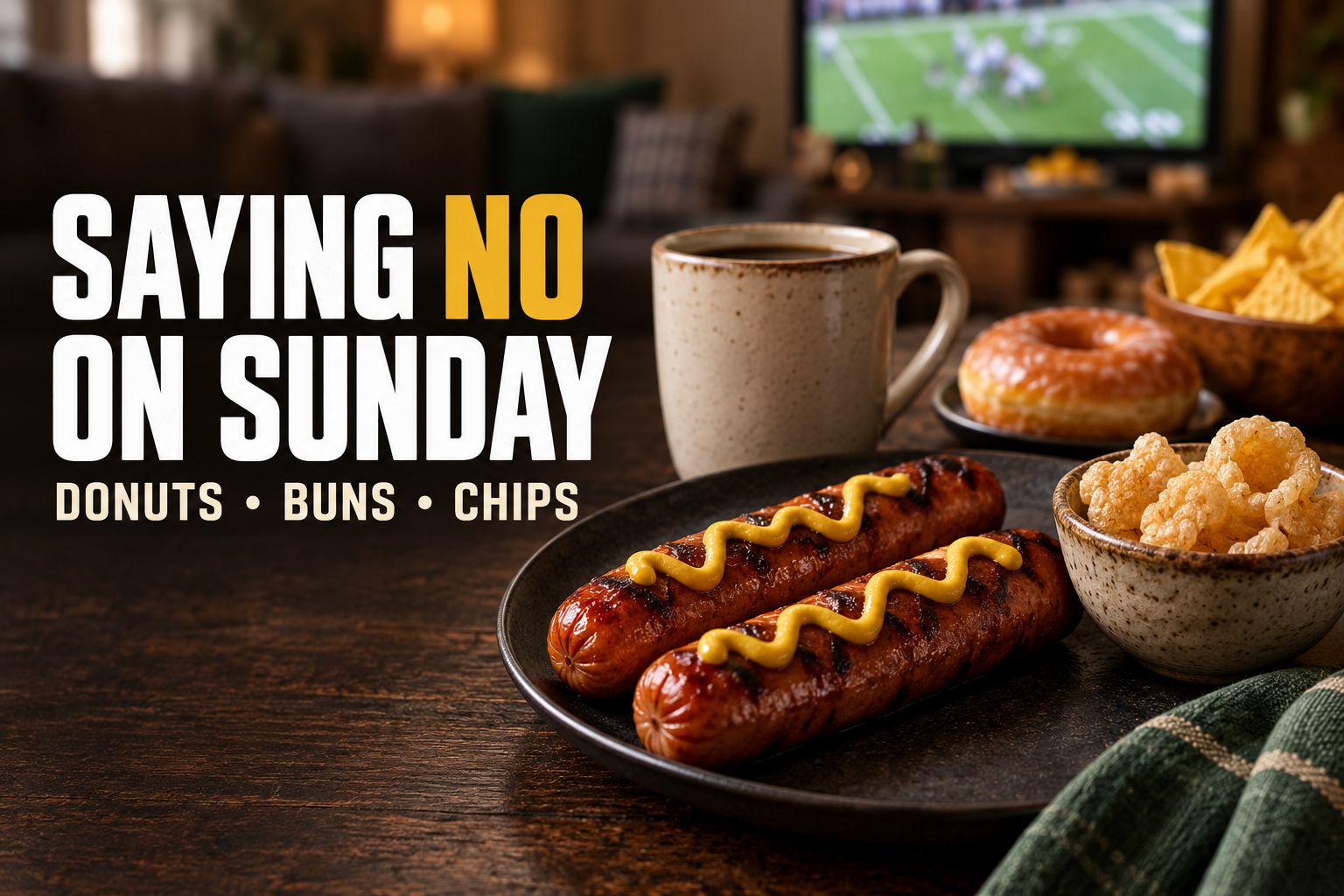
Sunday is supposed to be a day of rest. Apparently, that does not include resting from food temptation. My first test comes at church, where the donuts are waiting. They are free, convenient and sitting beside the coffee as if the two were joined together in holy matrimony.
Later, I have another test at an in-laws’ football watch party. That means hot dogs, buns, chips and food sitting within arm’s reach for several hours. Neither situation is unusual. That is precisely why it matters. Ketovore is relatively easy when I’m home and completely in control of the kitchen. The real challenge is following the plan while participating in ordinary life.
Today, that means learning to say no without becoming miserable, antisocial or the person who delivers a 20-minute lecture about carbohydrates while everyone else is trying to watch football.
The Donut Table at Church
A donut is not particularly difficult to avoid when it is locked inside a bakery several miles away. It becomes more persuasive when it is free, directly in front of me and surrounded by people I enjoy visiting with. The donut table creates several temptations at once:
- The food is convenient.
- Everyone else is eating.
- It feels like part of the Sunday routine.
- I can tell myself that one donut will not matter.
- There is often another donut available if the first one awakens its friends.
I may not even be hungry. I can still find myself considering one simply because it is there. That is something I have started noticing about my eating habits. Hunger is only one reason I eat. Availability, habit, boredom and social pressure can all look remarkably similar when glazed.
The Decision Needs to Happen Before Church
If I wait until I am standing beside the donut box to decide, I have already made the situation more difficult. A better approach is to make the decision before I leave home:
“I am not eating a donut at church today.”
That is clearer than saying I will “try to be good.” “Try” leaves room for negotiations. It invites me to inspect every donut, compare the options and determine whether the maple one might qualify as a special religious exemption. A decision ends the discussion. I can have my morning butter coffee, drink regular coffee or water at church and focus on the people rather than the refreshments. I can also avoid standing directly beside the donut table while visiting. Willpower is useful, but physical distance is wonderfully underrated.
Saying No to Food Is Not Saying No to Fellowship
This may be the most important part of the lesson. I can attend church, visit with friends and enjoy the morning without eating a donut. The food is available, but it is not the purpose of being there. Likewise, I can enjoy a family football party without eating everything on the table. Declining food is not the same as declining fellowship.
Sometimes I feel as though refusing something might make the situation awkward. In reality, most people are not carefully monitoring what I eat. They are thinking about their own plate, the conversation or whether their team can manage not to fumble. Nobody at church will remember whether I ate a donut. Nobody at the football party will care whether my hot dog had a bun. But tomorrow morning, I will remember the choice.
The Football Party Is a Different Kind of Test
The donut decision may last a few minutes. A football watch party can last several hours. That creates a different challenge. Food may remain on the counter throughout the game. Chips may sit in a bowl directly in front of me. Even if I am not hungry at kickoff, I may begin eating simply because my hand has nothing better to do between plays. Chips are especially dangerous for me because “just a few” is not a measurable unit.
A few chips becomes another handful. Then I find the broken chips at the bottom of the bowl strangely important. Before long, I have personally accepted responsibility for making sure none of them feel excluded. For me, not starting is often easier than stopping. Karen eats before going out and/or brings her own snacks. That’s something to consider.
My Plan for the Hot Dogs
Hot dogs can still give me a workable option. I can skip the bun and eat the hot dogs with mustard, cheese or another low-carbohydrate topping. I can check the labels when possible because hot dogs, chili and condiments can contain added sugar and carbohydrates. It may not be the most perfect ketovore meal I have ever eaten, but a bunless hot dog is much closer to my plan than a hot dog covered in chili, wrapped in bread and accompanied by half a bag of chips.
The goal is not to demand an ideal meal in every social setting. The goal is to make the best reasonable choice available. If I know the available food will be difficult, I can also eat some meat or eggs before leaving home. Arriving satisfied makes every decision easier. Hunger has an impressive ability to turn foods I had already rejected into foods I suddenly “need.”
Bring My Own Crunch
One challenge at a football party is wanting something crunchy while everyone else is eating chips. Pork rinds can be a useful substitute for me. They give me something appropriate to snack on without opening the door to tortilla chips. I can also keep water, unsweetened tea or a zero-sugar drink in my hand. That gives me something to reach for and reduces mindless eating.
This is not about pretending pork rinds are identical to chips. They are not. It is about having an option that supports the decision I made before the party.
I Don’t Need to Explain Everything
If someone offers me a donut or chips, I don’t owe them my complete dietary history. A simple response is enough: “No, thank you.” “I’m good.” “I’m skipping the bun.” “That looks good, but I’m sticking with my plan today.” I don’t need to explain ketosis, fasting, insulin, carbohydrates, weight loss or the entire history of the Standard American Diet.
“No, thank you” is a complete sentence. The conversation can then return to more important Sunday matters, such as faith, family and why the referee is apparently unable to see what everyone else in the room clearly saw.
What Am I Really Saying Yes To?
It is easy to focus on what I am giving up. I am saying no to the donut. I am saying no to the bun. I am saying no to the chips. But those are only half of the decision. I am also saying yes to waking up Monday without regret. I am saying yes to continued progress. I am saying yes to keeping a promise I made to myself.
“No” feels less like deprivation when I remember the larger “yes” behind it. I am not being denied a donut. I am choosing something I want more than the donut.
Sunday Does Not Have to Be a Cheat Day
Weekends can become dangerous because they feel separate from the rest of the week. I may tell myself that Sunday is a special occasion, but Sundays arrive with remarkable regularity. If every Sunday becomes a cheat day, I am not dealing with an occasional exception. I have created a weekly tradition.
There will be genuine special occasions, and I may occasionally make an intentional choice to eat something outside my plan. But the mere presence of food does not make the day special. A box of donuts is not a holiday. A football game happens almost every week. If I want long-term progress, I need a plan that works during normal Sundays—not just quiet weekdays when nobody invites me anywhere.
If I Slip, I Still Use the Next-Meal Rule
I have a plan, but I am also human. If I eat the donut or reach for the chips, I do not need to declare the entire day ruined. I can stop the mistake where it happened and return to ketovore at the next meal. That means no guilt, no extreme punishment and no promise to restart next Monday.
One donut does not require a farewell tour through the chip bowl. My previous rule still applies:
Reset at the next meal.
My Sunday Game Plan
Here is my plan for handling today:
- Make the donut decision before arriving at church.
- Have coffee or water and visit away from the food table.
- Remember that fellowship does not require eating.
- Arrive at the football party with a plan.
- Eat hot dogs without the buns.
- Use mustard, cheese or another low-carbohydrate topping.
- Skip the chips completely rather than attempting “just a few.”
- Bring pork rinds if I want something crunchy.
- Keep a drink in my hand.
- Enjoy the people and the game.
That is a realistic plan. It does not require everyone else to change the menu for me, and it does not require me to stay home.
The Bottom Line
Today’s challenge is not really donuts, hot dogs or chips. It is whether I can make a decision before temptation appears and then honor that decision when the food is directly in front of me. Ketovore will not work only because I know which foods contain carbohydrates. It will work when I learn to say no in the ordinary moments when eating would be easy, socially acceptable and temporarily enjoyable.
I can enjoy church without a donut. I can enjoy football without the bun and chips. I can enjoy time with my family without making food the main event. Today, saying no is not about what I am missing. It is about choosing the goal I want more.

0 Comments