
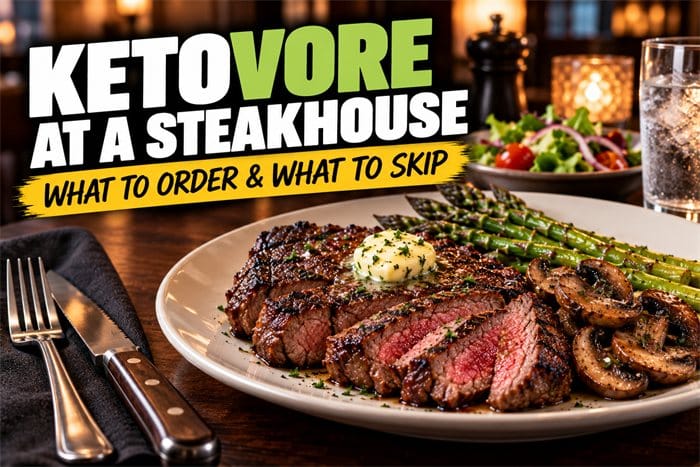
Of all the restaurants you could visit while eating ketovore, a steakhouse might be one of the easiest. Think about it. The entire restaurant is practically built around meat. Steak. Prime rib. Pork chops. Grilled chicken. Salmon. Shrimp. For someone trying to keep carbohydrates low and protein at the center of the meal, that’s a pretty good starting point.
Of course, there’s one small problem. The steakhouse also has warm bread, loaded baked potatoes, French fries, fried appetizers, and desserts that require their own ZIP codes. And somehow, that basket of bread always arrives before you’ve had a chance to make a responsible decision.
But eating ketovore at a steakhouse doesn’t have to be complicated. You don’t need to explain your entire dietary philosophy to the server. You don’t need to ask the chef to invent a special meal. You simply need to know what to order, what to modify, and what to skip. Let’s talk about it.
1. Start With the Steak
This one probably won’t surprise anybody. Steak is an obvious starting point for a ketovore meal. Most plain, unbreaded cuts of beef contain very little carbohydrate. They also provide protein, iron, zinc, and vitamin B12. The bigger differences between cuts usually involve portion size, fat content, price, and preparation.
Ribeye
Ribeye is known for its marbling and rich flavor. It’s a popular choice for people who prefer fattier cuts of meat. However, a large ribeye can also contain substantial calories and saturated fat. Ketovore doesn’t mean those considerations disappear.
New York Strip
A New York strip offers a balance between tenderness and a relatively firm texture. It’s another straightforward option when ordered without sweet glazes or sauces.
Filet Mignon
Filet mignon is generally leaner than ribeye and is known for its tenderness. It can be a good option if you prefer a smaller portion or less fat.
Sirloin
Sirloin is often one of the more affordable steakhouse options. And that’s worth remembering. You don’t have to order the most expensive cut of meat to have a satisfying ketovore dinner. Sometimes a reasonably priced sirloin is exactly what you need.
My practical recommendation: Choose a cut you enjoy, select a portion appropriate for your appetite, and ask for simple seasoning. The goal is dinner, not winning a steak-eating competition.
2. Don’t Overlook Prime Rib
Prime rib is another common steakhouse option. It’s usually roasted rather than grilled and is often served with au jus or horseradish sauce. Plain prime rib can fit a low-carbohydrate meal. But pay attention to the extras. Some sauces contain added sugar, flour, or other carbohydrate-containing ingredients.
If you’re uncertain, ask for the sauce on the side. That way, you’re controlling what goes on the meat. Also remember that prime rib can be quite rich. A large serving may be more food than you actually need. And if you don’t finish it, there’s nothing wrong with taking leftovers home and getting another meal out of it. That’s practically a financial planning strategy.
3. Choose Low-Carb Sides Instead of the Potato
Here’s where the steakhouse experience gets interesting. Many entrees come with a choice of sides. And the default options often include: Baked potatoes, Mashed potatoes, French fries, Macaroni and cheese, Rice, & Sweet potato casseroles. These can add substantial carbohydrates to an otherwise protein-centered meal. Fortunately, many steakhouses offer alternatives.
Better Side Options
Depending on your version of ketovore, consider:
- Steamed broccoli
- Grilled asparagus
- Sautéed mushrooms
- Green beans
- Side salad without croutons
- Spinach prepared without flour-based sauces
The preparation matters. Vegetables covered in sugary glaze or breaded and fried aren’t equivalent to plain steamed vegetables. Creamed spinach may contain flour or other thickeners. And those innocent-looking green beans might arrive with a sweet sauce. When in doubt, ask.
A simple request usually works: “Could I substitute steamed broccoli or asparagus for the baked potato?” No speech required. No PowerPoint presentation. Just a substitution.
4. Be Careful With Steakhouse Appetizers
Appetizers are where a perfectly reasonable dinner can become a much larger meal. Steakhouses love fried appetizers. Blooming onions. Fried pickles. Breaded mushrooms. Loaded potato skins. They’re designed to be shared, but that doesn’t mean they magically contain fewer carbohydrates when several people eat them.
Better Appetizer Choices
Depending on the menu, look for:
Shrimp cocktail: Chilled shrimp can be a protein-focused option. Traditional cocktail sauce often contains ketchup and added sugar, so use it sparingly or request lemon.
Grilled shrimp: A good alternative when prepared without sweet marinades.
Seared scallops: Potentially suitable when served without breading or sugary sauces.
Wedge salad: Can work if you include vegetables and dairy, but check the dressing and toppings.
Plain grilled mushrooms: A simple addition if available.
You can also skip the appetizer entirely. There’s no rule requiring you to eat three courses simply because the restaurant printed them on separate sections of the menu.
5. Watch the Sauces, Glazes, and Marinades
Here’s one of the biggest restaurant lessons. The meat itself may be low in carbohydrates. The sauce might not be.
Steakhouse menus sometimes feature:
- Bourbon glazes
- Honey barbecue sauces
- Sweet teriyaki marinades
- Brown sugar rubs
- Sweet chili sauces
- Thickened gravies
Those ingredients can change the carbohydrate content of a meal. That doesn’t mean every seasoning blend is a problem. Salt, pepper, garlic, herbs, and many dry seasonings contribute little carbohydrate in typical amounts. But recipes vary between restaurants.
My Simple Ordering Strategy
Ask for the steak grilled with salt and pepper. If you want butter, ask for a modest amount on the side. If you want a sauce, request it separately so you can decide how much to use. And remember that butter and rich sauces still contribute calories, even when they contain little carbohydrate.
I discussed the importance of keeping restaurant decisions simple in How to Eat Ketovore Fast-Food at These 10 Restaurants. The same principle applies at a steakhouse. Start with protein. Be selective about the extras.
6. What About the Bread Basket?
Ah, yes. The bread basket. The restaurant brings it to the table, warm and ready. Sometimes there’s cinnamon butter. Sometimes there are fresh rolls. Sometimes the server offers another basket before you’ve even ordered. If you’re keeping carbohydrates very low, the simplest strategy is to skip the bread.
But here’s the part I think matters most. Make that decision before the bread arrives. If you already know what you’re going to do, you don’t need to negotiate with yourself for fifteen minutes. You can also ask the server not to bring bread to the table, if everyone you’re dining with agrees. If other people want bread, that’s fine too. Your eating plan doesn’t have to become everybody else’s eating plan.
And if you decide to eat some bread, one choice doesn’t require turning the rest of the evening into a free-for-all. Just return to your normal routine at the next meal.
7. Don’t Forget Chicken, Fish, and Seafood
Even though we’re talking about steakhouses, beef isn’t your only option. Many steakhouses serve: Grilled salmon, Grilled chicken, Pork chops, Shrimp, Lobster, & Other seafood. These foods can provide protein and additional variety. Salmon, for example, provides omega-3 fatty acids.
Grilled chicken can be a leaner choice than many fatty beef cuts. Shrimp is another convenient protein source. The same ordering rules apply. Choose grilled, roasted, or otherwise simply prepared dishes. Ask about sauces. And substitute appropriate sides when possible. Variety can help make an eating plan more enjoyable and nutritionally balanced. You don’t need to eat ribeye every time you leave the house. Your wallet may appreciate that advice.
8. How to Order at a Steakhouse Without Making It Complicated
Let’s put everything together. Imagine you’re sitting down at a typical steakhouse. You want a good meal. You want to keep carbohydrates low. And you don’t want the server to regret approaching your table. Here’s a simple order: “I’d like the sirloin, please, with broccoli instead of the baked potato. Could you leave off any sweet glaze and put the sauce on the side?”
That’s it. You have a protein-centered entree with a lower-carbohydrate side. You can adjust the order based on your appetite and the restaurant’s options.
Three More Easy Orders
Option 1: The Classic
New York strip, grilled asparagus, water or unsweetened tea.
Option 2: The Budget-Conscious Choice
Sirloin with steamed broccoli and a side salad without croutons.
Option 3: The Seafood Alternative
Grilled salmon with green beans and lemon.
These are examples, not guaranteed menu combinations at every restaurant. Check the restaurant’s current menu before you go.
9. How to Avoid Spending a Fortune
There’s another challenge with steakhouse dining. The bill. It’s entirely possible to order a ketovore-friendly dinner that costs more than your weekly grocery budget. But that isn’t necessary. Here are a few ways to keep things reasonable.
Choose Sirloin Instead of Premium Cuts
A smaller sirloin may be substantially less expensive than a large ribeye or filet.
Skip Unnecessary Appetizers
If your entree provides enough food, you may not need an appetizer.
Consider Lunch Specials
Some restaurants offer smaller portions or lower prices during lunch.
Take Leftovers Home
A large steak can sometimes become two meals. Just refrigerate leftovers promptly and follow food-safety guidelines.
Remember the Grocery Store
Eating out is convenient, but cooking at home often gives you greater control over cost and ingredients. For more ideas, see My Simple Ketovore Grocery List—and How I Save Money on Meat. A good steakhouse dinner can be enjoyable. It just doesn’t need to become a financial emergency.
10. Plan Your Order Before You Arrive
This might be the most useful tip in the entire article. Look at the menu before leaving home. Most restaurants publish menus online. Some also provide nutrition and allergen information. You can check the available steaks, sides, and preparation options before you’re hungry. That makes the decision easier.
I’ve talked about this approach in Fred’s 5th Week on Ketovore: Meal Plan. Planning ahead is especially useful when eating out for business, traveling, or joining family and friends. You don’t have to control the entire restaurant experience. You just need a reasonable plan for your own meal.
Quick Steakhouse Ordering Cheat Sheet
| Menu Item | Ketovore Approach |
|---|---|
| Ribeye, strip, filet, or sirloin | Choose a suitable portion; request simple seasoning |
| Prime rib | Ask for sauces on the side |
| Grilled salmon or chicken | Good alternatives to beef |
| Asparagus, broccoli, or mushrooms | Practical lower-carb sides |
| Loaded baked potato | Skip or substitute |
| Bread basket | Skip if keeping carbohydrates low |
| Fried onion or breaded appetizer | Usually higher in carbohydrates |
| Sweet glazes and barbecue sauces | Ask about ingredients or leave off |
| Water or unsweetened tea | Simple drink choices |
| Dessert | Optional; consider whether it fits your goals |
Final Thoughts: Enjoy the Steakhouse
One thing I appreciate about ketovore is that eating out doesn’t have to be a major production. Especially at a steakhouse. The restaurant already serves plenty of foods that can fit a protein-centered, lower-carbohydrate meal. You simply need to make a few decisions.
Choose your protein. Pick appropriate sides. Pay attention to sauces. Keep portions reasonable. And enjoy your dinner. You don’t need to eat perfectly every time. You don’t need to explain yourself to everyone at the table. And you definitely don’t need to order the biggest steak in the building just because it technically fits your eating plan.
The goal is to enjoy a good meal while making choices that support the lifestyle you’re trying to maintain.
Because ketovore should make everyday decisions easier. Not turn a Friday-night steak dinner into a complicated science experiment.
Disclaimer: This article provides general nutrition information, not individualized medical advice. Ketovore and other restrictive diets may not be appropriate for everyone. Consult a qualified healthcare professional before making significant dietary changes, especially if you have a medical condition or take prescription medications.

0 Comments