
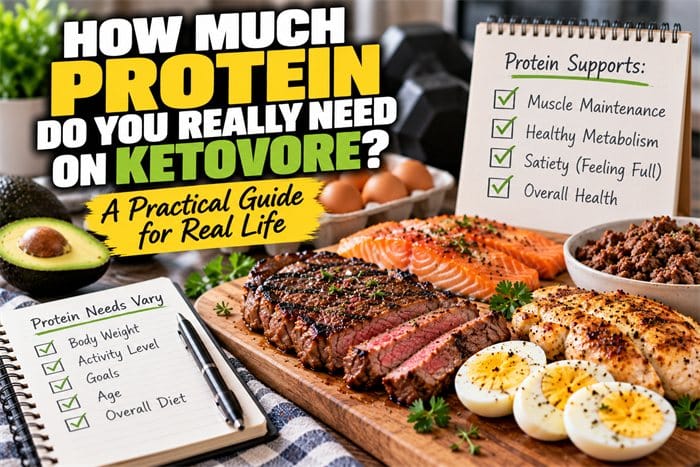
One of the things I appreciate about eating ketovore is that the food choices can be pretty straightforward. Meat. Eggs. Fish. Maybe some cheese, avocado, or low-carbohydrate vegetables, depending on how strictly you’re following the plan. Simple enough. But there’s a question that eventually comes up.
How much protein am I actually supposed to eat?
Is a couple of eggs enough for breakfast? Do you need a giant steak for dinner? Should you be counting every gram? And if you’re trying to lose weight, do you need more protein or less? There’s plenty of advice floating around the internet. Some of it is useful. Some of it makes eating dinner sound like preparing for a chemistry exam. Let’s simplify things.
Why Protein Matters on Ketovore
Protein is an essential nutrient. Your body uses it to build and repair tissues, maintain muscle, produce enzymes and hormones, and support normal immune function. It’s especially important when you’re trying to lose weight while maintaining muscle.
When people lose weight, they may lose some lean tissue along with body fat. Adequate protein, combined with resistance training, can help support muscle maintenance. But here’s an important point.
Eating more protein doesn’t automatically mean you’ll build more muscle or lose more fat.
Your overall diet, activity, energy intake, age, and health all matter. And while ketovore tends to emphasize protein-rich foods, that doesn’t guarantee you’re consuming the right amount. You still need to consider portions.
How Much Protein Does the Average Adult Need?
Let’s start with the basic recommendation. The Recommended Dietary Allowance (RDA) for protein for most healthy adults is approximately 0.8 grams per kilogram of body weight per day. That’s a baseline intended to meet the needs of nearly all healthy adults, not necessarily an ideal target for every fitness or weight-loss goal. To convert pounds to kilograms, divide your weight by 2.2. Then multiply by 0.8.
Example: Someone Weighing 180 Pounds
180 ÷ 2.2 = approximately 82 kilograms.
82 × 0.8 = approximately 65 grams of protein daily.
That’s the standard adult RDA. But protein needs can be higher for certain people, including athletes and people engaged in regular resistance training. Some older adults may also benefit from higher protein intake, depending on their health and nutritional status.
What About Protein for Exercise and Muscle Maintenance?
If you’re lifting weights or exercising regularly, protein requirements may differ from the standard RDA. Sports nutrition research commonly discusses a range of approximately 1.4–2.0 grams per kilogram of body weight per day for many healthy exercising adults. That isn’t a universal prescription.
It’s a research-supported range often used in sports nutrition, and individual needs vary. For someone weighing 180 pounds, that would be approximately 115–164 grams daily. That’s quite a difference from the baseline RDA. But it doesn’t mean everyone eating ketovore should immediately aim for 160 grams. Your age, activity level, body composition, medical history, and goals should influence your target. People with kidney disease or certain other medical conditions may need individualized protein recommendations.
Protein Calculator: See How the Numbers Work
Here are some examples using the standard adult RDA and the commonly cited range for exercising adults.
| Body weight | Baseline RDA (0.8 g/kg) | Exercise-oriented range (1.4–2.0 g/kg) |
|---|---|---|
| 140 lbs | 51 g | 89–127 g |
| 160 lbs | 58 g | 102–145 g |
| 180 lbs | 65 g | 115–164 g |
| 200 lbs | 73 g | 127–182 g |
| 220 lbs | 80 g | 140–200 g |
These are illustrative calculations, not personalized recommendations. For someone with substantial excess body weight, using current body weight in a higher-protein formula can sometimes overestimate an appropriate target. A registered dietitian can help select a suitable reference weight and goal. The point is to understand the general range, not chase the biggest number on the chart.
How Much Protein Is Actually in Your Food?
Here’s where things become practical. People sometimes confuse the weight of meat with the amount of protein it contains. A six-ounce steak doesn’t contain six ounces of pure protein. Meat also contains water, fat, and other components. Approximate protein amounts for common foods include:
| Food | Serving | Approximate protein |
|---|---|---|
| Chicken breast, cooked | 4 oz | 35 g |
| Ground beef, cooked | 4 oz | 28 g |
| Salmon, cooked | 4 oz | 25 g |
| Large eggs | 2 eggs | 12–13 g |
| Cottage cheese | 1 cup | 24–28 g |
| Cheddar cheese | 1 oz | 7 g |
| Canned tuna, drained | 3 oz | 20 g |
Actual amounts vary with the cut, fat content, brand, cooking method, and serving weight. You can look up individual foods in the USDA FoodData Central database.
A Quick Example
Suppose someone eats: Breakfast: Three eggs and a little cheese. Lunch: Six ounces of cooked chicken. Dinner: Six ounces of cooked ground beef. That combination could provide well over 100 grams of protein, depending on the exact ingredients and portions.
You don’t necessarily need protein shakes or expensive supplements. Ordinary food can provide a substantial amount.
Should You Eat All Your Protein in One Meal?
This is an interesting question, especially for people practicing intermittent fasting or OMAD. Your body can digest and absorb protein from a large meal. But that doesn’t mean meal timing is irrelevant. Research on muscle protein synthesis suggests that distributing protein across meals may be useful, particularly for people trying to optimize muscle maintenance or growth.
If you’re eating only once per day, it may also be harder to consume enough total protein and other nutrients comfortably. That doesn’t mean everyone must eat three meals. It means you should consider whether your eating schedule supports your nutritional needs.
For someone focused on muscle development, splitting protein between multiple meals may be more practical than attempting to eat everything at dinner. And if you’re following OMAD, it’s worth reviewing the overall adequacy of your diet with a qualified professional.
Does Eating More Protein Help With Weight Loss?
Protein can play a useful role in weight management. Higher-protein meals may increase feelings of fullness compared with some lower-protein alternatives. Adequate protein can also help support lean mass during weight loss, particularly when combined with resistance exercise. But protein still provides calories. Approximately four calories per gram.
And foods containing protein may also contain substantial fat. For example, a fatty cut of beef provides protein, but it also contributes more calories than a similar portion of lean meat. That isn’t automatically bad. It simply means portion sizes still matter. I’ve discussed this challenge in The Ketovore Mistake I Keep Making: Eating Too Much of the Right Foods.
Eating foods that fit your plan is only one part of the equation. Eating appropriate amounts is another.
Can You Eat Too Much Protein on Ketovore?
For healthy adults, relatively high protein intakes are often tolerated, but extremely high amounts aren’t automatically beneficial. More isn’t always better. Very restrictive eating patterns may also crowd out foods that provide fiber, vitamins, minerals, and other important nutrients. And people with certain kidney conditions may need specific limits or adjustments.
It’s also worth remembering that protein doesn’t replace the need for an overall nutritionally adequate diet. If you’re eating large quantities of meat but very little variety, it’s sensible to review your nutrient intake. Ketovore should not become a competition to see who can eat the biggest steak. Although I’m sure somebody on the internet has already tried.
Five Easy Ways to Get Enough Protein Without Overthinking It
1. Start With a Protein Source
Build your meals around foods such as eggs, chicken, beef, fish, or other suitable protein sources. Then add other foods according to your needs and preferences.
2. Learn a Few Common Portions
You don’t have to weigh every meal forever. But measuring a few servings can help you understand what four or six ounces of cooked meat actually looks like.
3. Use Affordable Protein Sources
Eggs, ground beef, chicken thighs, canned tuna, and canned salmon can all be practical choices. For more ideas, see My Simple Ketovore Grocery List—and How I Save Money on Meat.
4. Consider Your Activity Level
Someone who lifts weights regularly may have different needs from someone who is mostly sedentary. Adjustments should reflect your actual goals and health.
5. Don’t Forget the Rest of Your Nutrition
Protein is important. But so are adequate energy, essential fats, vitamins, minerals, and fiber. Eating ketovore doesn’t eliminate those requirements.
What Does a Protein-Focused Ketovore Day Look Like?
Let’s put everything together with an example. This isn’t a prescribed meal plan, just an illustration of how ordinary foods can contribute protein.
Breakfast
Three eggs with three ounces of cooked ground beef. Approximate protein: 40 grams.
Lunch
Five ounces of cooked chicken with avocado and a small salad. Approximate protein: 44 grams.
Dinner
Six ounces of cooked salmon with suitable vegetables. Approximate protein: 38 grams.
Estimated total: 122 grams of protein.
The actual total will vary based on ingredients and preparation. For more meal inspiration, see Ketovore Breakfast Ideas: 10 Easy High-Protein Meals. Notice that this example doesn’t require a protein shake, protein bar, or special supplement. It’s just food.
Final Thoughts: Protein Matters, but Keep It Practical
Protein is one of the most important nutrients to pay attention to when following a ketovore lifestyle. It supports muscle maintenance, tissue repair, and numerous normal body functions. But there’s no single magic number that applies to everyone. Your needs depend on your body, activity level, health, and goals. Start by understanding the basics.
Learn how much protein is in common foods. Build meals around appropriate portions. Pay attention to your overall nutrition. And make adjustments when necessary. Because the goal isn’t to win a protein-eating contest.
It’s to eat in a way that supports your health, your strength, and a routine you can actually maintain.
And if you can accomplish that without carrying a food scale to every restaurant? I’d call that progress.
Disclaimer: This article provides general nutrition education and is not individualized medical advice. Protein requirements vary, and people with kidney disease or other medical conditions may need specialized guidance. Consult a qualified healthcare professional before making major dietary changes.

0 Comments