
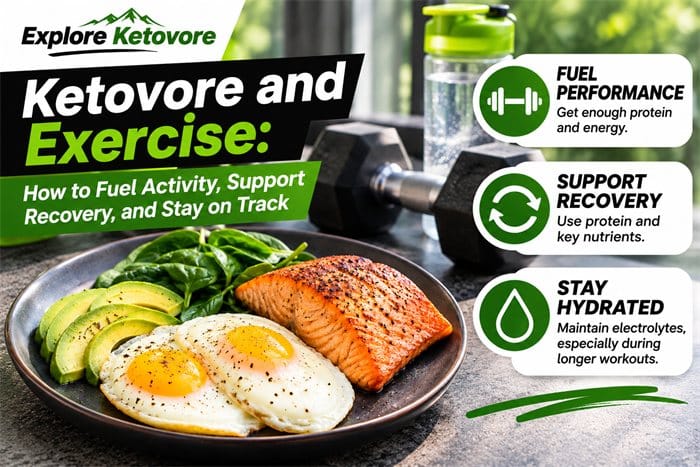
Eating ketovore can simplify food decisions because you focus on protein-rich foods, limit carbohydrates, and build meals around ingredients that fit your goals. But what happens when you add exercise to the equation? Maybe you’re walking every morning, lifting weights, or attending a spin class and discovering that stationary bicycles are remarkably effective at making you question your life choices. Suddenly, questions about nutrition, energy, and recovery become more important.
Should you eat before exercising, and do you need additional protein? Can you build muscle without eating many carbohydrates, and what happens if your energy disappears halfway through a workout? The answers depend on your activity level, nutritional needs, and how your body responds to carbohydrate restriction. The goal isn’t simply to exercise while eating ketovore. It’s to support your activity with adequate nutrition and recovery.
Can You Exercise on a Ketovore Diet?
Yes, people can participate in many forms of physical activity while following a carbohydrate-restricted eating pattern. Walking, recreational cycling, resistance training, and other activities are all possibilities. However, not every type of exercise places the same demands on your body, and a comfortable thirty-minute walk is very different from an intense interval-training session.
High-intensity exercise relies heavily on carbohydrate metabolism, while lower-intensity activities can use a greater proportion of fat for fuel. This doesn’t mean low-carb diets automatically prevent vigorous exercise, but performance responses vary from person to person. Some people adapt well to carbohydrate restriction, while others experience reduced performance during demanding workouts. If you’re consistently struggling with energy or recovery, your overall food intake and carbohydrate restriction may need reconsideration.
Start With a Realistic Exercise Goal
Before worrying about advanced workout nutrition, establish a sustainable activity routine. The Centers for Disease Control and Prevention recommends that adults generally aim for at least 150 minutes of moderate-intensity aerobic activity weekly, along with muscle-strengthening activities on two or more days. That might include brisk walking five days per week and strength training twice weekly. However, you don’t have to begin with that entire schedule.
Someone who has been inactive might start with ten-minute walks and gradually increase activity. Consistency matters more than attempting an ambitious routine that leaves you exhausted after three days. Exercise doesn’t have to happen in a gym, either, because walking, gardening, cycling, swimming, and many everyday activities count. The important thing is moving regularly and finding activities you can maintain.
Why Strength Training Deserves Attention
When people begin a weight-loss plan, the scale often becomes their primary measurement of success. However, losing weight and improving body composition aren’t exactly the same thing. During weight loss, some of the weight lost can come from lean tissue, making resistance training particularly valuable. Strength training can help preserve muscle while improving strength and physical function, especially as we age.
You don’t need to become a competitive bodybuilder to experience these benefits. A basic routine might include squats, modified push-ups, resistance-band exercises, or weight machines that work all major muscle groups. Start with movements appropriate for your abilities, use proper technique, and increase resistance gradually. Being able to carry groceries, climb stairs, and get out of a chair comfortably may not earn you a fitness trophy, but those abilities matter considerably in everyday life.
Protein Matters When You’re Active
Protein supports muscle maintenance and repair, making adequate intake especially important for people who exercise regularly. The International Society of Sports Nutrition reports that approximately 1.4–2.0 grams of protein per kilogram of body weight daily is sufficient for most healthy exercising individuals seeking to build or maintain muscle. However, that range isn’t a universal prescription because individual requirements depend on age, body composition, exercise intensity, energy intake, and medical circumstances. People with certain health conditions, including kidney disease, may require individualized guidance.
Fortunately, many common ketovore foods provide substantial protein, including beef, chicken, eggs, fish, and other animal-derived foods. However, eating ketovore doesn’t automatically guarantee adequate protein intake, particularly if you’re consuming very small portions or restricting calories aggressively. Paying attention to your overall intake can help ensure you’re supporting your activity and recovery. For more information, see How Much Protein Should I Eat on Ketovore?.
Do You Need to Eat Before Exercising?
Not necessarily, because some people prefer exercising before breakfast while others feel better after eating. The best approach depends on workout duration, intensity, personal tolerance, and medical considerations. For a short, comfortable walk, eating immediately beforehand may be unnecessary. However, demanding strength-training sessions or longer cycling workouts make adequate energy availability more important.
If exercising without food leaves you dizzy, unusually weak, nauseated, or unable to perform normally, don’t ignore those symptoms. Stop exercising and assess what might be happening rather than attempting to push through discomfort. People who take medications that can cause low blood glucose should be particularly cautious about combining fasting and exercise. After all, there is no special award for completing a workout while feeling terrible.
Don’t Confuse Low Carbs With Unlimited Fat
Fat provides energy and plays important roles in the body, but adding large quantities of butter, cream, or cooking fat doesn’t automatically improve exercise performance. Your total energy intake still matters, particularly when weight management is one of your goals. Routinely consuming more calories than your body uses can interfere with weight-loss progress, even when those calories come from ketovore-friendly foods.
On the other hand, eating too little can leave you fatigued and compromise recovery. The goal is to consume enough energy to support your health and activity without assuming that more fat is always better. Finding the appropriate balance depends on your individual needs and fitness goals. Explore Ketovore discusses this distinction in Do Calories Matter on Ketovore?.
Hydration and Electrolytes Matter Too
Water helps regulate body temperature and supports normal physical function, making hydration important during exercise. When you work out, especially in hot conditions, you lose fluids through sweat, and longer or more intense sessions can increase electrolyte losses. Carbohydrate restriction may also affect fluid balance, particularly during the initial transition to a very-low-carb diet. However, that doesn’t mean everyone needs large amounts of supplemental sodium or electrolyte powders.
Fluid and electrolyte requirements vary according to activity, temperature, sweat losses, medications, and health conditions. For many shorter workouts, drinking water according to thirst is sufficient, while longer or more demanding exercise may require additional planning. Avoid automatically taking high-dose electrolyte supplements, particularly if you have kidney disease, high blood pressure, or take medications affecting fluid balance. For a more detailed explanation, read Do You Need Electrolytes on Ketovore?.
Recovery Is Part of the Plan
Exercise provides a stimulus for physical adaptation, but recovery gives your body time to respond. That means adequate food, sleep, hydration, and rest all matter when building a sustainable fitness routine. A workout schedule that leaves you constantly exhausted isn’t necessarily more effective than a moderate plan you can maintain consistently.
Pay attention to persistent soreness, declining performance, unusual fatigue, and recurring injuries. These can indicate that your training load, recovery, or nutrition needs attention. A rest day doesn’t mean you’ve abandoned your goals or lost progress. Sometimes the most productive thing you can do for tomorrow’s workout is recover from today’s.
A Simple Weekly Ketovore Fitness Routine
Combining exercise with a low-carbohydrate eating pattern doesn’t require an elaborate training schedule. A balanced week can include moderate aerobic activity, strength training, and adequate recovery time. Here’s an example of how someone might organize their activities while maintaining a ketovore lifestyle.
- Monday: Thirty-minute brisk walk.
- Tuesday: Basic full-body strength training.
- Wednesday: Thirty-minute walk or comfortable cycling session.
- Thursday: Recovery day with optional light movement.
- Friday: Full-body strength training.
- Saturday: Longer walk, recreational cycling, or another enjoyable activity.
- Sunday: Rest, stretching, or easy movement.
This schedule is only an illustration, not a personalized exercise prescription. Beginners may need shorter sessions, while experienced exercisers may benefit from different training volumes. Your current fitness level, available time, and recovery needs should guide your decisions. The important thing is finding a routine that supports your goals and can be maintained over time.
What If Your Workouts Feel Worse on Ketovore?
Don’t automatically assume that poor exercise performance means you’re failing or lack discipline. Start by considering whether you’re eating enough overall, consuming adequate protein, and getting sufficient sleep. Think about whether you’ve increased exercise intensity too quickly or haven’t been drinking enough fluids. It’s also worth considering whether carbohydrate restriction could be affecting your performance during high-intensity activities.
If problems continue, consider working with a registered dietitian familiar with sports nutrition. Some people may benefit from a less restrictive carbohydrate intake, particularly when participating in demanding athletic activities. Your nutritional approach should support your health and physical performance rather than make exercise unnecessarily difficult. A dietary label shouldn’t become more important than your health.
The Bottom Line: Fuel the Life You’re Trying to Build
Ketovore and exercise can fit together, but successful fitness involves more than avoiding carbohydrates. It requires adequate nutrition, appropriate physical activity, and sufficient recovery to support your body’s needs. Start with a manageable routine, include strength training, pay attention to protein, and stay hydrated. Be willing to adjust your eating pattern when your activity level or health requires it.
The goal isn’t to become the person who follows the strictest diet. It’s to become healthier, stronger, and more capable. Building sustainable habits will generally serve you better than chasing perfection or following an overly restrictive routine. That’s a much better finish line.
Disclaimer: This article provides general nutrition and fitness education, not personalized medical advice. Consult a qualified healthcare professional before beginning strenuous exercise or making major dietary changes, particularly if you have diabetes, cardiovascular disease, kidney disease, or take prescription medications.

0 Comments