
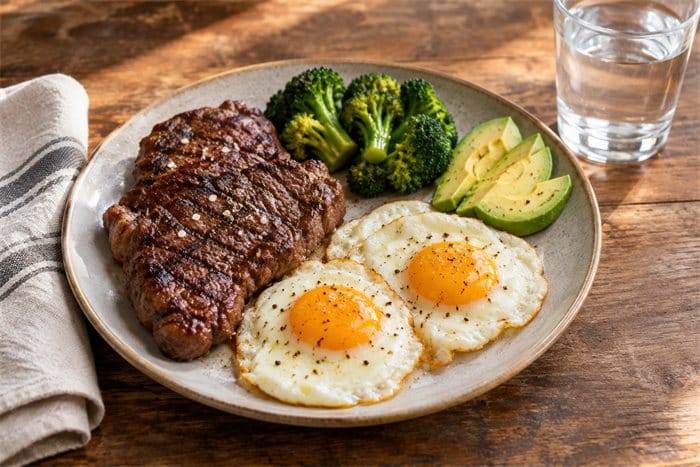
One of the most attractive things about eating ketovore is its simplicity. You don’t need seventeen ingredients, a complicated recipe, or a kitchen full of expensive specialty products. Sometimes dinner can be a steak and a couple of eggs.
Other times, it’s hamburger patties with cheese and a small serving of vegetables. And occasionally, it’s whatever meat you have in the refrigerator because you’re tired, hungry, and absolutely not interested in becoming a professional chef tonight. But there’s an important question worth answering:
How do you actually build a balanced, satisfying ketovore plate?
The answer doesn’t have to involve weighing every ingredient or turning dinner into a mathematics examination.
A practical starting point is to build meals around three decisions:
- Choose your protein.
- Include an appropriate amount of fat.
- Add optional low-carbohydrate foods for variety and nutrition.
Let’s break that down.
What Does a Ketovore Plate Look Like?
Ketovore generally falls somewhere between a traditional ketogenic diet and a strict carnivore diet. A carnivore diet focuses almost entirely on animal-derived foods. A ketogenic diet restricts carbohydrates while allowing a broader selection of foods, including vegetables, nuts, seeds, and other low-carbohydrate ingredients.
Ketovore combines elements of both approaches. Most of the meal typically comes from animal-based foods, while smaller amounts of low-carbohydrate plant foods may be included. That flexibility is useful because not everyone wants to eat exactly the same foods every day. A simple ketovore plate might contain: A grilled steak, Two eggs, A few slices of avocado, & A small serving of broccoli. Another person might prefer salmon, asparagus, and olive oil.
Neither plate needs to follow an exact percentage-by-volume rule. Portion sizes and nutritional needs vary, and there is no scientifically established universal ketovore plate formula. The goal is to create a practical structure that makes food choices easier.
Step 1: Start With Protein
Protein is the foundation of this meal-building approach. Before deciding what vegetables, cheese, sauces, or extras belong on the plate, choose the main protein. Some straightforward options include beef, chicken, turkey, pork, eggs, fish, and seafood. These foods supply protein that the body uses to maintain and repair tissues, including muscle.
Protein needs vary depending on body size, age, activity level, and health conditions. Someone who regularly exercises may have different nutritional needs from someone who spends most of the day sitting. That’s why it’s better to think of protein as a priority rather than assume one portion size works for everyone. For example, you could build dinner around hamburger patties.
Once those are selected, the remaining decisions become much easier. Would cheese improve the meal? Would a small serving of vegetables add variety? Do you need additional fat, or does the meat already contain enough? Starting with protein helps answer those questions.
Step 2: Let Fat Support the Meal
Fat is an important energy source, particularly when carbohydrates are restricted. However, eating ketovore doesn’t mean adding unlimited butter to everything. A ribeye steak already contains substantial fat. Chicken breast contains considerably less. Salmon provides fat along with protein, including omega-3 fatty acids.
The amount and type of fat you add can depend on the protein you’ve chosen. For example, a lean chicken breast might benefit from some olive oil or avocado. A fatty steak may need very little additional fat. It’s also worth remembering that fat is calorie-dense, providing approximately nine calories per gram. That doesn’t make fat something to fear. It simply means portions still matter, especially when weight management is a goal.
And while butter and animal fats can fit into some low-carbohydrate diets, dietary guidelines generally recommend limiting saturated fat and favoring unsaturated fat sources. The practical principle is simple: Use fat to make meals satisfying, not as a competition to see how much butter fits on one plate. For more discussion, see the existing Explore Ketovore article: How Much Fat Should I Eat on Ketovore?
Step 3: Decide Whether to Add Low-Carb Foods
Here’s where ketovore offers flexibility. Some meals might consist entirely of meat and eggs. Others might include a small portion of vegetables, avocado, nuts, or berries. The important thing is choosing foods that fit your nutritional needs and carbohydrate goals.
For example, consider adding: Broccoli, Asparagus, Spinach, Zucchini, Mushrooms, Avocado, & A small serving of berries. These foods can provide fiber and micronutrients that may be harder to obtain from a highly restrictive animal-only diet. Fiber deserves particular attention. According to the National Institute of Diabetes and Digestive and Kidney Diseases, adults generally need approximately 22–34 grams of dietary fiber daily, depending on age and sex.
Fiber supports normal bowel function and can help prevent constipation. People following restrictive low-carbohydrate diets may need to plan carefully to obtain adequate fiber and other nutrients. You don’t necessarily need to fill half your plate with vegetables to enjoy them. But eliminating entire food groups makes it especially important to evaluate nutritional adequacy. The goal should be a way of eating that supports long-term health, not simply the lowest possible carbohydrate number.
Five Easy Ketovore Plate Combinations
One of the easiest ways to simplify eating is to keep several reliable meal combinations available. Here are five possibilities.
1. The Steak and Eggs Plate
Start with a grilled steak and two eggs. Add a small serving of sautéed spinach or avocado if desired. This is a straightforward combination of animal-based protein, fat, and optional plant foods.
2. The Hamburger Bowl
Cook two hamburger patties. Add cheese if you tolerate dairy, along with lettuce, pickles, or a few slices of avocado. Skip the bun and choose condiments without unnecessary added sugar. It’s essentially a hamburger without the bread getting in the way.
3. The Salmon Plate
Bake or pan-sear salmon. Serve it with asparagus and a little olive oil. This provides protein, omega-3 fats, and an opportunity to include vegetables.
4. The Chicken and Avocado Plate
Choose grilled chicken thighs or chicken breast. Add avocado and a small serving of broccoli. Adjust the added fat depending on whether you’re using lean or fattier chicken.
5. The Breakfast-for-Dinner Plate
Scramble or fry several eggs. Add an appropriate serving of sausage or another protein. Include mushrooms or spinach if you enjoy them. Breakfast foods are perfectly capable of working the evening shift.
Don’t Confuse Simplicity With Eating the Same Thing Forever
One concern with restrictive diets is nutritional variety. Eating beef and eggs every day might make meal planning easy, but simplicity alone doesn’t guarantee nutritional completeness. Different foods supply different nutrients. Fish provides nutrients that may be less abundant in other animal foods. Eggs provide choline and other vitamins and minerals.
Vegetables, nuts, and seeds can contribute fiber and additional micronutrients. This doesn’t mean every meal must contain every nutrient. It means the overall eating pattern matters. A useful strategy is to rotate proteins throughout the week rather than rely exclusively on one or two foods. For example, a weekly rotation might include beef, chicken, salmon, pork, and eggs. That still keeps meal preparation simple while introducing variety.
What About Portion Sizes?
A ketovore plate can contain foods that fit your carbohydrate goals and still provide more energy than your body needs. That matters if weight loss is part of your plan. A plate containing steak, eggs, cheese, butter, and avocado can be satisfying, but the calories can add up quickly. Instead of assuming every low-carb food should be eaten without limits, pay attention to portions and overall intake.
Start with an appropriate protein serving. Add enough fat to make the meal enjoyable. Include optional low-carb foods. Then consider whether the amount of food matches your needs. If you’re working toward weight loss and progress stalls, it may be helpful to review portions and added fats before making the diet more restrictive. Explore Ketovore covers this topic in greater detail here: Do Calories Matter on Ketovore?
Make the Formula Work at Restaurants
The same three-step approach can simplify restaurant meals. First, identify the protein. Maybe it’s steak, grilled chicken, salmon, or hamburger patties. Next, look at the preparation method and added fats. Finally, choose any low-carbohydrate sides that fit your preferences. For example, at a steakhouse, you might order a steak with broccoli instead of fries. At a burger restaurant, you could order a bunless burger with a side salad.
At a breakfast restaurant, eggs and an appropriate protein can be easier choices than pancakes or waffles. You don’t need a perfect restaurant menu. You need a reliable decision-making process.
The Bottom Line: Keep Your Ketovore Plate Simple
Eating ketovore doesn’t require complicated recipes, expensive ingredients, or perfect food combinations. A simple formula can help: Start with protein. Adjust the fat. Add optional low-carbohydrate foods. Then consider portion sizes, nutritional variety, and how the meal fits into your overall eating pattern.
Some meals will be elaborate. Others will be hamburger patties and eggs. Both can fit a ketovore approach. The important thing is developing a way of eating that is practical enough to maintain and nutritionally appropriate for your needs. For more everyday meal inspiration, read: What I Eat in a Day on Ketovore
Disclaimer: This article provides general nutrition information, not personalized medical advice. Highly restrictive diets can create nutritional gaps and may not be appropriate for everyone. Consult a qualified healthcare professional or registered dietitian before making major dietary changes, particularly if you have diabetes, kidney disease, take medication, or have other medical concerns.

0 Comments