
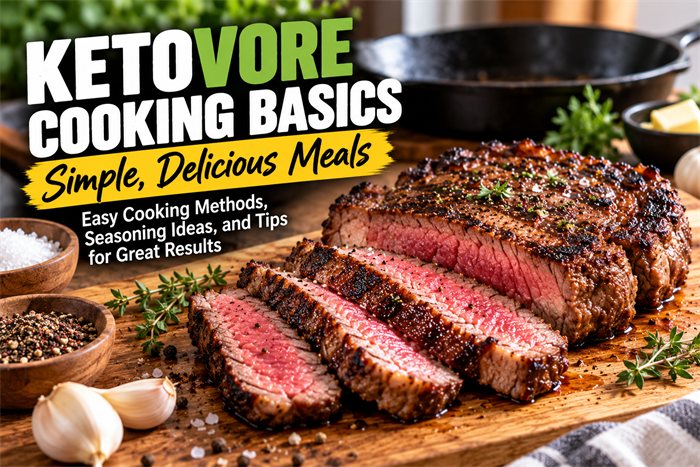
I’ve come to appreciate something about eating ketovore. You really don’t need to be a professional chef to make a great meal. You don’t need seventeen ingredients, a collection of expensive kitchen gadgets, or a recipe that requires you to understand French cooking terminology. Sometimes, all you need is a piece of meat, a hot skillet, and a little salt. And maybe a fire extinguisher.
Just kidding. Mostly. One of the things that makes ketovore appealing is how simple the meals can be. When you’re building your eating plan around meat, eggs, and a few other foods that fit your preferences, cooking doesn’t have to become a major production. But there’s a difference between simple cooking and boring cooking.
The goal is to prepare meals that are easy, satisfying, and enjoyable enough that you actually want to eat them again. Here are some practical ketovore cooking basics that can help.
1. Start With a Few Reliable Proteins
One of the easiest ways to simplify cooking is to stop trying to prepare something completely different every day. Choose a handful of proteins you enjoy and learn how to cook them well.
Some good starting points include: Ground beef, Steak, Chicken thighs, Pork chops, Eggs & Salmon. You don’t need to master all six at once. Start with two or three.
If you know how to cook a hamburger patty, scramble eggs, and prepare chicken thighs, you already have the foundation for several different meals. And once those become routine, you can add other foods to your rotation. Cooking gets easier when you stop treating every dinner like the final round of a television cooking competition.
2. Learn How to Cook a Great Steak
Let’s talk about steak. For many people following a ketovore lifestyle, steak is one of the most enjoyable meals. And the good news is that cooking a delicious steak doesn’t have to be complicated. Here’s a straightforward skillet method.
What you’ll need
- One steak, such as ribeye or sirloin
- Salt
- Black pepper
- A small amount of cooking fat
- A heavy skillet, preferably cast iron
- A meat thermometer
Basic cooking steps
- Pat the steak dry with paper towels.
- Season both sides with salt and pepper.
- Heat your skillet over medium-high heat.
- Add a small amount of cooking fat.
- Place the steak in the skillet and allow it to develop a brown crust.
- Flip and continue cooking, adjusting the heat as necessary.
- Check the internal temperature with a food thermometer.
- Allow the steak to rest briefly before slicing.
For food safety, the USDA recommends cooking whole cuts of beef to an internal temperature of at least 145°F followed by a three-minute rest. Cooking times vary depending on thickness, pan temperature, and your equipment. A thermometer is much more reliable than guessing.
And while a beautifully cooked steak is wonderful, an overcooked steak isn’t the end of the world. It just means you’ll have another opportunity to practice.
3. Ground Beef Might Be the Most Useful Food in Your Kitchen
Ground beef doesn’t always get the same attention as a ribeye. But it’s incredibly practical. You can prepare it quickly, use it in multiple dishes, and often purchase it for less than premium cuts of beef.
Here are a few easy ketovore meal ideas:
Hamburger patties: Form ground beef into patties, season with salt and pepper, and cook in a skillet.
Beef and eggs: Brown ground beef, then add scrambled eggs for a simple protein-rich meal.
Taco-style beef bowl: Season ground beef with cumin, chili powder, and garlic. Add cheese, avocado, or low-carb vegetables if they fit your approach.
Bunless cheeseburgers: Top cooked hamburger patties with cheese and serve without bread.
For safety, cook ground beef to an internal temperature of 160°F. One of the best things about ground beef is that you can cook extra and use it for another meal. Just refrigerate leftovers promptly and use them within three to four days, or freeze them for longer storage.
4. Chicken Thighs Are Forgiving and Flavorful
Chicken breasts are popular, but chicken thighs deserve a little more attention. They generally contain more fat than chicken breasts, which can help them remain juicy during cooking. They’re also often less expensive. Here’s an easy oven method.
Simple baked chicken thighs
Ingredients:
- Four chicken thighs
- Salt
- Black pepper
- Garlic powder
- Paprika
- A little olive oil or another suitable cooking fat
Instructions:
- Preheat your oven to 400°F.
- Pat the chicken dry.
- Season both sides.
- Arrange the thighs on a baking sheet or oven-safe dish.
- Bake until the thickest part reaches 165°F.
- Rest briefly before serving.
Depending on their size and whether they’re bone-in or boneless, chicken thighs may take approximately 25–45 minutes. Use a thermometer rather than relying on time alone. Pair them with a low-carb vegetable or another appropriate side, and you’ve got a straightforward dinner.
5. Eggs Can Rescue Almost Any Meal
Let’s give eggs the recognition they deserve. They’re versatile. They’re relatively easy to prepare. And they work with all kinds of ketovore meals. Scrambled eggs with ground beef. Fried eggs alongside steak. Hard-boiled eggs for a convenient snack. Omelets with cheese and leftover meat. You can even prepare an egg-based meal when you don’t have much time.
My favorite simple approach to scrambled eggs
Use a nonstick or well-seasoned skillet over medium-low heat. Add a small amount of butter or another cooking fat. Whisk your eggs. Pour them into the skillet and stir gently. Remove them from the heat once they’re fully cooked but still tender. That’s it. No elaborate recipe required.
For food safety, cook eggs until the whites and yolks are firm, or use pasteurized eggs for preparations that remain undercooked.
6. Seasoning Makes Simple Food Interesting
Here’s where people sometimes get bored. They start eating meat and eggs, but prepare everything exactly the same way. After a few weeks, they’re convinced ketovore means eating bland food forever. It doesn’t. Seasoning can make an enormous difference.
Some useful basics include: Salt, Black pepper, Garlic powder, Onion powder, Smoked paprika, Chili powder, Rosemary & Thyme. If you’re following a stricter carnivore-style approach, your preferred seasonings may be more limited. But for a flexible ketovore plan, herbs and spices can add variety without requiring sugary sauces.
Just check seasoning blends for added sugar or starches. A little seasoning can turn an ordinary piece of chicken into something you actually look forward to eating.
7. Don’t Overcomplicate Your Cooking Equipment
You don’t need an expensive kitchen full of gadgets. A few basic tools can handle most ketovore meals. A good skillet. A baking sheet. A sharp knife. A cutting board. A meat thermometer. That’s a pretty solid start. An air fryer or slow cooker can be convenient, but neither is essential. The best equipment is whatever helps you prepare food safely and consistently.
If a simple skillet works for you, use it. If you enjoy grilling, grill. If you prefer the oven, that’s perfectly fine. Cooking should make your eating plan easier, not become another expensive hobby.
8. Cook Once, Eat Twice
One of the smartest cooking habits is preparing extra food. If you’re already cooking chicken thighs, why not make a few more? If you’re browning ground beef, consider preparing enough for tomorrow. This can save time and reduce the temptation to grab something less aligned with your goals when you’re busy.
I discussed this same principle in my earlier article, Ketovore Meal Planning: 7 Simple Ways to Stay on Track Without Making Life Complicated. A little planning can make the difference between an easy dinner and standing in front of the refrigerator wondering what happened to all the food.
9. Don’t Forget About Food Safety
Because ketovore meals often revolve around animal proteins, safe handling matters. A few basic rules can help: Wash your hands before and after handling raw meat. Keep raw meat separate from ready-to-eat foods. Use a food thermometer. Refrigerate perishable foods promptly. Reheat leftovers thoroughly.
According to USDA guidance, common safe minimum internal temperatures include:
| Food | Minimum internal temperature |
|---|---|
| Whole beef steaks and chops | 145°F plus a 3-minute rest |
| Ground beef | 160°F |
| Chicken and other poultry | 165°F |
| Fish | 145°F |
| Leftovers | 165°F |
These recommendations aren’t specific to ketovore. They’re simply good kitchen practices. And nobody wants food poisoning to become part of their weight-loss strategy.
10. Make Cooking Sustainable
This is probably my biggest takeaway. You don’t have to love cooking to eat ketovore. You just need a few meals you can prepare reliably. Maybe that’s steak and eggs. Maybe it’s hamburger patties. Maybe it’s baked chicken thighs. The important thing is finding foods you enjoy and methods that fit your schedule.
If a recipe requires two hours of preparation and twelve ingredients, there’s nothing wrong with skipping it. Especially when a perfectly good dinner can come from a skillet in twenty minutes.
Final Thoughts: Simple Food Can Still Be Great Food
There’s a lot of information available about eating ketovore. Different approaches. Different rules. Different opinions about which foods are best. But sometimes the practical side gets overlooked. You still have to cook dinner. You still have to buy groceries. And you still have to figure out what to eat when you’re hungry. Learning a few basic cooking techniques can make those decisions much easier.
Start with simple proteins. Learn how to season them. Use a thermometer. Cook extra when it makes sense. And don’t feel obligated to turn every meal into a culinary masterpiece. A good meal doesn’t have to be complicated. Sometimes a steak, a couple of eggs, and a little salt are all you need for a satisfying meal. And the best part? You don’t even have to learn French.
Disclaimer: This article provides general cooking and nutrition information, not individualized medical advice. Ketovore and other restrictive dietary patterns may not be appropriate for everyone. Consult a qualified healthcare professional about significant dietary changes, especially if you have a medical condition.

0 Comments