
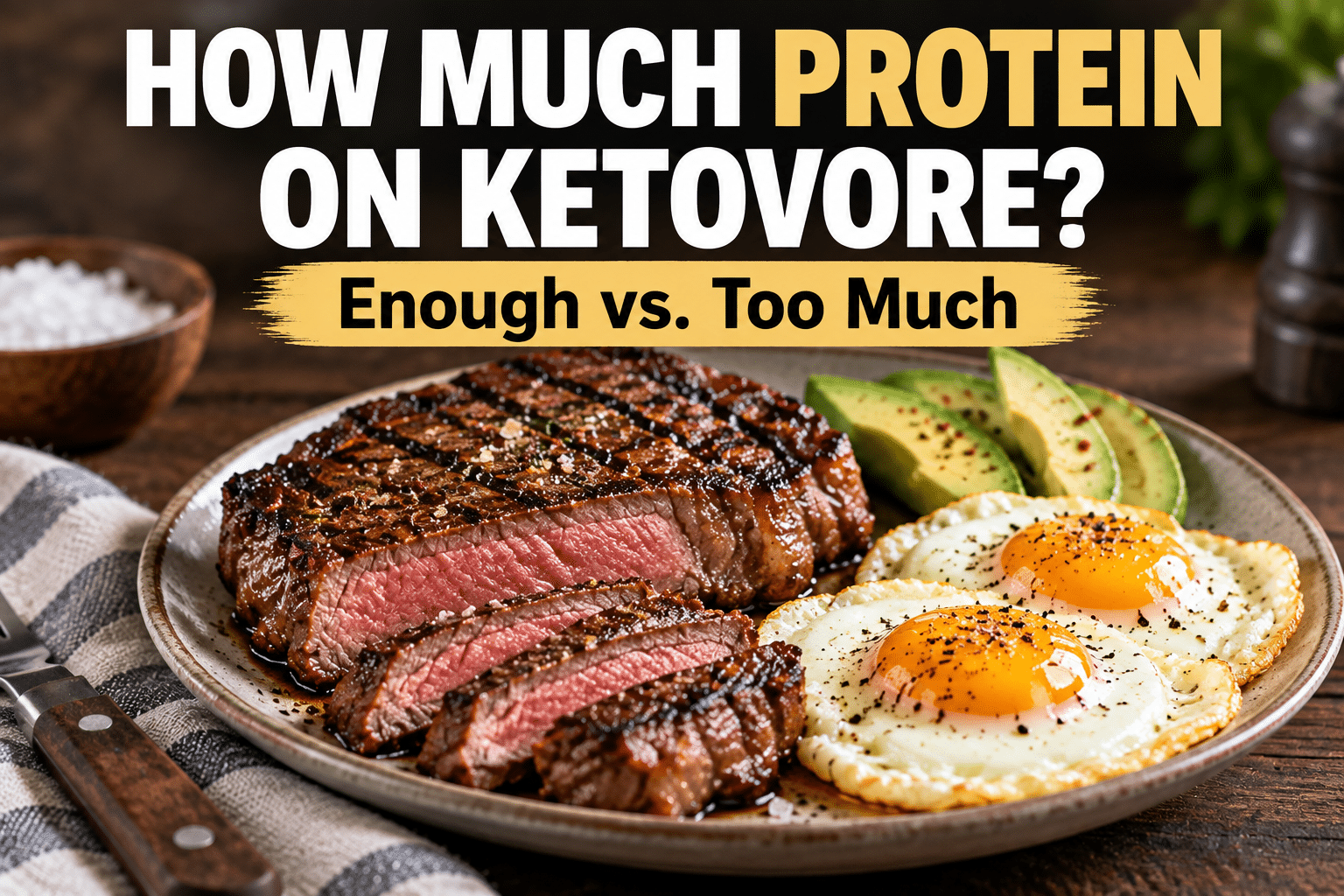
One of the things I like most about ketovore is that eating doesn’t have to become an accounting job. Eat meat. Eat eggs. Keep the carbs low. Stop eating when I’m satisfied. That is considerably easier than weighing lettuce. But eventually I ran into another question: How much protein am I actually supposed to eat?
That’s when things got complicated again. Search online and you’ll find people telling you to moderate protein, increase protein, calculate protein based on your current weight, calculate it based on your ideal weight, eat protein first, eat fat first, or apparently carry a calculator every time you approach a ribeye. I don’t want ketovore to become that complicated. But I do want to make sure I’m eating enough protein. So let’s figure out what actually matters.
Why Protein Matters
Protein isn’t simply something bodybuilders eat while carrying gallon jugs of water. We all need it. Protein provides amino acids the body uses to build and maintain things such as: Muscle, Skin, Hair, Enzymes, Hormones, Antibodies, & Other body tissues. Protein becomes especially interesting to me as I get older. At 56, I’m not trying merely to make the number on the scale smaller. I want to lose excess body fat while keeping as much muscle as possible.
Those are two very different goals. If I lose ten pounds but a significant amount of it is muscle, I’m not convinced I’ve won.
The Minimum Is Not Necessarily My Goal
The Recommended Dietary Allowance for protein for healthy adults is 0.8 grams per kilogram of body weight per day. Here’s where I think the terminology matters. That’s a recommended baseline intended to meet the needs of most healthy adults. It isn’t necessarily the perfect target for every person, every age or every goal. People who exercise regularly, are trying to maintain muscle while losing weight, or are older may have different protein needs.
So I’m much more interested in asking: Am I eating enough protein to support what I’m trying to accomplish? That’s a better question than trying to eat the smallest amount necessary.
What Does That Look Like in Real Food?
This is where nutrition numbers finally become useful. I don’t normally sit down and eat “40 grams of protein.” I eat a steak.
As a rough guide, common animal foods can provide approximately:
-
4 ounces of cooked beef: around 28–30 grams of protein
-
4 ounces of chicken breast: around 30–35 grams
-
4 ounces of salmon: around 25 grams
-
One large egg: around 6 grams
-
Two large eggs: around 12 grams
-
One hamburger patty: often around 20–30 grams depending on size
-
One can of tuna: often around 25 grams
Exact numbers vary by cut, serving size and preparation. But I don’t need laboratory precision to see the pattern. Animal foods make getting protein remarkably straightforward.
My Ketovore Rule: Start With the Protein
This may be the simplest change I’ve made. When I’m planning a meal, I decide what the protein is first. Not: “What side dish should we have?” Not: “What keto snack should I buy?” Not: “What low-carb dessert can I recreate using 14 ingredients Amazon has to deliver?”
First question: What’s the meat? Maybe that’s: Ground beef, Ribeye, Chicken thighs, Pork chops, Salmon, Hamburger patties, Eggs, & Brisket. Once I’ve answered that question, most of the meal is solved. That’s one of the reasons ketovore works so well for me.
What About Fat?
Ketovore is not a low-fat diet. Fat provides energy and helps make meals satisfying. The foods I eat naturally contain both protein and fat. A ribeye comes with fat. Ground beef comes with fat. Eggs contain protein and fat. Salmon contains protein and fat. I don’t necessarily need to turn every meal into a science experiment where I chase a perfect protein-to-fat ratio. Instead, I can choose fattier or leaner cuts depending on hunger, goals and how I’m eating that day.
Can You Eat Too Much Protein on Ketovore?
This question shows up constantly in keto discussions. Some people worry that eating too much protein will automatically kick them out of ketosis because the body can convert amino acids into glucose through a process called gluconeogenesis. That process is real. But the conclusion sometimes gets oversimplified into: Protein turns into sugar.
That’s not a particularly useful way to think about it. Your body doesn’t automatically convert every extra bite of steak into a candy bar. Gluconeogenesis is a normal metabolic process the body uses to make glucose when needed. For me, the bigger practical concern is simpler: Am I eating protein because I’m hungry and need it? Or am I continuing to eat because the food tastes good? Those are different things.
I’ve Already Learned That “Ketovore” Doesn’t Mean Unlimited
I recently wrote about one of my recurring mistakes: eating too much of the right foods. That lesson applies here too. Steak is ketovore. Cheese is ketovore. Eggs are ketovore. Bacon is ketovore. That doesn’t mean eating all four until I physically cannot move is automatically the perfect weight-loss strategy.
Ketovore removes a lot of problematic foods from my diet. It doesn’t remove physics. If my goal includes losing body fat, total food intake still matters.
Protein Helps Make Ketovore Satisfying
One thing I’ve noticed during this journey is how different hunger feels when meals revolve around protein. Compare these two situations. I could eat: A bowl of cereal, toast and orange juice. An hour or two later, I might be wondering what we’re having for lunch.
Or I could eat: Eggs, bacon and hamburger patties. That meal tends to stick with me considerably longer. This is part of why I’ve naturally been able to experiment with fasting. I’m not spending the entire morning fighting hunger. A satisfying meal makes not eating easier. That’s a much different strategy than trying to survive until dinner through willpower alone.
Protein Becomes Even More Important With OMAD
This is something I’m paying more attention to as I experiment with one meal a day. OMAD reduces the number of opportunities I have to eat protein. If I eat three meals, I can spread protein across breakfast, lunch and dinner. If I eat once, I have one opportunity. That means my OMAD meal can’t be: A tiny salad, six almonds and optimism. It needs to be a real meal. When I eat OMAD, I want the meal built around a substantial source of protein.
What About Protein Shakes?
Protein shakes can be convenient. But they aren’t where I want to start. I’d rather get most of my protein from real food: Beef, Eggs, Chicken, Pork, & Seafood. Why? Because those foods provide more than isolated protein. They’re also satisfying and contain additional nutrients. A protein shake can be a tool when convenience requires it.
I just don’t want the tool to replace dinner.
My Simple Protein Strategy
After reading far too many opinions about protein, I’ve come back to a simple approach.
1. Build Every Meal Around Protein
I decide on the meat or eggs first.
2. Eat the Protein First
Especially when eating away from home.
If there’s steak, bread, potatoes and dessert on the table, the steak gets my attention first.
3. Don’t Fear Protein
I’m much more concerned about eating too little quality protein than accidentally eating an extra ounce of steak.
4. Adjust for My Activity
On days when I’m lifting weights, doing spin or particularly active, adequate protein becomes even more important.
5. Pay Attention to OMAD
One meal means one major opportunity to get the day’s nutrients.
6. Don’t Turn Protein Into Permission to Overeat
Protein is important. “Unlimited food because it’s ketovore” is a different philosophy.
7. Keep It Simple
If I need an Excel spreadsheet before ordering dinner, I’ve gone too far.
And I say that as someone who likes spreadsheets.
A Simple Ketovore Plate
If I’m trying to make this practical rather than mathematical, my plate starts with an animal protein.
For example:
Steak Night
-
Ribeye steak
-
Eggs if I’m particularly hungry
-
Small low-carb vegetable if I want one
Burger Night
-
Two bunless hamburger patties
-
Cheese
-
Egg on top
-
Pickles or avocado
Chicken Night
-
Chicken thighs
-
Bacon
-
Small salad or low-carb vegetable
Breakfast-for-Dinner Night
-
Four eggs
-
Bacon or sausage
-
Hamburger patty
Nothing particularly fancy. That’s the point.
Do I Need to Track Protein Every Day?
Probably not forever. But I do think tracking occasionally can be educational. I may think I’m eating a tremendous amount of protein because I had a steak for dinner. Then I look at the entire day and realize that was essentially my only meaningful protein source. Tracking a few representative days can answer the question: What am I actually eating?
Once I understand that, I don’t necessarily need to spend the rest of my life entering scrambled eggs into an app.
What I’m Trying to Accomplish
This is the part I think matters most. I’m not trying to become the world’s greatest ketovore. There is no trophy. My goals are much more practical. I want to: Lose excess body fat, Maintain muscle, Get stronger, Control hunger, Keep carbohydrates low, Improve my relationship with food & Find an eating pattern I can actually maintain. Protein supports several of those goals. So rather than worrying that a steak contains “too much protein,” I’m going to keep asking whether my meals are helping me move toward those goals.
The Bottom Line
Protein is one of the foundations of the way I eat ketovore. I don’t think I need to fear it. I also don’t think the word protein magically makes calories irrelevant. My practical strategy is pretty simple: Start with meat or eggs. Eat enough to feel satisfied. Keep carbohydrates low. Adjust based on activity and goals. Don’t keep eating just because the food technically qualifies as ketovore.
Some days I’ll eat more. Some days I’ll eat less. Some days I’ll eat once. Other days I’ll eat twice. The important thing is that I’m building meals around nutrient-dense food instead of trying to construct a diet around everything I’m technically allowed to eat. Ketovore gets easier when I stop asking, “What can I have?” And start asking: “Where’s the protein?”
Disclaimer: This article describes my personal experience and is for general educational purposes only. Protein needs vary based on age, body size, activity, health conditions and other factors. People with kidney disease or other medical conditions that may require dietary protein restrictions should follow guidance from a qualified healthcare professional.

0 Comments