
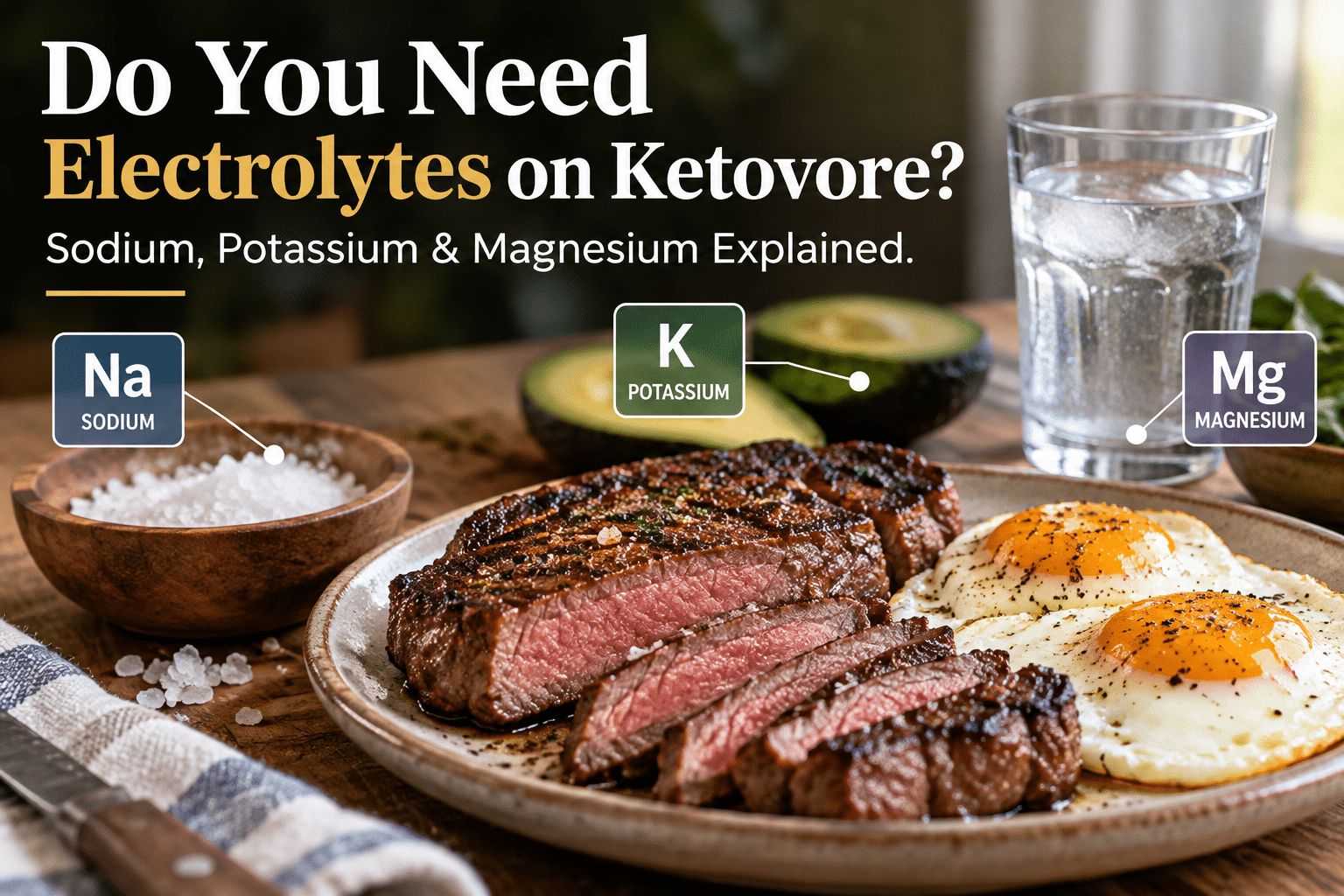
When I first started eating low-carb, I assumed hydration was simple. Drink water. Problem solved. Then you start reading about keto, carnivore and ketovore and suddenly everyone is talking about electrolytes.
Salt your food. Add magnesium. Watch your potassium. Drink an electrolyte mix. Don’t drink that electrolyte mix because it has sugar. Don’t drink plain water because apparently now water needs accessories. It can get confusing quickly. So today I wanted to answer a simple question: Do electrolytes actually matter when you’re eating ketovore? The short answer is yes. But that does not mean everyone needs to start dumping three different powders into a gallon jug every morning.
What Are Electrolytes?
Electrolytes are minerals that carry an electrical charge and help your body perform some fairly important jobs. They help regulate things like: Fluid balance, Nerve signaling, Muscle contraction, Heart function, Blood pressure & Acid-base balance. Some of the major electrolytes include sodium, potassium, magnesium, calcium and chloride.
For someone eating ketovore, the three that get discussed most frequently are:
Sodium
Potassium
Magnesium
Why Do Low-Carb Dieters Talk About Electrolytes So Much?
When you drastically reduce carbohydrates, your body begins going through several changes. One of the earliest things many people notice is a rapid drop on the scale. Unfortunately, I did not magically burn five pounds of body fat while sleeping. A significant part of that early change can be water.
Very-low-carbohydrate diets can change fluid balance, and some people experience headaches, fatigue, dizziness, nausea or dehydration during the transition. That means simply drinking more water may not always tell the whole story. If you are losing more water, sweating heavily or fasting, it makes sense to pay attention to the minerals that go along with it.
Sodium: The Electrolyte I Notice First
Sodium has somehow spent several decades playing the villain in nutrition conversations. That makes this topic tricky. For someone eating a very low-carbohydrate diet, however, sodium needs may not look exactly the same as they did when that person was eating a typical high-carbohydrate diet. Sodium helps regulate fluid balance.
Practically speaking, it helps your body manage water. A person transitioning to ketovore may notice symptoms such as: Headaches, Feeling lightheaded, Low energy, Muscle weakness & Feeling unusually tired. Those symptoms can have many causes, so I would never automatically diagnose them as, “You need salt.” But sodium and hydration are worth considering.
How I Get Sodium on Ketovore
My approach is not particularly sophisticated. I salt my food. Steak gets salt. Eggs get salt. Ground beef gets salt. Chicken gets salt. It turns out salt works surprisingly well when your diet consists largely of foods that taste good with salt.
Some other ketovore-friendly sodium sources may include: Broth, Bacon, Cheese, Pickles, Salted meat, Sugar-free electrolyte drinks. That does not mean more sodium is automatically better. People with high blood pressure, kidney disease, heart disease or certain other medical conditions may have specific sodium recommendations from their physician.
That advice outranks a guy on the internet holding a salt shaker. Including me.
Potassium: The One I Don’t Want to Guess About
Potassium is extremely important. It helps with: Muscle contraction, Nerve transmission, Normal kidney function, & Normal heart function. The good news for ketovore eaters is that potassium is not found only in bananas.
It is also present in foods such as:
-
Beef
-
Chicken
-
Pork
-
Fish
-
Dairy products
-
Avocado
-
Broccoli
-
Certain other low-carb foods
That makes it possible to get meaningful potassium from real food.
Be Careful With Potassium Supplements
This is one electrolyte where I would be especially careful about randomly supplementing. Too little potassium can be dangerous. Too much potassium can also be dangerous. Kidney disease and certain medications can make high potassium particularly risky. This is not the mineral where I want to say: “If one scoop is good, four scoops must be excellent.” That philosophy works poorly with electricity and potassium.
Magnesium: The Cramp Conversation
Magnesium is another electrolyte commonly discussed in low-carb communities. It is involved in hundreds of processes in the body, including muscle and nerve function. People often start thinking about magnesium when they experience: Muscle cramps, Restless legs, Trouble sleeping, & Muscle twitching. Again, those symptoms can have many causes. But magnesium intake is worth looking at, especially if someone’s food choices are very limited.
Ketovore-friendly magnesium sources can include: Meat, Fish, Avocado, Certain nuts if they fit your version of ketovore, & Leafy greens if you include them. Some people also choose a magnesium supplement. If I were considering one regularly, particularly alongside medications or medical conditions, I would discuss it with my healthcare provider.
Do You Need an Electrolyte Drink?
Maybe. But not automatically. Most healthy people can generally replace normal electrolyte losses through food and water. However, my wife Karen, does drink an electrolyte drink to avoid cramps. Electrolyte drinks become more useful when losses increase, such as during: Long workouts, Heavy sweating, Extended outdoor activity, Hot weather & Certain fasting routines.
Living in Texas gives me plenty of opportunities to test the “hot weather” portion of that list. A long workout, spin class or afternoon outside in August is very different from sitting behind a computer in air conditioning. Those situations should not necessarily require the same hydration strategy.
What I Look for in an Electrolyte Drink
If I’m choosing an electrolyte product while eating ketovore, I want to check the label. I look at: Total carbohydrates, Added sugar, Sodium, Potassium, Magnesium, Serving size, Sweeteners & Number of servings in the container. Some electrolyte drinks contain a surprising amount of sugar.
That’s useful in certain endurance-sports situations, but it may be the exact opposite of what I’m trying to accomplish while staying very low-carb. I don’t want to eliminate carbohydrates all day and then unknowingly drink them because the bottle has lightning bolts on the label.
What About “Keto Flu”?
People commonly use the term keto flu to describe unpleasant symptoms that sometimes occur when dramatically reducing carbohydrates. These can include: Headache, Fatigue, Nausea, Dizziness, Irritability, Constipation, & Muscle cramps. Electrolytes and hydration may be part of the picture. But I don’t think every headache deserves an automatic diagnosis of keto flu.
Maybe I did not drink enough. Maybe I slept poorly. Maybe I had too much coffee. Maybe I am actually sick. Maybe I have spent nine consecutive hours staring at websites. There are options.
Can You Drink Too Much Water?
This is another reason I do not believe hydration should simply mean, “Drink as much water as humanly possible.” Water is essential. But electrolyte balance matters too. If I am sweating heavily and continuously replacing only water, I also need to consider what I am losing through that sweat. The answer is not necessarily to carry a five-gallon bucket of electrolyte powder everywhere I go. It is simply another reminder that hydration is about balance.
My Simple Ketovore Electrolyte Approach
I prefer simple rules. Here is the approach that makes sense to me:
1. Drink Water Regularly
Water remains my default drink.
2. Salt My Food to Taste
Most of my food is naturally very low in sodium until I season it.
3. Eat Real Food
Meat, eggs, fish and selected ketovore foods provide more than protein and fat. They also contain minerals.
4. Pay More Attention When Sweating
Exercise, Texas heat and long periods outdoors change the equation.
5. Read Electrolyte Labels
I do not assume “electrolyte” automatically means “low-carb.”
6. Don’t Megadose Potassium
Some experiments do not need to become personal experiments.
7. Ask a Doctor When Medical Conditions or Medications Are Involved
Especially with kidney disease, cardiovascular conditions, blood-pressure medications, diuretics or other situations that affect fluid and electrolyte balance.
Food First Is Still My Default
One thing I want Explore Ketovore to avoid becoming is a website where every problem requires purchasing another product. You should not need a countertop filled with powders, pills and tubs to eat meat and eggs. There may absolutely be situations where electrolyte products are convenient or useful.
But the basics still matter:
-
Eat nutrient-dense food.
-
Drink water.
-
Salt food appropriately.
-
Pay attention to how you feel.
-
Adjust when activity or weather changes.
-
Get medical guidance when appropriate.
Simple still wins.
The Bottom Line
Electrolytes matter whether you are eating ketovore, keto, carnivore or pizza. Your body needs sodium, potassium, magnesium and other minerals to function properly. Very-low-carbohydrate diets can change water balance, which is one reason people following keto-style diets often pay closer attention to hydration and electrolytes. For me, that does not mean obsessively measuring every mineral.
It means drinking water, salting my food, eating a variety of animal foods, paying attention when I exercise or sweat heavily and being cautious about blindly supplementing something just because the internet told me I needed it. Ketovore is supposed to simplify my diet. If I need a chemistry degree before drinking breakfast, I’ve probably complicated it again.
Disclaimer: This article reflects personal experience and general educational information. It is not medical advice. Electrolyte requirements can vary, and excessive intake of certain minerals can be harmful. Talk with a qualified healthcare professional before making major dietary changes or using electrolyte supplements if you have a medical condition or take medication.

0 Comments