
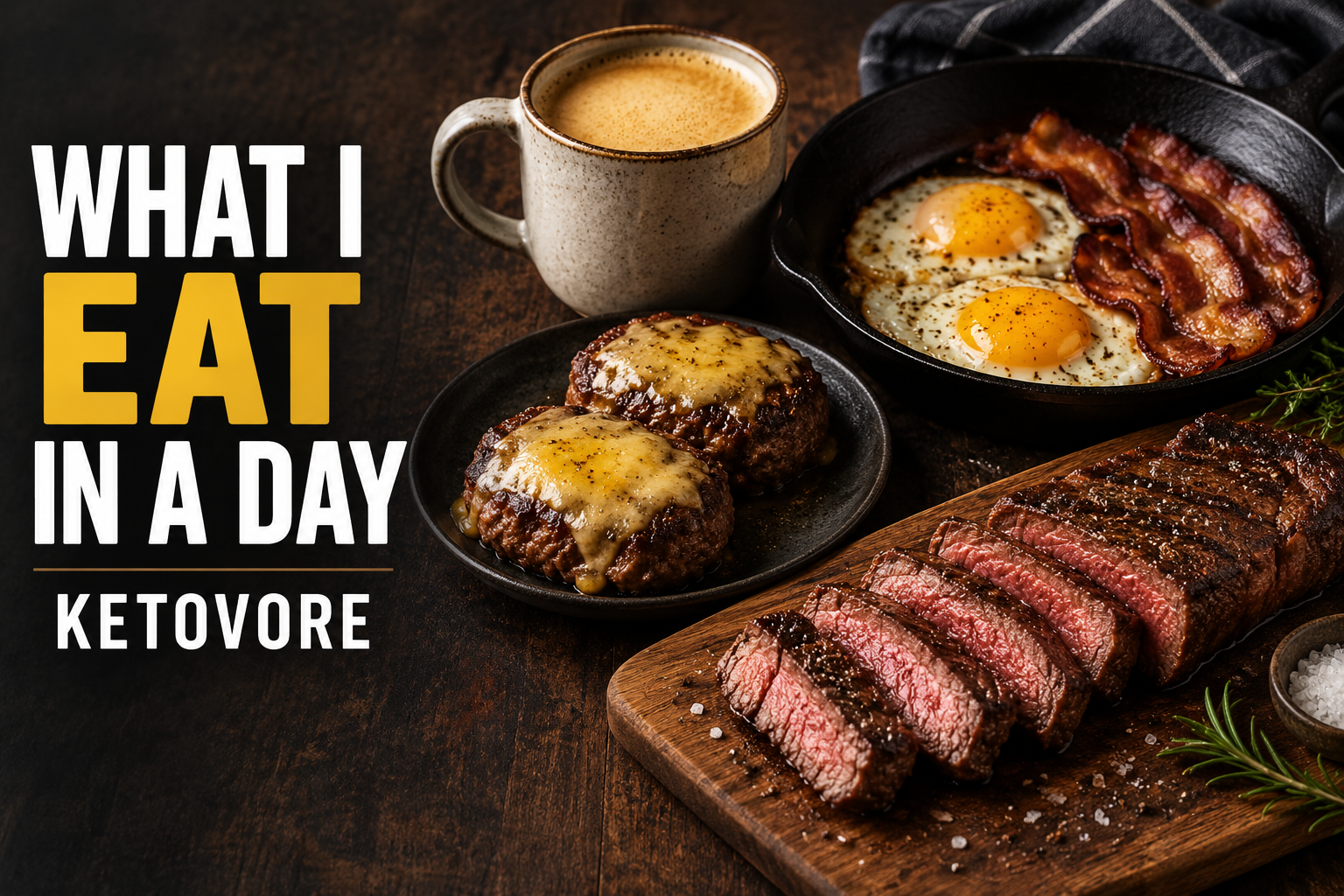
One of the most common questions people ask about any diet is also one of the most practical: What do you actually eat? Not what could someone eat. Not the perfectly arranged meal photographed beside an avocado and an inspirational water bottle. What do I really eat during an ordinary day when I have work to do, places to be and no interest in spending two hours preparing dinner?
My ketovore meals are surprisingly simple. Most days revolve around meat, eggs, butter, cheese and a few low-carbohydrate extras. I generally eat one or two meals within an eight-hour window, depending on my schedule and hunger. This is not a prescribed meal plan. It is simply what has been working for me.
My Morning Usually Begins With Butter Coffee
Most mornings begin with coffee blended with butter—often called bulletproof coffee. It gives the coffee a rich, creamy texture and helps me feel satisfied during the morning. I enjoy the routine, and it makes avoiding a traditional high-carbohydrate breakfast much easier. There is an important distinction, however: butter contains calories, so this is not a clean fast.
If my only goal were a strict water-and-black-coffee fast, I would leave the butter out. My current goal is usually appetite control and staying away from carbohydrates, so I am comfortable including it. That is one thing I have learned about fasting: it helps to decide what kind of fast I am trying to complete before I begin. Otherwise, we tend to invent the rules while standing in front of the refrigerator.
I Usually Eat One or Two Meals
I move between two basic schedules. On some days, I eat one primary meal. That is generally considered OMAD, or one meal a day. On other days, I follow something closer to 16:8, which means fasting for approximately 16 hours and eating during an eight-hour window. On those days, I may have a smaller first meal followed by a larger dinner.
I don’t force myself into exactly the same schedule every day. My work calendar, exercise and social commitments can all affect when I eat. The important part for me is maintaining some structure. An eating window gives the kitchen a closing time. Without one, a “small evening snack” can turn into a private tour of everything in the pantry.
A Typical First Meal
When I eat a first meal, I normally keep it simple. It might include:
- Eggs cooked in butter
- Bacon or sausage
- Ground beef with scrambled eggs
- Leftover steak
- Hamburger patties
- Cheese in a reasonable amount
Eggs are especially useful because they are affordable, versatile and quick to prepare. I can scramble them with ground beef, fry them beside bacon or place them on top of hamburger patties. I don’t need a complicated recipe. Meat, eggs, salt and a frying pan will solve a surprising number of problems. My first meal is normally built around protein rather than recreated breakfast foods. I’m not trying to manufacture a low-carbohydrate version of pancakes, cereal or cinnamon rolls every morning. Those products may technically fit someone’s macros, but they can also keep the desire for sweet foods alive. For me, it is often easier to stop negotiating with breakfast and eat eggs.
My Main Meal of the Day
My main meal is normally some form of meat. Depending on what I purchased at the grocery store, it might be:
- Hamburger patties with cheese
- Ground beef topped with salsa
- Steak cooked in butter
- Roasted chicken thighs
- Chicken wings
- Pork chops
- Chuck roast
- Sausage with eggs
- A bunless burger from a restaurant
- Traditional wings with a low-sugar sauce
I don’t require every meal to be purely carnivore. That is where the “vore” in ketovore gives me some flexibility. I may add salsa, mustard, hot sauce, pickles or another low-carbohydrate condiment. Those small additions provide variety without turning dinner into the Standard American Diet with a hamburger patty hiding underneath it. I still check labels. Sauces, seasoning blends and processed meats can contain more sugar than expected. A serving may look reasonable until I discover that my definition of a serving and the manufacturer’s definition have never met.
What an OMAD Meal Looks Like for Me
On a one-meal day, the meal needs to be satisfying. A tiny salad and one lonely chicken wing are not going to accomplish that. My OMAD meal might include a generous portion of ground beef, several eggs and some cheese. Another option might be steak with eggs or multiple hamburger patties with bacon.
The objective is not to see how little food I can survive on. It is to eat a satisfying meal built around protein and fat, then stop eating until the next planned window. I try to eat slowly enough to notice when I am satisfied. There is a difference between eating until I am no longer hungry and eating until I need to loosen my belt and reconsider every decision that brought me to the table. I am still learning that difference.
What a 16:8 Day Looks Like
On a 16:8 day, I may have two meals. The first might be eggs and bacon, leftover meat or a couple of hamburger patties. The second is usually the larger meal and may include beef, chicken or pork. For example: First meal: Three eggs cooked in butter with bacon. Main meal: Ground beef with cheese and salsa, eaten with pork rinds instead of tortilla chips.
Another day might look like: First meal: Leftover steak and eggs. Main meal: Chicken wings with a low-carbohydrate sauce. These meals are intentionally repetitive. Repetition makes shopping, cooking and decision-making easier. I do not need every dinner to be a culinary adventure. Sometimes dinner’s only job is to taste good, keep me full and prevent me from ordering something I will regret.
What I Eat When I’m Busy
The most dangerous time for any eating plan is not usually when everything is going well. It is when the day becomes hectic and I have no food prepared. That is why I keep several emergency options available:
- Cooked hamburger patties
- Hard-boiled eggs
- Canned tuna or chicken
- Deli meat
- Cheese
- Pork rinds
- Leftover meat
- Rotisserie chicken
- Frozen burger patties
These foods give me a faster option than ordering delivery. I also know that I will sometimes eat at restaurants. Ketovore does not require hiding at home with a cast-iron skillet. At a burger restaurant, I can order patties without the bun. At a steakhouse, I can choose steak without the potato and bread. At Wingstop, I can select traditional wings and be careful with sauces and sides. The perfect option may not always be available, but a much better option usually is.
What I Drink
My regular drinks are uncomplicated: Water, Coffee, Unsweetened tea, and Occasionally a zero-sugar drink. I try to make water the default choice. Coffee with butter or heavy cream is part of my routine, but I count it honestly. It may support my low-carbohydrate eating plan, but it contains calories and therefore is not the same as drinking black coffee during a clean fast.
Changing the name does not make the butter disappear. Unfortunately, the same rule applies to carbohydrates.
Do I Track Everything?
I am more interested in building consistent habits than turning every meal into an accounting project. My basic questions are:
- Is the meal centered around meat or eggs?
- Is it low in carbohydrates?
- Will it keep me satisfied?
- Am I eating because I’m hungry or merely because food is available?
- Am I staying within my planned eating window?
Some people benefit from tracking every gram of protein, fat and carbohydrate. Others find that a simple list of acceptable foods works better. The best system is the one that helps someone remain consistent without becoming so complicated that it is abandoned.
What I Try Not to Eat
My biggest results do not come from discovering a magical ingredient. They come from the foods I leave out most of the time:
- Bread
- Pasta
- Rice
- Potatoes
- Cereal
- Chips
- Cookies
- Candy
- Desserts
- Sweetened drinks
- Sugary sauces
I also try to avoid turning low-carbohydrate snacks into an all-day activity. Even foods that fit the plan can slow my progress when I eat them continuously. Cheese, nuts, pork rinds and “keto” treats can quietly become a second dinner spread across three hours. That is another reason an eating window helps me. Eventually, the restaurant known as my kitchen has to close.
My Meals Begin at the Grocery Store
Eating this way becomes easier when I shop with a plan. I keep basic proteins in the refrigerator and freezer, watch for grocery-store meat markdowns and purchase food I already know how to cook. When I find discounted ground beef, steak, stew meat or roast, I portion it and freeze it. That gives me several future meals without paying full price every time. Ketovore does not have to mean buying expensive cuts of meat every day. Ground beef and eggs may not look glamorous on social media, but they are affordable, filling and dependable.
I will take dependable over photogenic most days.
This Is a Framework, Not a Perfect Menu
Not every day looks exactly the same. Some days I eat one meal. Other days I eat two. Sometimes I cook at home, and sometimes I make the best available choice at a restaurant. The consistency comes from returning to the same basic framework:
- Build meals around meat and eggs.
- Keep carbohydrates low.
- Eat during a planned window.
- Stop when satisfied.
- Keep convenient backup foods available.
- Return to the plan after an imperfect choice.
That last point matters. One meal does not create success, and one imperfect meal does not destroy it. The results come from what I do repeatedly.
The Bottom Line
What I eat in a day on ketovore is not complicated. I drink butter coffee in the morning, understanding that it is not a clean fast. I eat one or two satisfying meals built around beef, chicken, pork or eggs. I use cheese, salsa and seasonings for variety, and I keep emergency foods available for busy days. There is no elaborate meal preparation and very little pretending that cauliflower is pizza.
My meals may be repetitive, but that is part of why the plan works for me. I enjoy the food, I stay satisfied and I don’t have to make twenty decisions every time I enter the kitchen. Simple food. Clear rules. Fewer opportunities to talk myself into dessert. That is a daily eating plan I can actually follow.

0 Comments