
Sunday is usually when I look at the week ahead and convince myself that everything will go perfectly. I will eat exactly as planned. I will exercise. I will get my steps. I will avoid unnecessary snacks. I will handle every restaurant meal like a seasoned ketovore professional. Then Monday arrives with emails, phone calls, website projects, meetings, family obligations, and someone suggesting lunch at a restaurant where the menu appears to have been sponsored by bread.
That is why I need a Sunday ketovore reset. The purpose isn’t to prepare 21 identical meals in matching containers. I’m not trying to turn my refrigerator into a meal-prep documentary. I simply want to make enough decisions on Sunday that busy Fred has fewer opportunities to sabotage optimistic Sunday Fred.
First, I Review the Previous Week Honestly
My reset begins by looking backward. What went well last week? Maybe I followed OMAD on the days I planned. Maybe I made a good choice at a business lunch. Maybe I ate only appropriate foods at a football game, even if I returned for seconds. Maybe I exercised, reached my step goal, or stopped eating earlier in the evening. Those wins matter.
I also need to identify what didn’t work. Did I eat because I was hungry, or because food was available? Did I allow a stressful day to become an excuse? Did one unplanned meal turn into an unplanned weekend? The goal isn’t to beat myself up. Guilt doesn’t contain protein, burn calories, or prepare dinner. The goal is to find patterns. If I struggled at restaurants, I need a restaurant plan. If evenings were difficult, I need to close the kitchen earlier. If I became extremely hungry before my OMAD meal, I may need to adjust the meal, the timing, or the schedule. Honesty gives me something useful to work with.
I Treat the Scale as Information
Sunday can also be a good time to review my weight and overall progress. The number may be encouraging, disappointing, or almost exactly the same as last week. None of those results should determine my value or ruin the day. The scale is a measuring device, not a judge handing down a sentence. One weigh-in can be affected by water retention, sodium, meal timing, exercise, and other normal fluctuations. I’m more interested in the trend over several weeks. If my weight is moving in the right direction, I want to identify the habits helping me succeed.
If it has stalled or increased, I want to examine the obvious possibilities:
- Am I eating larger portions?
- Have snacks returned?
- Am I eating more cheese, butter, or other calorie-dense foods?
- Am I drinking more calories?
- Did “only meat” become permission for unlimited meat?
- Have I become less active?
I don’t need to redesign my entire diet after one disappointing number. I need to make one or two sensible adjustments and continue.
I Choose My Fasting Schedule Before the Week Starts
I have been experimenting with OMAD and 16:8 fasting. OMAD works well when my day is predictable and I can plan one substantial ketovore meal. It eliminates decisions and reduces my opportunities to eat. A 16:8 schedule works better when I have a business lunch, family dinner, football game, or another event that makes two meals more practical. On Sunday, I can look at my calendar and decide which approach fits each day.
For example:
- A quiet workday may be ideal for OMAD.
- A client-lunch day may work better with 16:8.
- A football-game evening may require moving my eating window later.
- A demanding workout day may need more flexibility.
- A family event may become the planned meal rather than an interruption.
This is much better than announcing that I will follow OMAD every day and then acting surprised when my actual life refuses to cooperate. Changing the fasting schedule is not failure. Abandoning every boundary because the original schedule changed is where the trouble begins.
I Identify the Week’s Food Traps
My worst food decisions are usually predictable. Business lunches do not fall from the sky without warning. Board meetings are on the calendar. Football games happen at scheduled times. Family dinners and weekend plans are generally known in advance. If I know where the difficult moments are likely to occur, I can make decisions before I am hungry. For a business lunch, I can suggest a restaurant where meat-based options are easy to order. I recently steered a client lunch toward Wingstop because I knew I could build a workable meal there.
For a football game, I can decide whether the game food will be my primary meal and remind myself that eating only meat doesn’t require going back for unlimited servings. For a family dinner, I can plan my earlier meals—or skip them—so I can participate without turning dinner into a cheat. The restaurant menu becomes much less powerful when I have already decided what I’m ordering.
I Stock Dependable Ketovore Foods
I don’t need an elaborate weekly menu, but I do need appropriate food available. My dependable foods may include:
- Ground beef
- Steaks or burger patties
- Chicken
- Eggs
- Bacon
- Pork
- Fish
- Cheese
- Butter
- Pork rinds
- Salsa or low-carbohydrate seasonings
The exact list can change, but the principle remains the same: the easiest available food should support my plan. If the refrigerator contains nothing I can eat quickly, ordering something questionable becomes much easier. Hunger is an excellent salesperson, and it is very persuasive when delivery apps are involved. I want enough good options available that being busy does not automatically become an excuse.
I Prepare Components, Not a Cafeteria
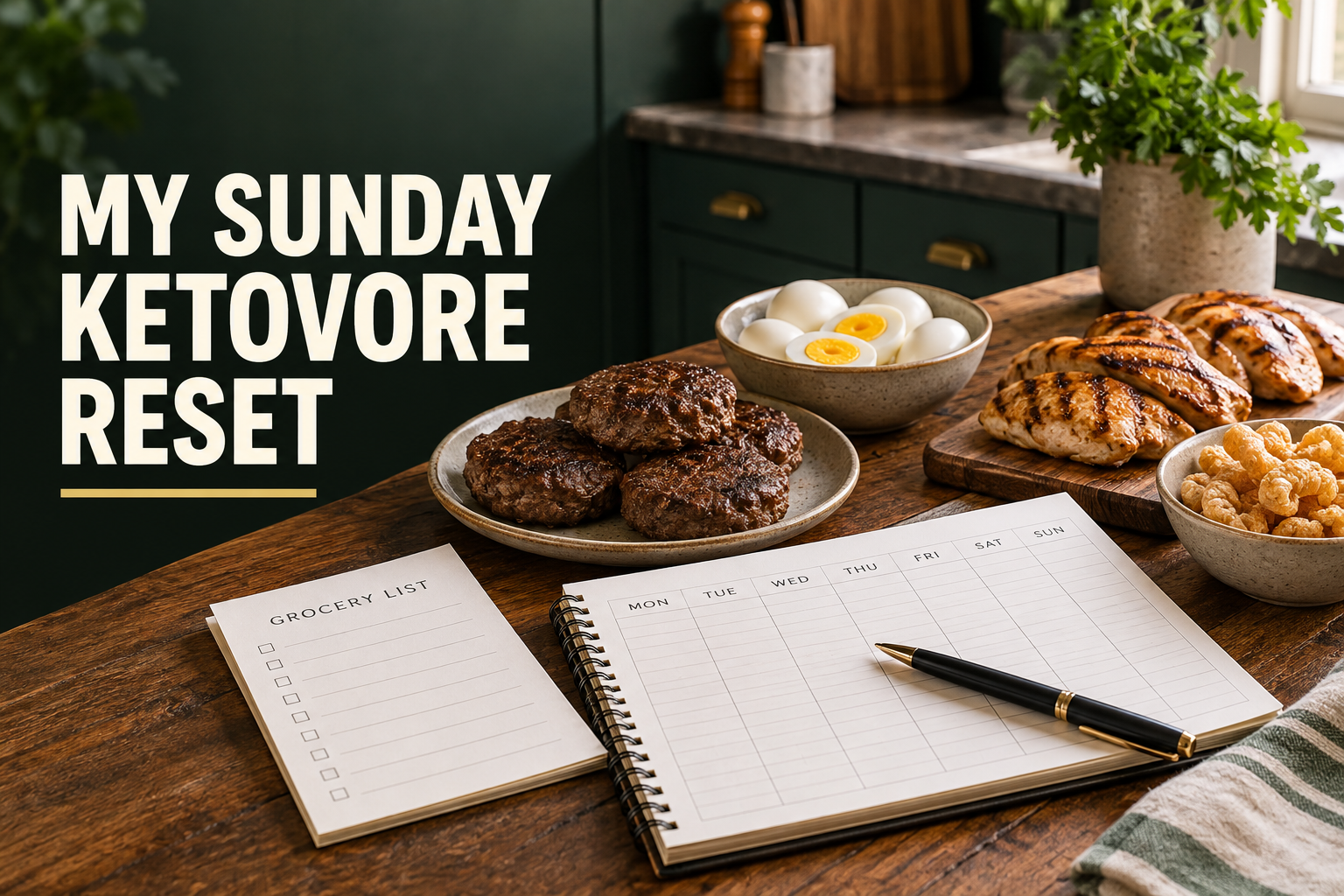
Some people enjoy preparing every meal for the entire week on Sunday. That level of organization is admirable. It is also unlikely to happen consistently at my house. My simpler approach is to prepare useful components. I might cook ground beef that can be reheated with eggs or cheese. I can grill several burger patties or pieces of chicken. Hard-boiled eggs can provide a quick option when the day gets away from me.
The purpose is not to eliminate all cooking for the week. It is to shorten the distance between hunger and a good decision. A refrigerator containing cooked meat is a beautiful thing. It may not belong in an art museum, but I’m willing to nominate it.
I Create an Emergency Plan
Even a carefully planned week can become chaotic. A client meeting runs long. A project develops problems. I arrive home later than expected. The meal I planned is still frozen hard enough to qualify as construction material. That is when I need emergency ketovore options.
My emergency plan may include:
- Cooked burger patties
- Hard-boiled eggs
- Deli meat with simple ingredients
- Canned tuna or chicken
- Cheese in controlled portions
- Pork rinds
- A nearby restaurant with a known order
- Bunless burgers
- Unbreaded wings
- A rotisserie chicken when appropriate
An emergency meal does not need to be exciting. It needs to prevent an inconvenient evening from becoming a carbohydrate festival.
I Decide Where My Morning Coffee Fits
My butter coffee is part of my morning routine. As I recently admitted, adding butter means it breaks a strict fast. It still may help me control hunger and comfortably delay solid food, but I need to count it honestly as something containing calories. On Sunday, I can decide what matters most during the coming week. If I want a completely clean fasting window, I can choose black coffee. If appetite control and reaching my planned meal are more important, I may keep the butter coffee and treat it as a small morning meal.
The key is knowing what I am doing rather than changing the definition of fasting to protect my coffee. The Mickey Mouse mug is innocent. The butter is the one with calories.
I Plan Movement Alongside Food
My ketovore reset is about more than meals. Exercise and daily movement help me feel like I am actively working toward something. When I exercise, get my steps, or attend a spin class, I am often more motivated to make good food choices. Sunday is a good time to schedule those activities. If exercise is left for “whenever I have time,” it will eventually be scheduled for the twelfth of never.
I need to identify realistic workout times and consider what may interfere with them. The plan does not need to be perfect, but it should exist.
I Choose One Goal for the Week
Trying to improve everything at once can become overwhelming. Instead, I can choose one behavioral goal for the coming week.
It might be:
- No desserts.
- No second servings.
- Follow my planned fasting schedule.
- Eat only at planned meals.
- Reach my step goal each day.
- Complete three workouts.
- Avoid eating after dinner.
- Prepare before every restaurant meal.
A specific goal gives me something clear to evaluate next Sunday. “Be better” is difficult to measure. “No second servings at football” leaves much less room for creative interpretation.
Sunday Is a Reset, Not a Punishment
The most important part of my Sunday ketovore reset is remembering that I am not starting over from nothing. A difficult week does not erase everything I have learned. An unplanned meal does not send me back to the beginning. A disappointing weigh-in does not require a starvation challenge on Monday. I am continuing.
Sunday gives me an opportunity to review the results, adjust the plan, and move forward with more information. That is what a reset should do.
My Simple Sunday Ketovore Checklist
Before Sunday ends, I want to answer these questions:
- What worked last week?
- What caused the most trouble?
- Which days will be OMAD?
- Which days need a 16:8 window?
- What meals or events are already scheduled?
- Do I have enough meat, eggs, and other dependable foods?
- What is my emergency meal?
- When will I exercise?
- What is my single behavioral goal?
- What will I do when the week does not go exactly as planned?
If I can answer those questions, I am ready for Monday.
The Bottom Line
My Sunday ketovore reset doesn’t require hours of meal preparation, a complicated spreadsheet, or a refrigerator filled with identical containers. I need appropriate food, a realistic fasting schedule, awareness of upcoming challenges, and one clear goal. The week will still surprise me. Meetings will move. Clients will suggest lunch. Someone will bring food to an event. My motivation will rise and fall.
But preparation gives me a better chance of responding intentionally instead of reacting hungrily. Optimistic Sunday Fred cannot control everything that happens to busy Tuesday Fred. He can, however, make sure Tuesday Fred has cooked hamburger, a planned restaurant order, and fewer excuses. That is a pretty good start.

0 Comments