
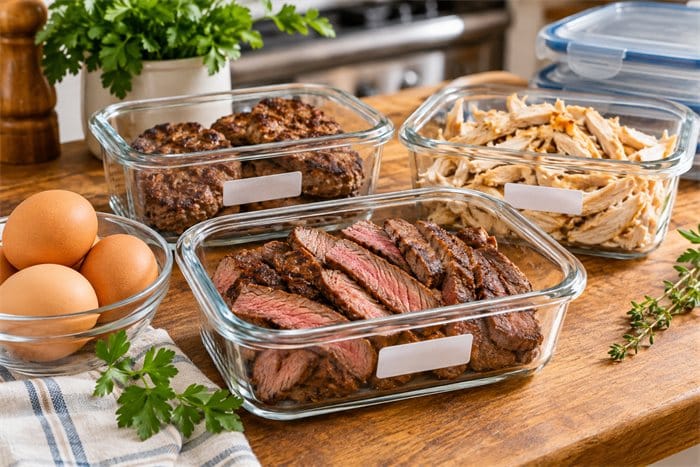
One of the biggest challenges with eating ketovore isn’t figuring out which foods belong on the menu. It’s figuring out what to eat when you’re busy. You might have every intention of cooking a delicious steak for dinner. But then work runs late, the refrigerator looks uninspiring, and suddenly ordering takeout seems like the greatest invention since indoor plumbing.
That’s where meal prep becomes useful. Not the kind of meal prep that requires twenty identical containers and an entire Sunday spent cooking. We’re talking about something much simpler. Cook a few versatile proteins, store them properly, and make your next several meals easier. The goal isn’t to prepare every bite you’ll eat for the next seven days. It’s to remove some of the decisions that make healthy eating harder than necessary. Here’s how to do it.
Why Meal Prep Makes Sense for Ketovore
Ketovore eating generally emphasizes meat, eggs, fish, and other animal-based foods, with optional low-carbohydrate plant foods. That makes meal preparation relatively straightforward. Instead of planning elaborate recipes, you can prepare a few basic ingredients that work in different combinations.
Ground beef can become hamburger patties, taco bowls, or a quick skillet meal. Chicken can be served with eggs, vegetables, or a simple sauce. A roast can provide several meals without requiring you to cook a new protein every evening. The biggest benefit is convenience.
When something suitable is already available, there’s less work between feeling hungry and eating a meal that fits your plan. Meal prep doesn’t guarantee weight loss or perfect nutrition. But it can make your intended eating pattern easier to follow. And sometimes, making the better choice easier is half the battle.
Step 1: Choose Three Proteins
Don’t begin by planning twenty-one different meals. Start with three proteins you enjoy. For example: Ground beef, Chicken thighs, & Beef roast. These provide several possible combinations without requiring a long grocery list. You could cook hamburger patties, roast the chicken, and prepare the beef in a slow cooker.
Alternatively, choose salmon, pork chops, and eggs. There’s no official ketovore requirement to eat particular meats. Variety can help provide different nutrients and prevent meals from becoming repetitive. The key is selecting foods you’ll actually want to eat. Preparing five pounds of something you dislike isn’t meal planning. It’s creating a refrigerated obligation.
Step 2: Cook in Batches
Batch cooking means preparing larger quantities of food at once instead of cooking each meal separately. For example, you might cook several hamburger patties while roasting chicken in the oven. That gives you two proteins ready for different meals. A few useful approaches include:
Oven roasting: Chicken thighs and other cuts can be cooked in batches with relatively little hands-on attention.
Stovetop cooking: Ground beef and hamburger patties are easy to prepare and portion.
Slow cooking: Tougher cuts of meat can become tender, shredded protein for multiple meals.
Hard-boiled eggs: These can provide a convenient additional protein option when prepared and stored safely.
Always verify safe cooking temperatures with a food thermometer. According to the CDC’s food safety guidance, poultry should reach 165°F, ground beef 160°F, and whole beef steaks or roasts 145°F followed by a three-minute rest. CDC Cooking several proteins doesn’t mean they all need to be eaten immediately. Some can go into the refrigerator, while others can be frozen for later.
Step 3: Don’t Forget Food Safety
This is especially important when preparing meat ahead of time. Cooked meat isn’t something you should leave sitting on the kitchen counter all afternoon. The USDA recommends refrigerating perishable leftovers within two hours, or within one hour when temperatures exceed 90°F. Use shallow containers so food cools more quickly.
Keep the refrigerator at 40°F or below and the freezer at 0°F or below. Most cooked leftovers should be eaten within three to four days when refrigerated. If you’re preparing food on Sunday and want to eat it Friday, freezing the later portions is generally the better approach. When reheating leftovers, bring them to an internal temperature of 165°F. These recommendations come from USDA food storage guidance and the CDC. FoodSafety.gov Food poisoning is not a particularly effective weight-loss strategy.
Step 4: Create Different Meals From the Same Ingredients
Here’s where meal prep becomes interesting. You don’t need to eat the same hamburger patty five nights in a row. Instead, use prepared proteins as the starting point for different meals.
Meal Idea 1: Hamburger and Eggs
Reheat a properly stored hamburger patty and serve it with freshly cooked eggs. Add cheese if dairy fits your eating plan. Simple, filling, and easy.
Meal Idea 2: Chicken and Avocado
Combine prepared chicken with avocado and a small serving of low-carbohydrate vegetables. You can adjust portions to match your nutritional needs.
Meal Idea 3: Beef Bowl
Warm shredded beef and add a little broth or cooking liquid. Serve it with sautéed mushrooms or another optional low-carb ingredient.
Meal Idea 4: Steak and Eggs
Use a freshly cooked steak or properly stored leftover steak. Add eggs and any additional foods that fit your preferences.
Meal Idea 5: Chicken and Broccoli
Reheat chicken and serve it with steamed broccoli. Add seasonings or an appropriate amount of olive oil. None of these combinations requires an elaborate recipe. That’s the point. For additional inspiration, see What I Eat in a Day on Ketovore.
Step 5: Freeze Meals Before They Become Leftovers You Regret
One common meal-prep mistake is cooking too much food and expecting everything to remain fresh in the refrigerator all week. A better approach is to divide your prepared food into two groups. Keep the portions you’ll eat within the next three or four days refrigerated. Freeze the portions intended for later. Label containers with the food and preparation date. This makes it easier to identify what’s available and helps prevent food from disappearing into the mysterious back corner of the freezer.
For best quality, many cooked meat leftovers can be frozen for approximately two to six months, although food kept continuously frozen at 0°F remains safe indefinitely. Quality can decline over time. When you’re ready to eat a frozen meal, thaw it safely in the refrigerator, cold water, or microwave—not on the countertop. The USDA provides additional guidance in its leftover storage recommendations. Ask USDA
Step 6: Keep Some Foods Fresh
Not everything needs to be prepared days in advance. Eggs are often easy enough to cook fresh. Avocados are generally better sliced when you’re ready to eat them. Some vegetables also taste better when freshly prepared. A useful compromise is to prepare the time-consuming proteins ahead of time while leaving quick ingredients for the day you’ll eat them.
That way, you’re not spending forty minutes preparing dinner, but you’re also not eating a plate that tastes like it’s been waiting patiently since Sunday.
Step 7: Don’t Turn Meal Prep Into Overeating
Having food available is convenient. Having unlimited portions available can also create challenges if weight management is your goal. Low-carbohydrate foods still contain calories. A container of hamburger patties doesn’t become calorie-free because it doesn’t contain bread.
When portioning prepared meals, consider your overall energy needs, protein requirements, and activity level. There’s no universal portion size that works for everyone. You can learn more about this in The Ketovore Mistake I Keep Making: Eating Too Much. Meal prep should make eating easier, not encourage eating more simply because the food is ready.
A Simple Sunday Ketovore Meal Prep Routine
Here’s a practical approach that doesn’t require preparing every meal for the week.
First 10 minutes: Check your refrigerator, freezer, and pantry. Choose two or three proteins.
Next 10 minutes: Season the meat, preheat the oven, and prepare your cooking equipment.
Next 30–45 minutes: Cook the proteins, allowing enough time for each to reach its safe internal temperature.
Final 15 minutes: Divide the cooked food into shallow containers, refrigerate promptly, and label the portions you intend to freeze.
The exact time will depend on your recipes and equipment. Larger roasts or slow-cooked meals require additional cooking time. You can also spread the work across multiple days. For a broader weekly planning approach, read My Sunday Ketovore Reset: How I Prepare for a Better Week.
The Bottom Line: Make Tomorrow’s Meals Easier Today
Ketovore meal prep doesn’t need to be complicated. You don’t need a professional kitchen, expensive containers, or a refrigerator that looks like a fitness influencer’s Instagram account. Start with a few proteins. Cook them safely. Store them properly. Freeze what you won’t eat within a few days. Then build simple meals using the ingredients you already have.
The objective isn’t perfection. It’s reducing the number of decisions standing between you and your next meal. Because when dinner is already halfway finished, sticking with your plan becomes a whole lot easier.
Disclaimer: This article provides general nutrition and food safety information, not personalized medical advice. Highly restrictive diets may not meet everyone’s nutritional needs. Consult a qualified healthcare professional or registered dietitian before making major dietary changes, particularly if you have a medical condition or take medications.

0 Comments